
Conduit for molten glass, container for molten glass, manufacturing method thereof, glass article manufacturing apparatus, and glass article manufacturing method
A glass melting and manufacturing method technology, applied in the field of glass article manufacturing and glass article manufacturing device, can solve the problems of difficulty in suppressing bubbles, difficulty in bubbles, and high viscosity, and achieve the effects of preventing the residue of bubbles and preventing the generation of bubbles
Patent Information
- Authority / Receiving Office
- CN · China
- Patent Type
- Patents(China)
- Current Assignee / Owner
- Publication Date
- 2017-09-26
Smart Images
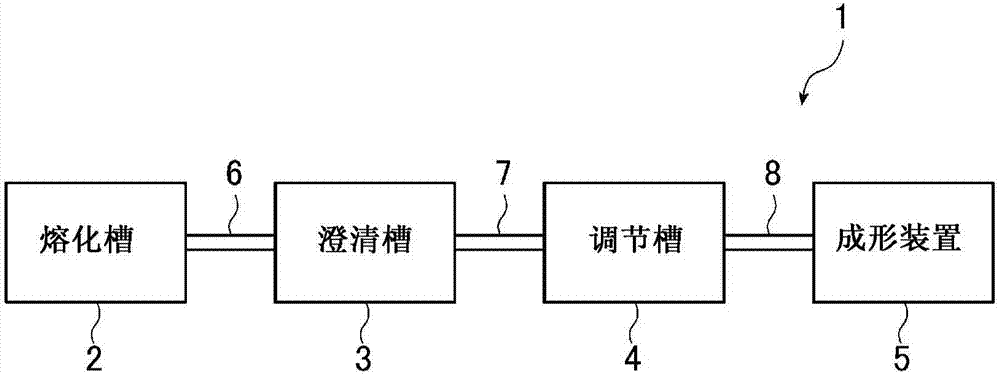
Figure 1 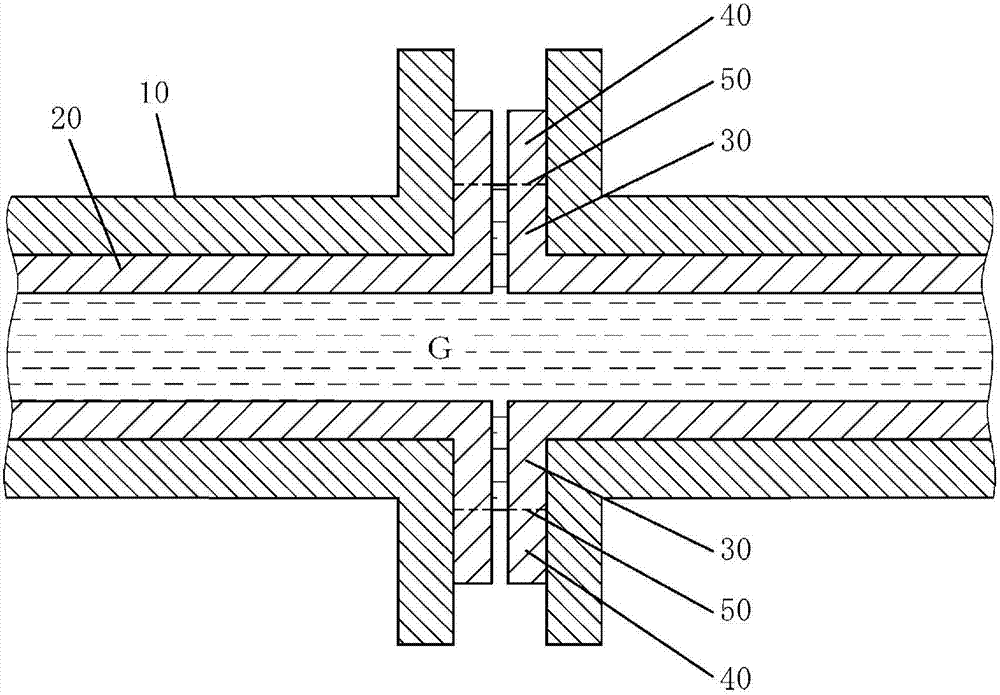
Figure 2 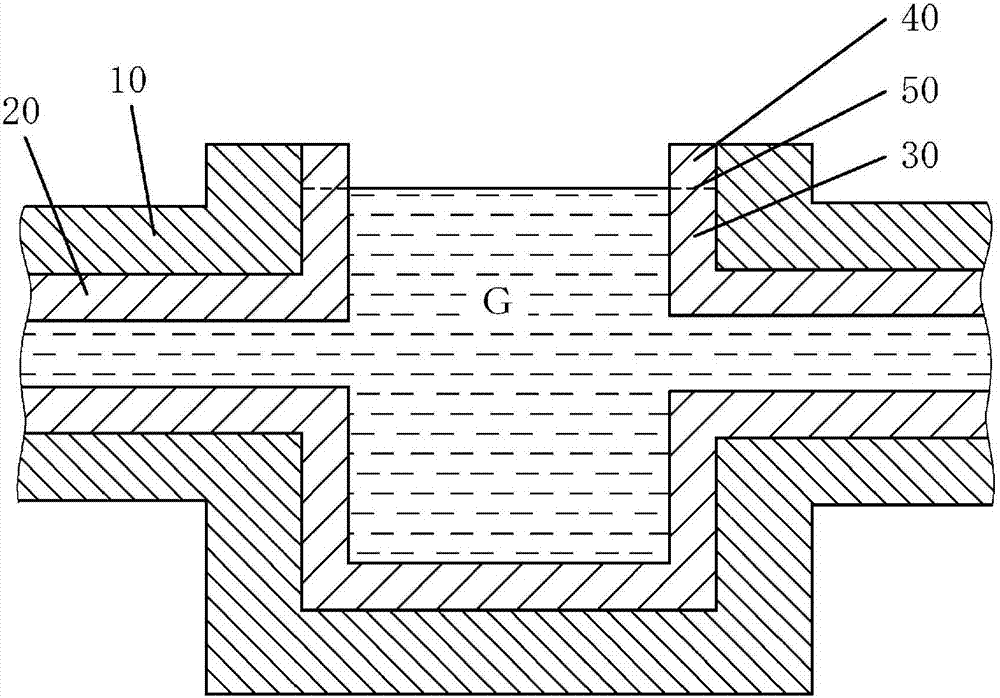
Figure 3
Abstract
Description
technical field
[0001] The present invention relates to a conduit for molten glass or a container for molten glass used as a conduit for molten glass in a glass article manufacturing apparatus, and to a manufacturing method thereof.
[0002] Moreover, this invention relates to the manufacturing apparatus of a glass article using the conduit for glass melts, or the container for glass melts.
[0003] Moreover, this invention relates to the manufacturing method of a glass article using this glass manufacturing apparatus. Background technique
[0004] Platinum or platinum and other precious metal elements such as rhodium (Rh) and gold (Au) are used as constituent materials of glass manufacturing equipment (melting tank, clarification tank, adjustment tank, stirring tank, cooling tank, etc., and their connecting passages). , an alloy of palladium (Pd), iridium (Ir), and ruthenium (Ru) (hereinafter, platinum and platinum alloys are collectively referred to as platinum materials ...
Examples
example 1
[0117] (Example 1 (evaluation of porosity))
[0118] In this example, in order to study the state of the thermal spray coating after sintering, a thermal spray coating was formed on a refractory brick, and after exposure to an oxygen-containing atmosphere (atmospheric atmosphere) at 1400°C for 5 hours, the following procedure was performed: The state of the structure of the thermal spray coating was observed. Observation was performed by cutting out a cross section of the thermal spray coating, polishing it, etching it, and then magnifying it 50 times with an optical microscope. The porosity indicating the state of the structure was calculated from the area ratio of the pores after binarizing the luminance. In this binarization, the length and width of the target area are set to 0.6 mm and 0.3 mm, respectively. When calculating, randomly select five locations from the section of the thermal spray coating, and use the average value.
[0119] In addition, in order to study th...
example 2
[0155] (Example 2 (Suppressing effect of air bubbles 1))
[0156] Using the raw material C above, a thermal spray coating was formed on the outer surface of an aluminum cylindrical mold. Thereafter, the aluminum mold was dissolved and removed to obtain a bottomed cylindrical container formed only of the thermal spray coating. The opening diameter of the container was 30 mm, the height was 30 mm, and the thickness was 0.3 mm.
[0157] The cullet was put into the container, and heated under the following conditions to melt the cullet. The cullet is the following non-alkali glass, the water content in the glass β-OH is 0.5mm -1 .
[0158] Expressed in mass percent based on oxides,
[0159] SiO 2 : 60%,
[0160] Al 2 o 3 : 17%,
[0161] B 2 o 3 :8%,
[0162] MgO: 3%,
[0163] CaO: 4%,
[0164] SrO: 8%
[0165] (initial melting condition)
[0166] The temperature was raised from room temperature to 300° C. for 2 hours at a heating rate of 150° C. / hour. Afterwards, ...
example 3
[0172] (Example 3 (Suppression effect of air bubbles 2))
[0173] Using the raw material C described above, a thermal spray coating was formed on the side surface other than the bottom surface inside a bottomed cylindrical container made of platinum. The width of the container was 45 mm, the depth was 45 mm, and the height was 45 mm, and the shape of the upper opening was rectangular. The film thickness of the thermal spray coating formed inside was 0.3 mm.
[0174] The cullet was added to the vessel and the cullet was melted under the above initial melting conditions. The depth of the molten glass was 15mm. Then, generation of air bubbles at the interface between the glass melt and the container wall surface was evaluated under the above-mentioned main test conditions.
[0175] As a result, a large number of bubbles were confirmed at the interface between the bottom surface of the inner side where the thermal spray coating was not formed and the molten glass, and no air bu...