
High linearity and anti-dispersion wireless communication technology based on bias voltage control in high-speed railway communication
A technology for optical-borne wireless communication and high-speed railways. It is used in fiber-optic radio, distortion/dispersion elimination, and fiber-optic transmission. , the effect of suppressing modulation nonlinear distortion
Patent Information
- Authority / Receiving Office
- CN · China
- Patent Type
- Patents(China)
- Current Assignee / Owner
- Publication Date
- 2019-04-05
Smart Images
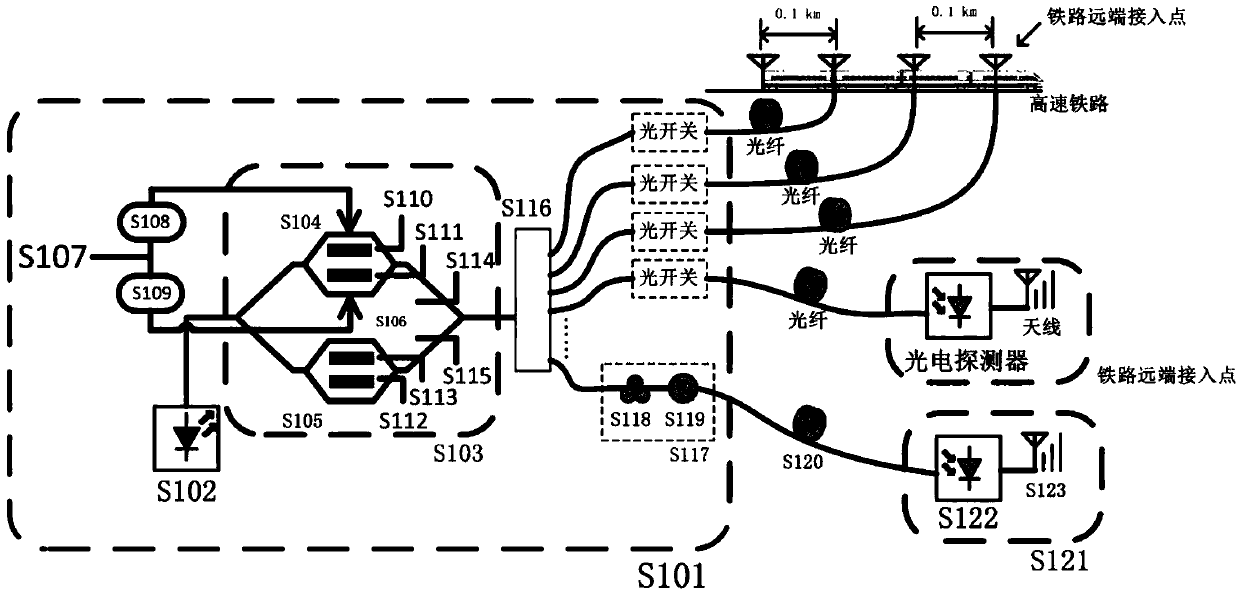
Figure 1 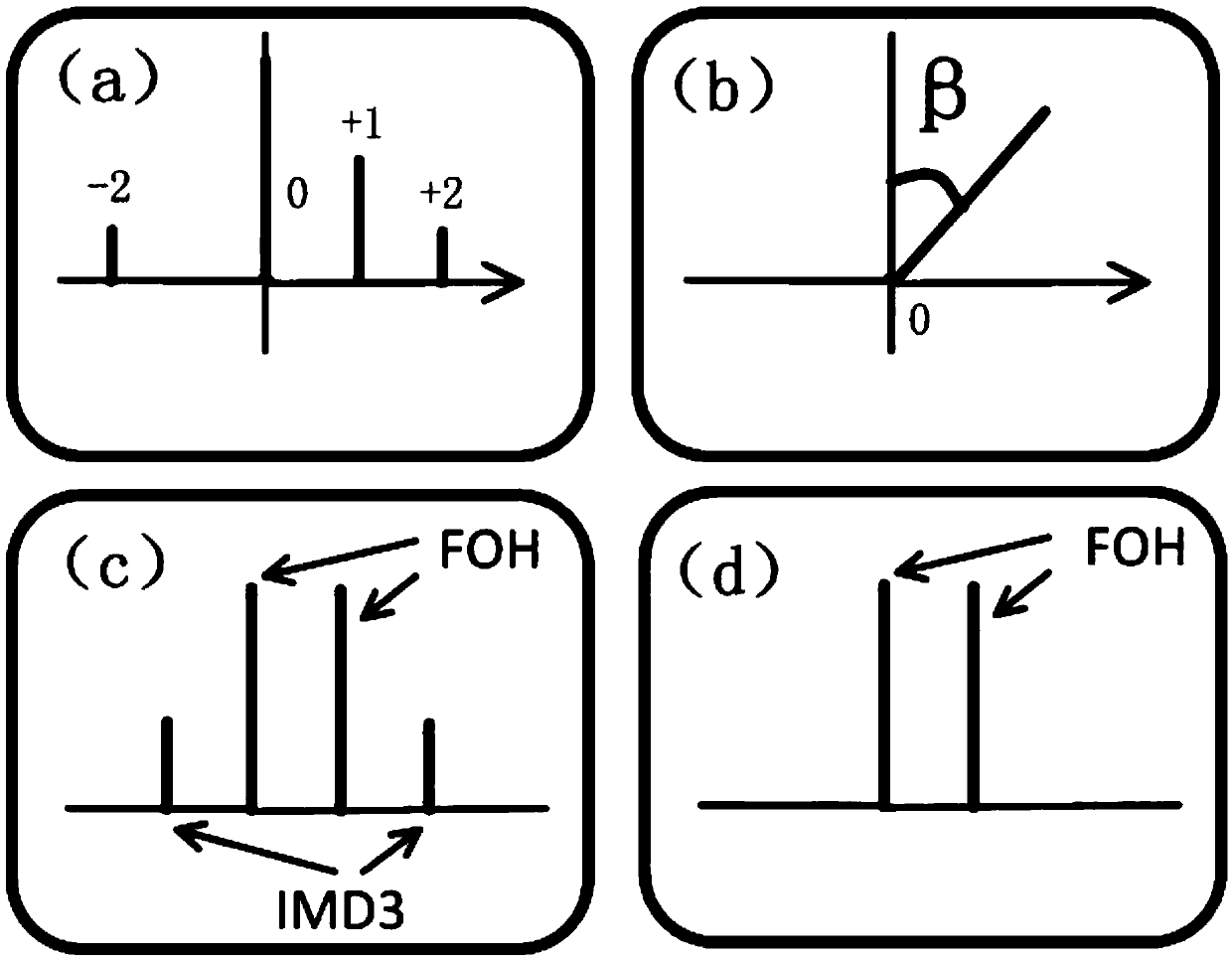
Figure 2 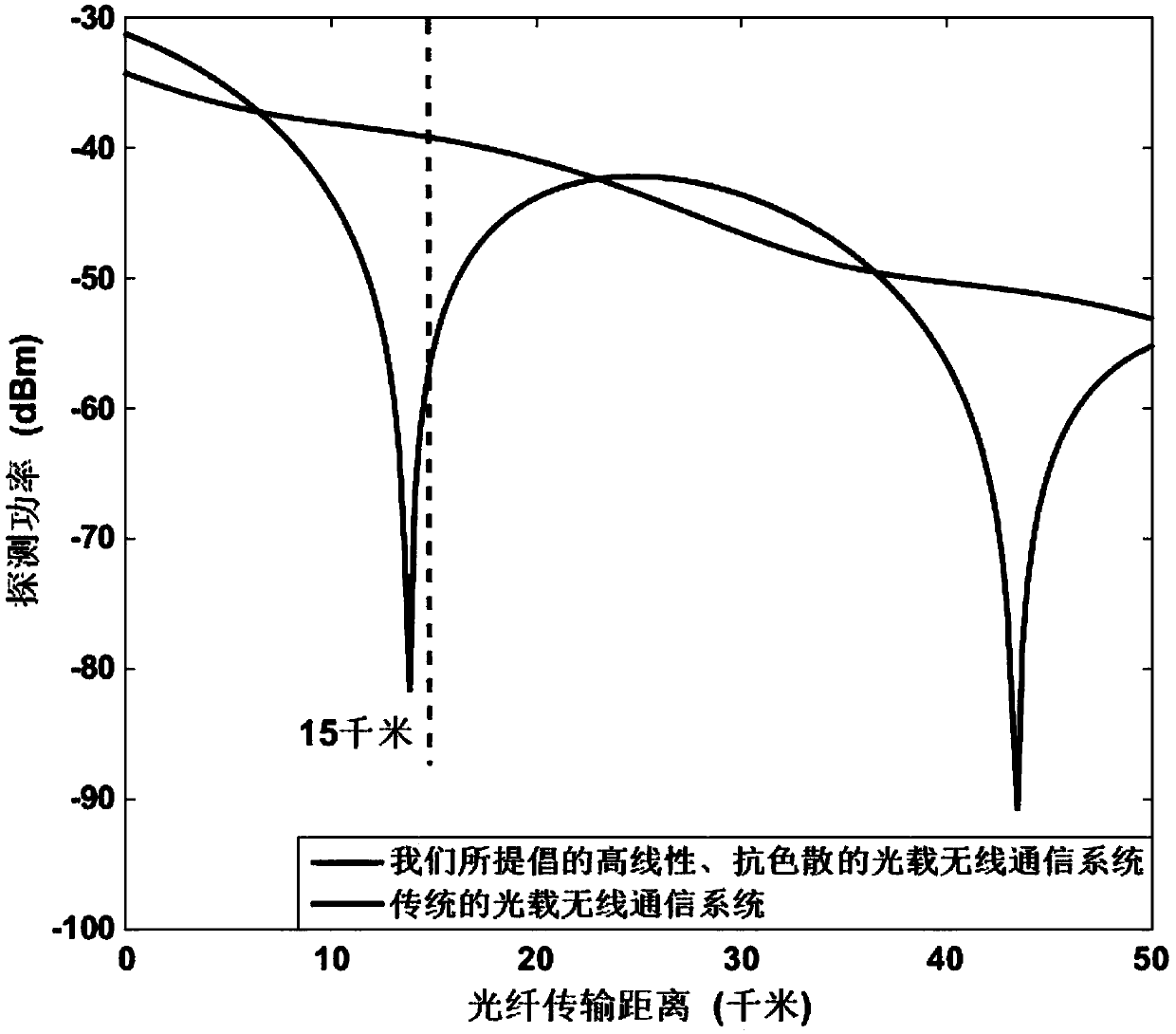
Figure 3
Abstract
Description
Technical field
[0001] The present invention relates to an optical carrier wireless communication technology that realizes single-sideband modulation and nonlinear suppression based on bias control, and the technology can be applied in high-speed railway communication. Background technique
[0002] High-performance, wide-bandwidth, and high-speed access to high-speed railway communications are essential for train positioning, train speed measurement, train stability confirmation, and star-level services that provide passengers with real-time voice, video, and even large-scale online game access. . However, the traditional 450M wireless train adjustment system and the GSM-R railway digital mobile communication system have shortcomings such as small available bandwidth, weak error correction capability, low transmission rate, and susceptibility to Doppler frequency shift, so they cannot meet the current and future requirements. High-speed railway communications with high performan...
Examples
Embodiment Construction
[0013] The embodiments of the present invention will be described in detail below with reference to the accompanying drawings.
[0014] figure 1 The structure diagram of the optical carrier wireless communication system based on bias control to achieve both anti-dispersion and suppression of modulation nonlinear distortion, in which S101 is a centralized base station, S102 is a wavelength tunable laser, and the optical carrier is output from S102 and passes through S103 dual Balanced modulator. The S103 double-balanced modulator consists of S104 sub-two-electrode intensity modulator 1 and S105 sub-two-electrode intensity modulator 2 embedded in the S106 mother intensity modulator. The optical carrier power injected into the S106 mother intensity modulator is equally divided into two channels and transmitted on its upper and lower arms. The optical carrier transmitted on the upper arm is modulated by the radio frequency signal when it passes through the S104 sub-two-electrode int...