

A polymer composite self-healing hydrogel based on nano-thin molybdenum disulfide sheet and its preparation method
A technology of molybdenum disulfide sheets and composite hydrogels, applied in the field of polymer biomaterials, can solve the problems of high cost, bioincompatibility, and low mechanical strength, and achieve low cost, good biocompatibility, and good healing efficiency effect
Patent Information
- Authority / Receiving Office
- CN · China
- Patent Type
- Patents(China)
- Current Assignee / Owner
- Publication Date
- 2019-03-29
Smart Images
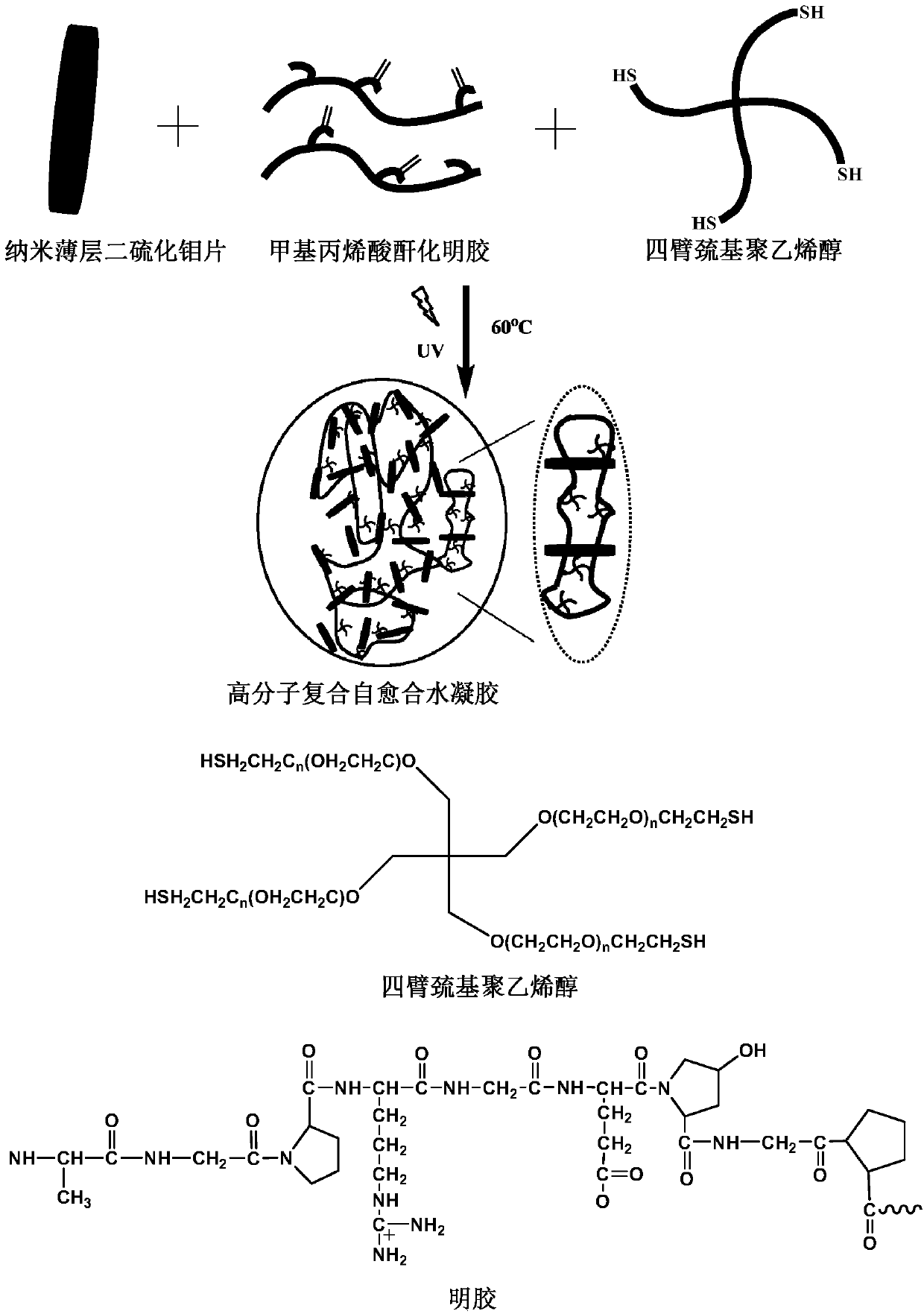
Figure 1 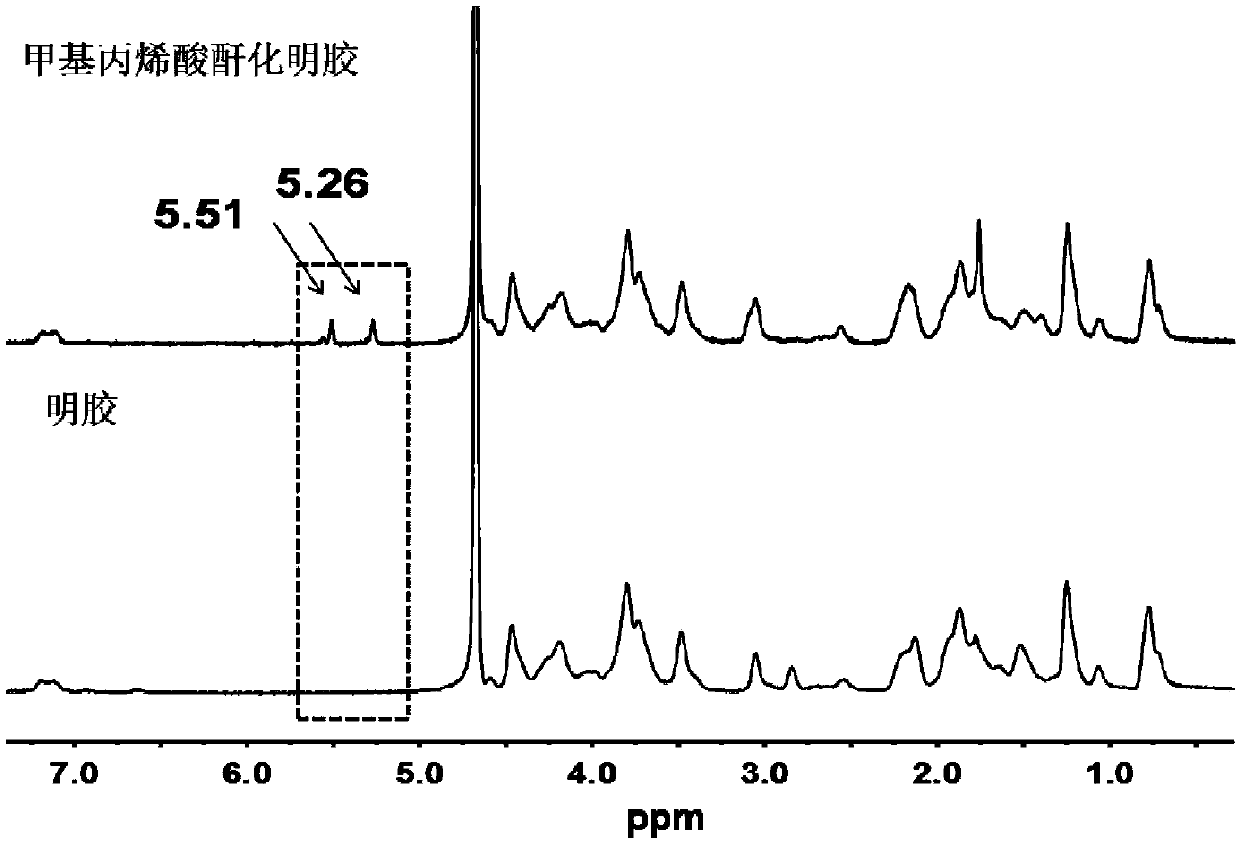
Figure 2 
Figure 3
Abstract
Description
technical field
[0001] The invention belongs to the technical field of macromolecule biomaterials, and in particular relates to a polymer composite self-healing hydrogel based on nanometer thin-layer molybdenum disulfide sheets and a preparation method thereof. Background technique
[0002] Self-healing materials are inspired by nature, imitating the healing of biological damage, and through the mechanism of material supply or energy supply, the micro-damage of the material can be automatically healed as a new biomimetic material.
[0003] At present, composite hydrogels, nanocomposite hydrogels have made great progress in the field of self-healing, generally composed of immiscible organic (polymer) and inorganic components (clay / particles) and complex (nano- level) structure. McKee et al. (Adv. Funct. Mater. 2014, 24, 2706) prepared a nanocomposite hydrogel through host-guest interaction and has excellent self-healing properties (self-healing time is less than 10s). Spolj...
Examples
Embodiment 1
[0046] The invention provides a polymer composite self-healing hydrogel based on nanometer thin-layer molybdenum disulfide sheets. Alcohol synthesis, the four-arm mercapto polyvinyl alcohol and methacrylic anhydride gelatin react in the aqueous solution of molybdenum disulfide sheet, and part of the terminal mercapto groups of the four-arm mercapto polyvinyl alcohol and the molecules of methacrylic anhydride gelatin The chains undergo light-triggered click reactions to link together and attach figure 1 It is a schematic diagram of the structure and synthesis of the polymer composite self-healing hydrogel of the present invention.
[0047] Before preparing the polymer composite self-healing hydrogel, it is necessary to prepare nano-thin molybdenum disulfide sheets and methacrylic anhydride gelatin. figure 2 For the proton nuclear magnetic resonance spectrum of the synthetic raw material methacrylic anhydride gelatin in this embodiment 1, methacrylic anhydride gelatin has prod...