
Soluble bipolar host material with high glass-transition temperature and preparation and application thereof
A technology with high vitrification and transition temperature, applied in semiconductor/solid-state device manufacturing, organic chemistry, electrical solid-state devices, etc., to achieve simple synthesis, good film-forming properties, and high yield
Patent Information
- Authority / Receiving Office
- CN · China
- Patent Type
- Applications(China)
- Current Assignee / Owner
- Publication Date
- 2018-01-05
Smart Images
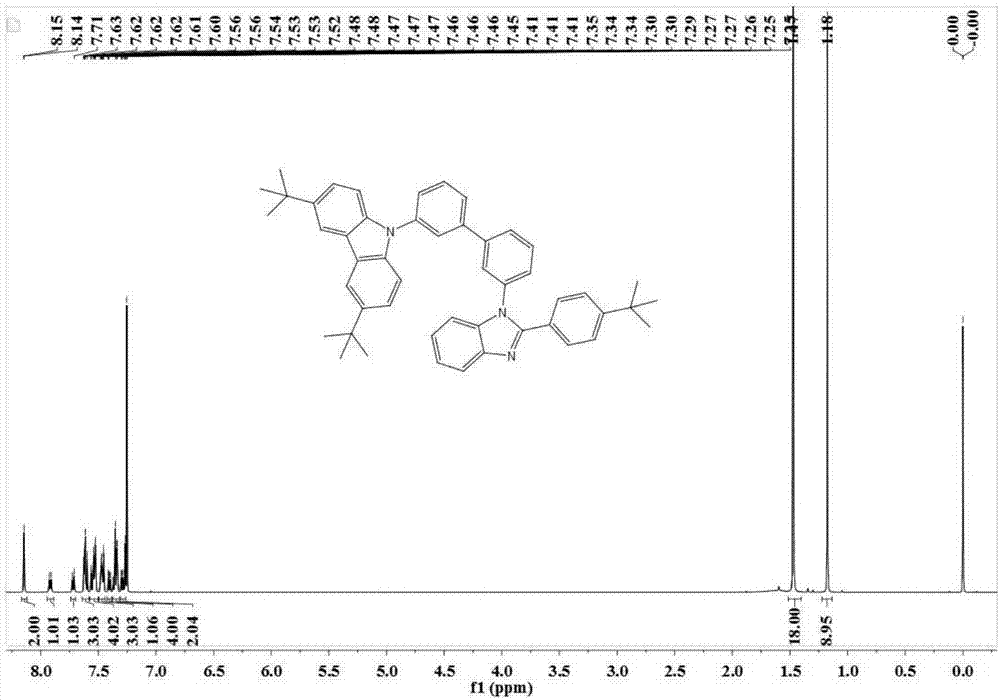
Figure 1 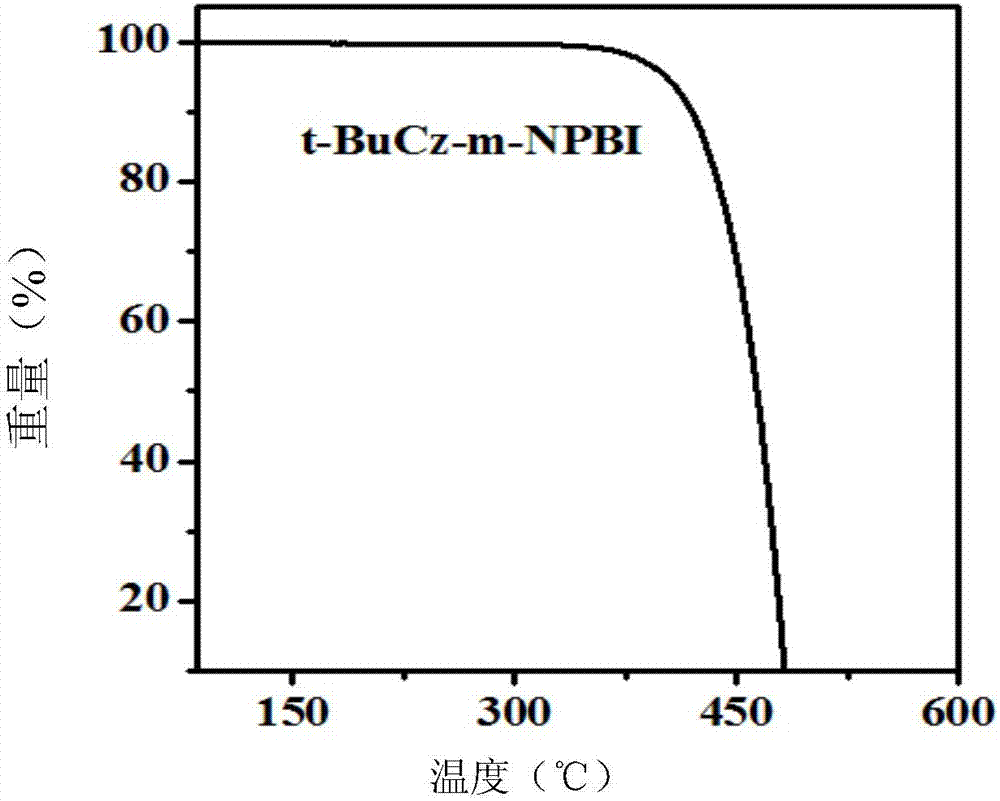
Figure 2 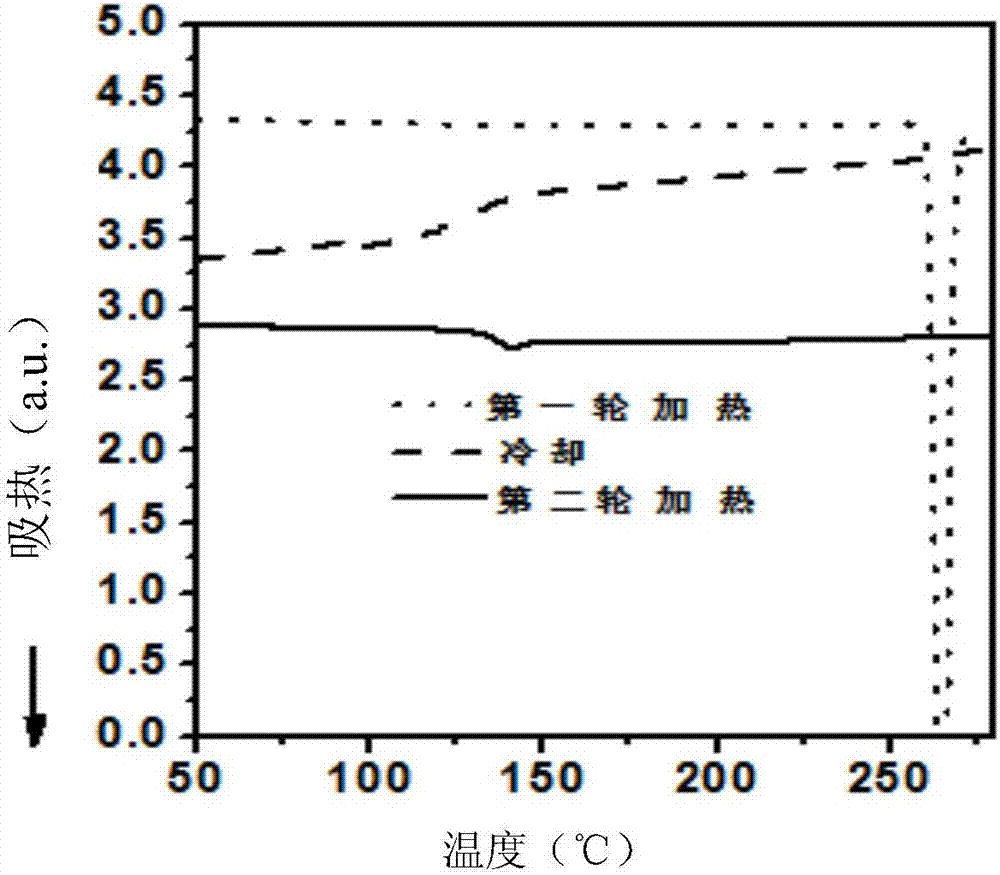
Figure 3
Abstract
Description
technical field
[0001] The invention relates to an organic small molecule host material, in particular to a soluble host material with high glass transition temperature, bipolarity and high triplet energy level, its synthesis method and its application in light-emitting devices. Background technique
[0002] Organic light-emitting diodes (OLEDs) hold great promise for novel electroluminescent displays and lighting applications. At present, the preparation of OLEDs is widely based on the vacuum evaporation process, and the material utilization rate is low. Therefore, solution processing OLED devices, such as using inkjet printing technology, can greatly improve the utilization rate of materials, and has potential low-cost advantages in the preparation of large-scale display and lighting devices.
[0003] However, when preparing OLED devices by solution processing, the existing high-performance host materials face challenges in synthesis and purification. In the present inve...
Examples
Embodiment 1
[0046] The structural formula of the bipolar host material of this embodiment is as follows:
[0047]
[0048] The preparation method of the soluble bipolar host material t-BuCz-m-NPBI of the present embodiment comprises the following steps:
[0049] Step 1: Preparation of 3,6-bis(tert-butyl)carbazole (1), the formula is as follows:
[0050]
[0051] Carbazole (5g, 0.03mmol) was dissolved in dichloromethane, after evacuating the air for 30 minutes, aluminum trichloride (4g, 0.03mmol) was added, cooled to 0°C, tert-butyl chloride (5.8g, 0.063mmol) was added, The reaction was stirred overnight (12h); after the reaction was completed, sodium hydroxide aqueous solution was added to neutralize excess aluminum trichloride, and after the solvent was removed under reduced pressure, the reaction mixture was poured into water and extracted with dichloromethane; the organic layer was washed with anhydrous Dry over magnesium sulfate, filter, remove the solvent under reduced pressure ...