
A kind of cross-linked starch with high resistant starch content and preparation method thereof
A technology of high resistant starch and cross-linked starch, which is applied in the field of modified starch, can solve the problems of restricting the industrial production and application of cross-linked starch, low content of cross-linked starch resistant starch, and low production efficiency, so as to improve the cross-linking reaction Efficiency, enhanced health function, fast effect
Patent Information
- Authority / Receiving Office
- CN · China
- Patent Type
- Patents(China)
- Current Assignee / Owner
- Publication Date
- 2020-05-12
Smart Images

Figure 1 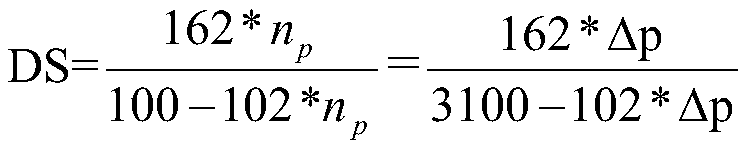
Figure 2 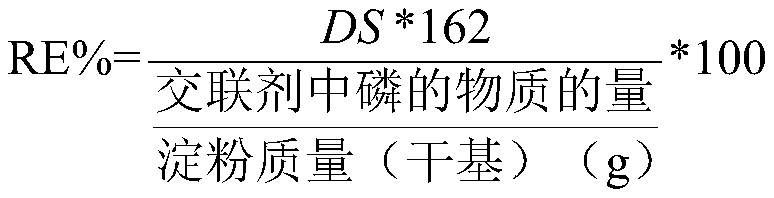
Figure 3
Abstract
Description
Technical field
[0001] The invention belongs to the technical field of modified starch, and in particular relates to a cross-linked starch with high content of resistant starch and a preparation method thereof.
Background technique
[0002] Resistant starch (Resistant Starch, RS) is a kind of starch and starch degradation products that cannot be digested in the small intestine of healthy humans, but can be fermented or partially fermented in the large intestine. The digestive properties of resistant starch endow it with a variety of important physiological functions. According to research, resistant starch is fermented and metabolized by microorganisms in the large intestine to produce some short-chain fatty acids, which contribute to the prevention and treatment of colon cancer; can effectively reduce cholesterol, It is beneficial to weight control; it can better regulate the blood sugar index, so it is beneficial to the prevention and treatment of diabetes. According ...
Examples
Embodiment 1
[0022] Accurately take by weighing 25g potato starch (dry basis) and mix with double distilled water, the starch emulsion A that preparation obtains concentration is 40%, with 12% sodium tripolyphosphate-sodium trimetaphosphate (sodium tripolyphosphate: sodium trimetaphosphate =20:80) composite cross-linking agent and 10% anhydrous sodium sulfate were added to the starch milk, and the amount added was based on starch dry basis to obtain starch emulsion B. Adjust the pH of the starch emulsion B system to 9, stir evenly, and place in microwave In the synthesis reaction workstation, the reaction was carried out at 45°C for 2 minutes, and the power was set to 450W. During the microwave reaction, magnetic stirring was carried out at the same time to ensure the uniformity of heating. After the microwave reaction, adjust the pH of the starch emulsion to 6.0 with 1mol / L HCl solution to terminate the crosslinking reaction, then centrifuge under a centrifuge at 3000r / min, filter with suc...
Embodiment 2
[0024] Accurately take by weighing 25g potato starch (dry basis) and mix with double distilled water, prepare the starch emulsion that concentration is 40%, with 10% sodium tripolyphosphate-sodium trimetaphosphate (sodium tripolyphosphate: sodium trimetaphosphate =20:80) composite cross-linking agent and 10% anhydrous sodium sulfate were added to the starch milk, and the amount added was based on starch dry basis to obtain starch emulsion B. Adjust the pH of the starch emulsion B system to 10, stir evenly, and place in microwave In the synthesis reaction workstation, react at 50°C for 1.8min, and set the power to 500W. During the microwave reaction, magnetic stirring is carried out at the same time to ensure the uniformity of heating. After the microwave reaction, adjust the pH of the starch emulsion to 6.2 with 1mol / L HCl solution to terminate the crosslinking reaction, then centrifuge under a centrifuge at 3000r / min, filter with suction, wash, dry, pulverize, and sieve to pre...
Embodiment 3
[0026] Accurately take by weighing 25g potato starch (dry basis) and mix with double distilled water, prepare the starch emulsion that concentration is 30%, with 10% sodium tripolyphosphate-sodium trimetaphosphate (sodium tripolyphosphate: sodium trimetaphosphate =10:90) composite cross-linking agent and 10% anhydrous sodium sulfate were added to the starch emulsion, and the amount added was based on starch dry basis to obtain starch emulsion B. Adjust the pH of starch emulsion B system to 11, stir evenly, and place in microwave In the synthesis reaction workstation, react at 50°C for 1.2min, and set the power to 500W. During the microwave reaction, magnetic stirring is carried out at the same time to ensure the uniformity of heating. After the microwave reaction, adjust the pH of the starch emulsion to 6.5 with 1mol / L HCl solution to terminate the crosslinking reaction, then centrifuge under a centrifuge at 3000r / min, filter with suction, wash, dry, pulverize, and sieve to pre...