
Molecular marker in blood serving as diagnosis index of respiratory syncytial virus infection
A technology of syncytial virus and respiratory tract, which is applied in the field of molecular marker-TYMS as a diagnostic indicator of respiratory syncytial virus infection, can solve the problems of complicated operation, non-specific staining, slow antibody production, etc., and achieves reduction of mortality and genetic diagnosis. Timely and more effective genetic diagnosis
Patent Information
- Authority / Receiving Office
- CN · China
- Patent Type
- Applications(China)
- Current Assignee / Owner
- Publication Date
- 2019-02-12
- Estimated Expiration
- Not applicable · inactive patent
Smart Images
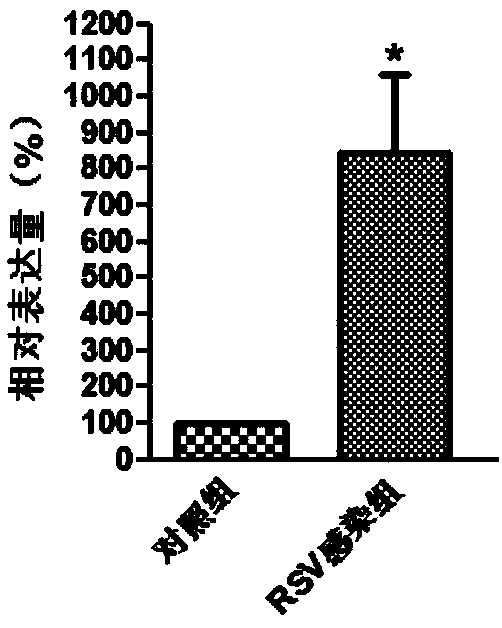
Figure 1 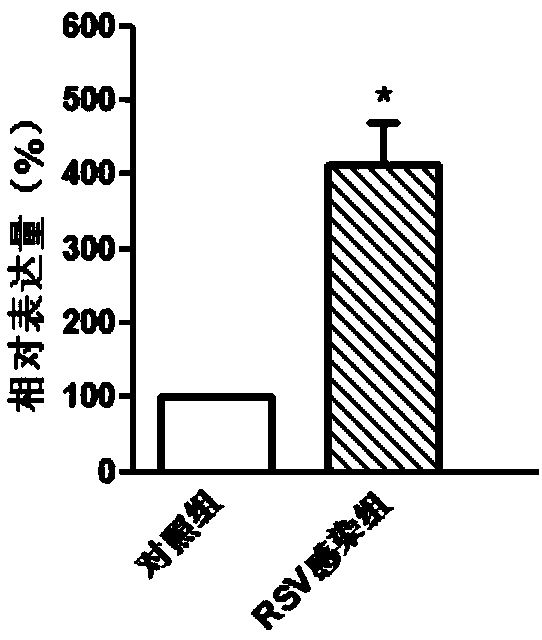
Figure 2 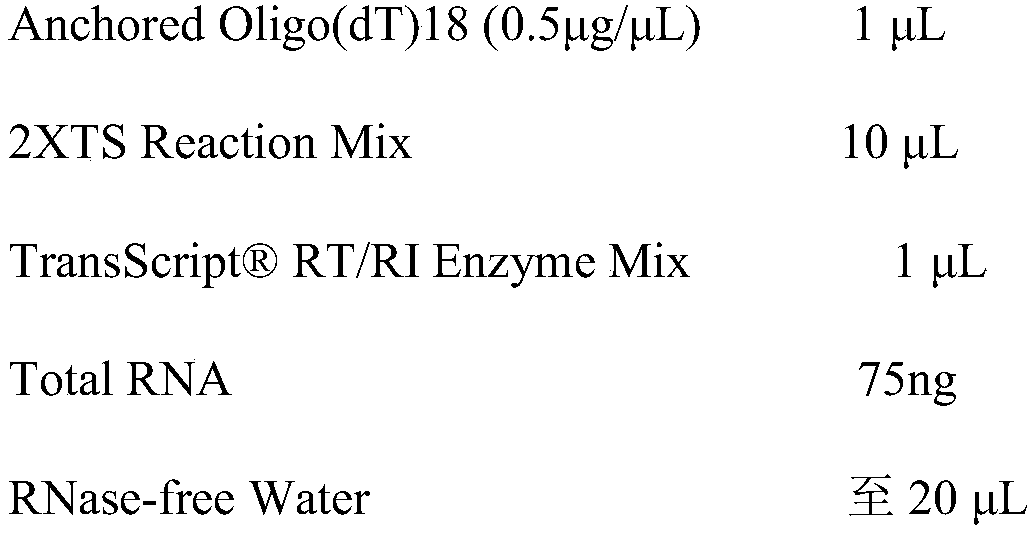
Figure 3
Abstract
Description
technical field
[0001] The invention belongs to the field of molecular diagnosis, and relates to a diagnostic index of respiratory syncytial virus infection, in particular to molecular marker-TYMS in blood as a diagnostic index of respiratory syncytial virus infection. Background technique
[0002] Respiratory syncytial virus (RSV) belongs to the Pneumovirus genus of the Paramyxoviridae family, and is a non-segmented single-stranded RNA (negative strand) virus with an envelope. It is the most common virus that causes lower respiratory tract infection in infants and young children. It invades the human body mainly through the respiratory tract and spreads through the air (droplets, dust). The virus mainly proliferates in the nasopharyngeal epithelial cells. Respiratory syncytial virus is the most important pathogen of viral pneumonia in children under 5 years old, and it is also one of the causes of sudden infant death. Children are generally susceptible to RSV and have a hi...
Examples
Embodiment 1
[0044] Example 1 Screening of genes differentially expressed in patients with respiratory syncytial virus infection and normal people
[0045] 1. Case collection population
[0046] Children treated by the inpatient department of the pediatric department of the hospital (RSV infection group, 5 cases) and children with routine physical examination in the pediatric outpatient growth and development clinic (control group, 5 cases).
[0047] 2. Clinical case screening criteria
[0048] 2.1 Inclusion criteria of RSV infection group
[0049] (1) Age: 1 month to 1 year old;
[0050] (2) Past history: no RSV infection and / or wheezing attack;
[0051] (3) Clinical symptoms: cough and / or wheezing and / or shortness of breath;
[0052] (4) Physical examination: increased respiratory rate / three inspiratory depressions / wheeze or moist rales on lung auscultation;
[0053] (5) Auxiliary examination: the throat swab is positive for RSV antigen;
[0054] (6) Imaging examination: Chest X-ra...
Embodiment 2
[0103] Example 2 QPCR experiment verification of genes differentially expressed in patients with respiratory syncytial virus infection and normal people
[0104] 1. Research object:
[0105] The screening criteria were the same as in Example 1, with 30 cases in each of the RSV infection group and the control group.
[0106] 2. Extraction of total RNA in blood
[0107] Step is with embodiment 1.
[0108] 3. RT-PCR
[0109] (1)RT
[0110] RT reaction system (20μl):
[0111]
[0112] RT reaction procedure:
[0113] 42°C 15min
[0114] 85℃ 5s
[0115] 4℃ ---
[0116] (2) qPCR
[0117] PCR reaction system (20μl):
[0118]
[0119] PCR reaction program:
[0120] Amplification procedure:
[0121] Stage 1 95°C 10min
[0122] Stage 2 95°C 10s
[0123] 52.8°C 10s
[0124] Repeat 41 cycles
[0125] Three replicate wells were set for each sample, and the internal reference was GAPDH.
[0126] (3) Primers
[0127] The primer sequences of TYMS gene and GAPDH gene are...
Embodiment 3
[0141] Example 3 Western blot experiment to verify the expression products of differentially expressed genes in patients with respiratory syncytial virus infection and normal people
[0142] 1. Research object: same as embodiment 2.
[0143] 2. Mononuclear cell isolation
[0144] Take 10ml of venous blood from patients in the RSV infection group and the control group, inject it into a sterile vial containing heparin, and shake it gently immediately after capping. Add an equal volume of HBSS (NaCl 8.0g, NaCl 2 HPO 4 0.132g, KH 2 PO 4 0.06g, KCl 0.4g, phenol red 1ml, NaHCO 3 0.35g, D-glucose 1.0g, dissolved in 1000ml double distilled water), to reduce the aggregation of red blood cells. Draw 8ml of lymphocyte stratification solution into a 50ml centrifuge tube, slowly add the diluted blood along the tube wall, keep the interface clear, do not mix the two, centrifuge at 20°C 2000r / min for 30min, carefully absorb the stratification solution and plasma transfer The turbid...