
A pathogenic mutation of hereditary primary infertility and its detection reagent
The technology of a reagent and a kit is applied in the field of pathogenic mutation of hereditary primary infertility and its detection reagent, which can solve the problem that the pathogenic mutation site needs to be further confirmed.
Patent Information
- Authority / Receiving Office
- CN · China
- Patent Type
- Patents(China)
- Current Assignee / Owner
- Publication Date
- 2021-07-09
Smart Images
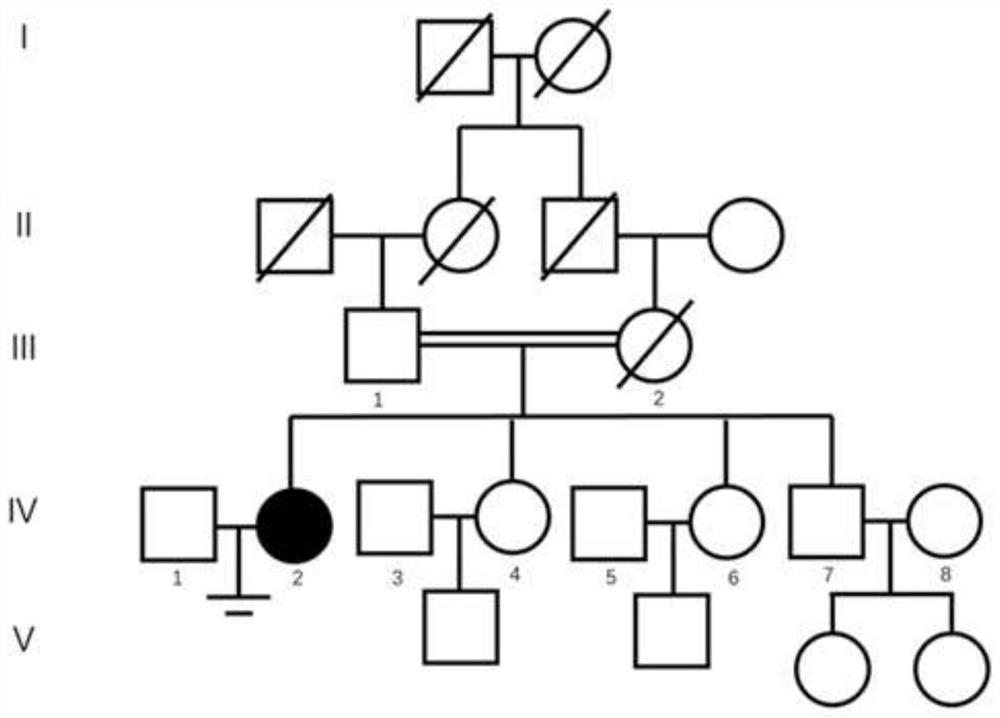
Figure 1 
Figure 2 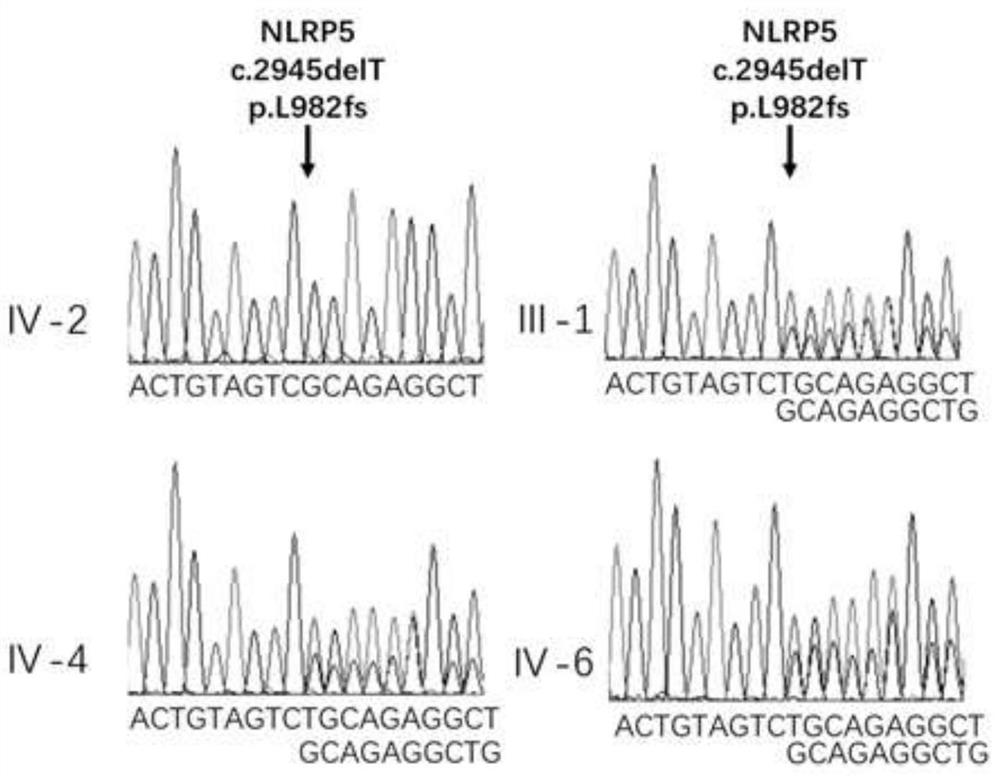
Figure 3
Abstract
Description
technical field
[0001] The invention belongs to the field of biomedicine and relates to a pathogenic mutation of hereditary primary infertility and a detection reagent thereof. Background technique
[0002] Infertility has become a common disease in modern society, and WHO data shows that infertility has become the third largest disease after tumors and cardiovascular and cerebrovascular diseases. According to data released by the National Family Planning Commission, the infertility rate of couples of childbearing age in China has climbed to 12%-15% in recent years, and the number of female patients has exceeded 25 million. Therefore, it is particularly urgent to explore the causes of female infertility. Assisted reproductive technology is currently widely used in the treatment of infertility, but there are still some infertility cases in clinical practice where neither the cause nor the effective treatment method has been found, and a considerable number of female patients ...
Examples
Embodiment 1
[0034] Detection of NLRP5 gene mutations in a family with primary female infertility.
[0035] experimental method:
[0036] 1. Collection of clinical resources of the family and establishment of a genetic resource bank:
[0037] The proband in this family is patient (Ⅳ-2), female, who visited Nanjing Maternal and Child Health Hospital two years ago and was diagnosed with primary infertility; her younger sister and younger brother are of normal fertility; her parents are close relatives, but Mother has passed away. (Family diagram see figure 1 ). Clinical data mainly include personal medical history, family history, birth history, etc. The clinical data of the patient (Ⅳ-2) and the blood samples of the father and two fertile sisters were collected. Genomic DNA from the blood of the patient (Ⅳ-4) and his father (Ⅲ-1) and younger sisters (Ⅳ-4, Ⅳ-6) was extracted with a blood genomic DNA extraction kit (Qiagen, Hilden, Germany).
[0038] 2. Discover the pathogenic mutations...
Embodiment 2
[0064] Biological analysis was performed on the pathogenic mutation NLRP5 c.2945delT p.L982fs detected in Example 1.
[0065] Experimental results:
[0066] 1. Conservative analysis:
[0067] Using the NCBI HomoloGene database (http: / / www.ncbi.nlm.nih.gov / homologene), the screened NLRP5 p.L982fs mutation was conserved in multiple species including humans, mice, orangutans, sheep, dogs, and horses It is found that this site is conserved in the evolution process, which confirms that the mutation of the site may cause more serious pathological diseases. The results are shown in image 3 .
[0068] 2. Research on protein crystal structure changes:
[0069] SWISS MODEL (http: / / swissmodel.expasy.org / ) prediction software was used to predict the structures of the NLRP5 wild-type protein and the mutant protein carrying the c.2945delT p.Leu982fs mutation, and evaluate the protein structure changes caused by the mutation. The prediction results of the protein crystal structure showe...