
A pathogenic mutation of hereditary cone dystrophy and its detection reagent
A cone cell and malnutrition technology, applied in the field of biomedicine, can solve the problems of not being able to locate the disease-causing site, analyzing small families and sporadic cases, and screening out disease-causing genes, etc.
Patent Information
- Authority / Receiving Office
- CN · China
- Patent Type
- Patents(China)
- Current Assignee / Owner
- Publication Date
- 2017-04-26
Smart Images
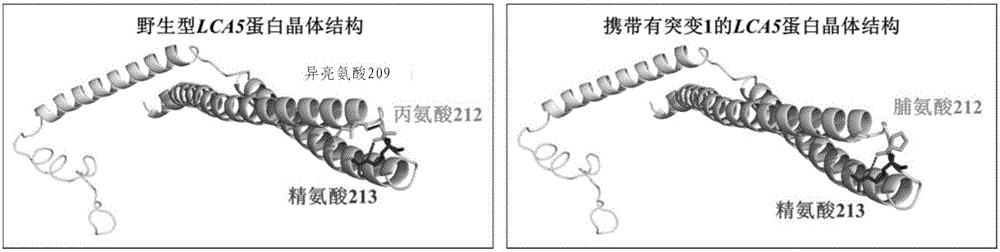
Figure 1 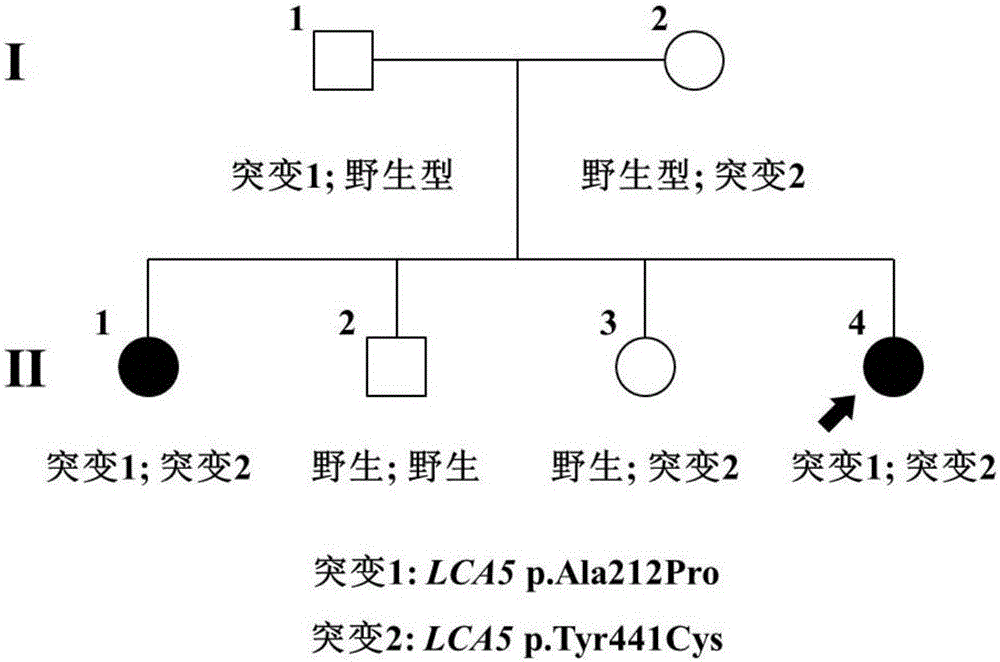
Figure 2 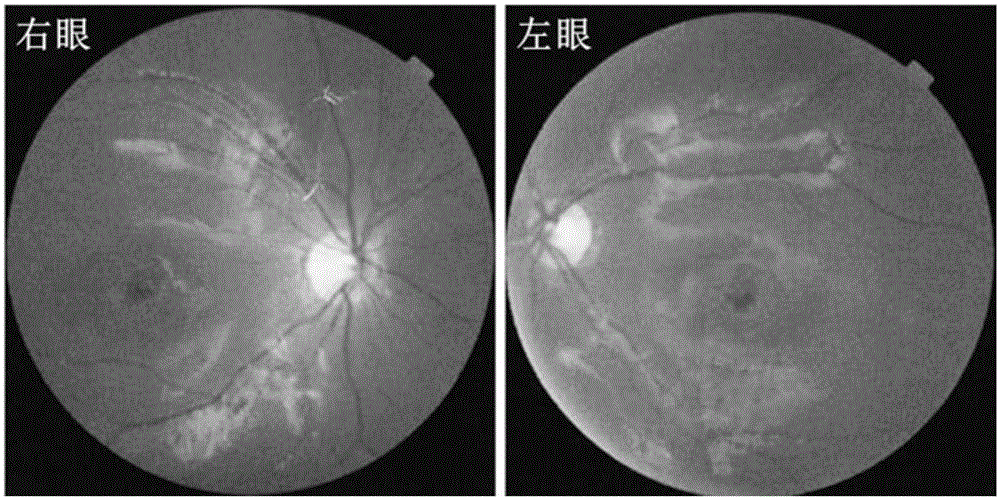
Figure 3
Abstract
Description
technical field
[0001] The invention belongs to the field of biomedicine and relates to a pathogenic mutation of hereditary cone cell dystrophy and a detection reagent thereof. Background technique
[0002] Cone dystrophy (CD) is a group of progressive retinal degenerative diseases caused by genetic defects. The main pathological feature of this type of disease is the irreversible apoptosis of cone cells. Some patients in the advanced stage of the disease may be combined with Damage to rod cells. The clinical manifestations of CD patients are the progressive decline of central vision in childhood, which can lead to blindness in severe cases. CD is a clinically common and serious hereditary blinding disease. It is a large category of blinding eye disease that seriously harms the working-age population worldwide. CD has a relatively high incidence in my country and even in the world. my country is a country with a large amount of CD genetic resources, but most of the genetic...
Examples
Embodiment 1
[0045] A second-generation family with cone dystrophy (CD) was detected for mutations in the LCA5 gene.
[0046] experimental method:
[0047] 1. Collection of clinical resources of the family and establishment of a genetic resource bank:
[0048] The clinical data and blood samples of each member of the family were collected, see the family diagram figure 1 . Clinical data mainly include personal medical history, family history, best corrected visual acuities (BCVAs), slit lamp examination, fundus photography, color vision examination, visual field examination (Humphrey perimetry), visual evoked potential detection (visual-evokedpotentials); VEP), full field electrophysiology (electroretinography; ERG), fundus fluorescein angiography (FFA) and optical coherence tomography (optical coherence tomography; OCT), etc. The blood genomic DNA of each family member was extracted with a blood genomic DNA extraction kit (Qiagen, Hilden, Germany).
[0049] 2. Discover the pathogenic ...
Embodiment 2
[0082] Functional studies were carried out on the pathogenic genes detected in Example 1. Here, the new mutation p.[Ala212Pro];[Tyr441Cys] detected in the LCA5 gene was taken as an example.
[0083] experimental method:
[0084] 1. Conservative analysis:
[0085] Using NCBI HomoloGene database ( http: / / www.ncbi.nlm.nih.gov / homologene ) Conservative evaluation and prediction of the screened mutations in multiple species.
[0086] 2. Predict the pathogenicity of mutations based on SIFT and PolyPhen values:
[0087] Using two mainstream online prediction software: PolyPhen-2 (Polymorphism Phenotyping, version2; http: / / genetics.bwh.harvard.edu / pph2 / ) and SIFT Human Protein DB ( http: / / sift.bii.a-star.edu.sg / ), to predict the impact of missense mutations and nonsense mutations on protein levels, thereby predicting the pathogenicity of mutations.
[0088] 3. Research on protein crystal structure changes:
[0089] SWISS MODEL (http: / / swissmodel.expasy.org / ) prediction s...