
Compound and method for preparing substituted [5,6]cyclo-4(3H)-pyrimidinone compound by using same
A compound, pyrimidinone technology, applied in the field of medicinal chemistry, can solve problems such as alcoholysis by-products and Br hydrolyzed impurities.
Patent Information
- Authority / Receiving Office
- CN · China
- Patent Type
- Applications(China)
- Current Assignee / Owner
- Publication Date
- 2021-04-16
Smart Images
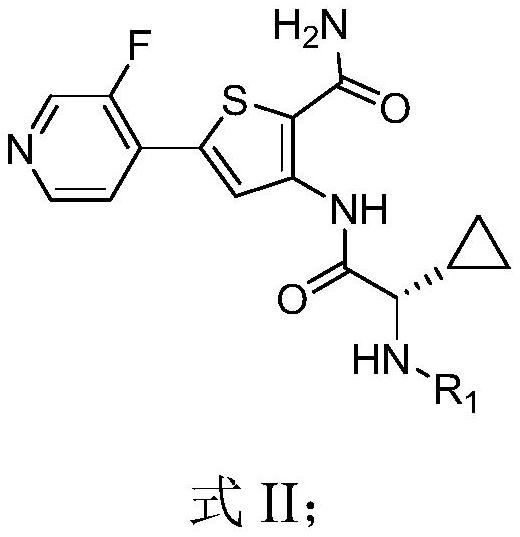
Figure 1 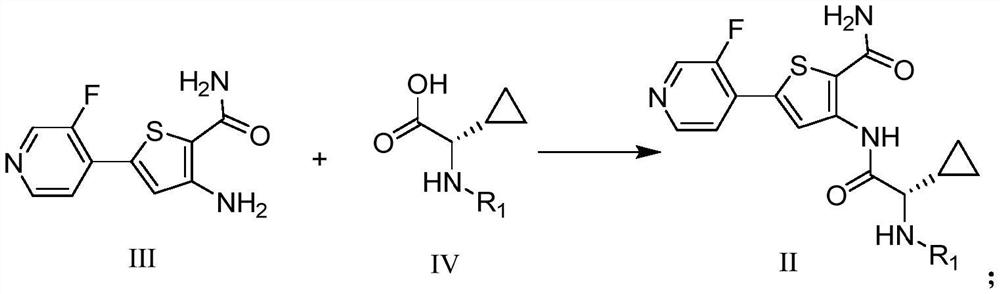
Figure 2 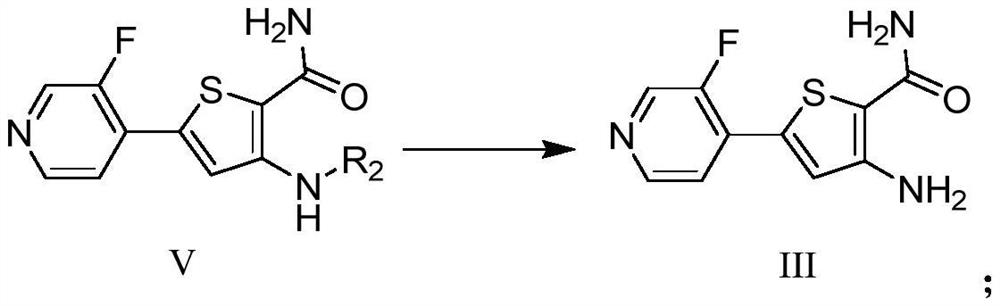
Figure 3
Abstract
Description
technical field
[0001] The invention belongs to the field of medicinal chemistry, and specifically relates to a compound and a method for preparing a substituted [5,6] ring-4(3H)-pyrimidinone compound using the same. Background technique
[0002] Cancer is an uncontrolled proliferative disease in which most cancer cells proliferate at a higher rate than normal cells. During cell cycle division, chromosome replication is essential, and DNA replication in S phase is tightly regulated. Inhibition of DNA replication has been proven useful in cancer therapy, and its inhibitors have been widely used clinically, such as gemcitabine, the active metabolite of 5-fluorouracil and Hydroxyurea (HU).
[0003] CDC7 (cell division cycle 7) is a serine-threonine kinase that plays a key role in DNA synthesis and is required for activation of the DNA replication origin throughout the S phase of the cell cycle. The kinase activity of CDC7 is regulated by binding to its activating partner. Du...
Examples
Embodiment 1
[0098] This embodiment example provides a compound shown in formula II-1, its structural formula is as follows:
[0099]
[0100] Compound II-1 synthetic route is as follows:
[0101]
[0102] (1) Synthesis of methyl 5-bromo-3-((tert-butoxycarbonyl)amino)thiophene-2-carboxylate
[0103] Add the compound of formula X (100g) into the three-necked flask, add pyridine, then add DMAP (5.2g), cool down to 5°C in an ice bath, and start adding (Boc) 2 O (102.2g). After the addition was complete, the reaction was removed from the ice bath and stirred overnight at room temperature.
[0104] After the reaction was monitored by TLC, the reaction solution was poured into water, extracted by adding EA, the organic phases were combined, washed with HCl solution, dried over anhydrous sodium sulfate, and spin-dried by a rotary evaporator to obtain a crude product (160 g, y=120%). After passing through the column, 90.7 g (y=63%) of the pure compound of formula IX-1 was obtained.
[01...
Embodiment 2
[0123] This embodiment provides the preparation method of the compound shown in formula II-2, and described reaction formula is as follows:
[0124]
[0125] Steps (1)-(5) are the same as in Example 1.
[0126] (6) (9H-fluoro-9-yl)methyl (S)-(2-((2-carbamoyl-5-(3-fluoropyridin-4-yl)thiophen-3-yl)amino)- Synthesis of 1-cyclopropyl-2-oxyethyl)carbamate
[0127] The preparation method of the compound of formula III is the same as in Example 1. Formula III compound (1.0eq) and formula IV-2 compound (1.2eq) in POCl 3 (1.3eq) is the reaction under the condition of acylating reagent, the final product yield is 63%, and the ee value is 99.6%.