
Production process and application of (2S, 5S)-2, 5-hexanediol
A production process and technology of hexylene glycol, applied in the field of bioengineering, can solve the problem of low product conversion rate, and achieve the effects of simple reaction operation and broad market prospects.
Patent Information
- Authority / Receiving Office
- CN · China
- Patent Type
- Applications(China)
- Current Assignee / Owner
- Publication Date
- 2021-06-29
Smart Images
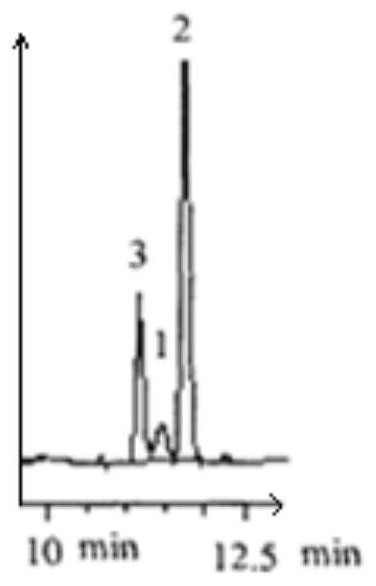
Figure 1 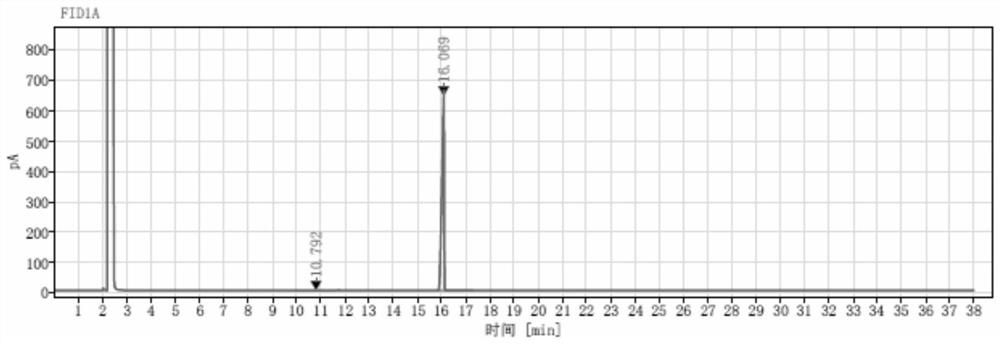
Figure 2 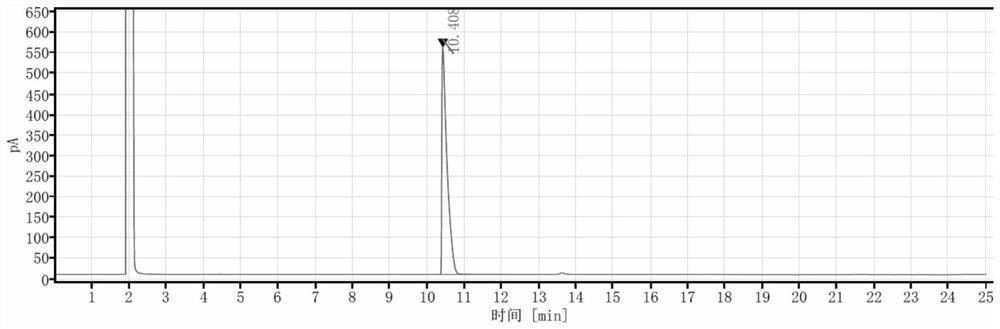
Figure 3
Abstract
Description
technical field
[0001] The invention relates to the field of bioengineering, in particular to a production process and application of (2S,5S)-2,5-hexanediol. Background technique
[0002] (2S,5S)-2,5-Hexanediol, as an optically active alcohol with specific groups, is an important chiral building block for the synthesis of many chiral drugs and other chiral chemicals. Wide application prospects. Among them, since (2S,5S)-2,5-hexanediol is an optically active chiral alcohol, it is not only an intermediate for antihypertensive drugs captopril and diltiazem, but also a synthetic chiral amino acid, ionic liquid, chiral It is a catalyst for various chiral compounds such as alcohols, and is also an important ligand for chiral diphospholane ligands (DuPHOS). Therefore, efficient production of (2S,5S)-2,5-hexanediol is of great significance for the preparation of antihypertensive drugs, chiral catalysts and chiral ligands.
[0003] At present, the method for preparing (2S,5S)-2,5-...
Examples
Embodiment 1
[0041] A production process of (2S,5S)-2,5-hexanediol, specifically comprising the following steps:
[0042] With 2,5-hexanedione as the initial substrate of the reaction, with ketoreductase (the ketoreductase is a reductase encoded by the ketoreductase gene, and the amino acid sequence of the ketoreductase is as shown in SEQ ID No.2 Shown, the nucleotide sequence of the ketoreductase gene is shown in SEQ ID No.1) as a catalyst, adding coenzyme and isopropanol to form a reaction system for catalytic reaction, to obtain the target product, that is, the (2S, 5S) -2,5-Hexanediol. Specifically, the concentration of the initial substrate 2,5-hexanedione was controlled at 877mol L -1 About, the concentration of ketoreductase in described reaction system is 50g / L, the concentration of coenzyme NAD in described reaction system is 0.1g / L, add and account for 80% v / v of the total volume of described reaction system Propanol, remove the acetone generated by vacuuming in the reaction, a...
Embodiment 2
[0044] A production process of (2S,5S)-2,5-hexanediol, specifically comprising the following steps:
[0045] With 2,5-hexanedione as the initial substrate of the reaction, with ketoreductase (the ketoreductase is a reductase encoded by the ketoreductase gene, and the amino acid sequence of the ketoreductase is as shown in SEQ ID No.2 Shown, the nucleotide sequence of the ketoreductase gene is shown in SEQ ID No.1) as a catalyst, adding coenzyme and isopropanol to form a reaction system for catalytic reaction, to obtain the target product, that is, the (2S, 5S) -2,5-Hexanediol. Specifically, the concentration of the initial substrate 2,5-hexanedione is controlled at 800mol L -1 About, the concentration of ketoreductase in the reaction system is 40g / L, the concentration of coenzyme NAD in the reaction system is 0.01g / L, and 70% v / v of the total volume of the reaction system is added Propanol, remove the generated acetone by vacuuming during the reaction, add isopropanol to pro...
Embodiment 3
[0047] A production process of (2S,5S)-2,5-hexanediol, specifically comprising the following steps:
[0048] With 2,5-hexanedione as the initial substrate of the reaction, with ketoreductase (the ketoreductase is a reductase encoded by the ketoreductase gene, and the amino acid sequence of the ketoreductase is as shown in SEQ ID No.2 Shown, the nucleotide sequence of the ketoreductase gene is shown in SEQ ID No.1) as a catalyst, adding coenzyme and isopropanol to form a reaction system for catalytic reaction, to obtain the target product, that is, the (2S, 5S) -2,5-Hexanediol. Specifically, the concentration of the initial substrate 2,5-hexanedione is controlled at 900mol L -1 Left and right, the concentration of ketoreductase in the reaction system is 60g / L, the concentration of coenzyme NAD in the reaction system is 1g / L, and isopropyl Alcohol, remove the generated acetone by vacuuming during the reaction, add isopropanol to promote the reaction, and the catalytic reaction...