
Ultrasonic response type polymer and nanoparticles, preparation method and application thereof
A nanoparticle and polymer technology, used in microcapsules, nanocapsules, pharmaceutical formulations, etc., can solve the problems of inflammatory response, large particle size, and unstable liposomes in the body, and achieve sensitive ultrasonic response and small dispersion coefficient. , the effect of low cytotoxicity
Patent Information
- Authority / Receiving Office
- CN · China
- Patent Type
- Applications(China)
- Current Assignee / Owner
- Publication Date
- 2021-07-23
Smart Images
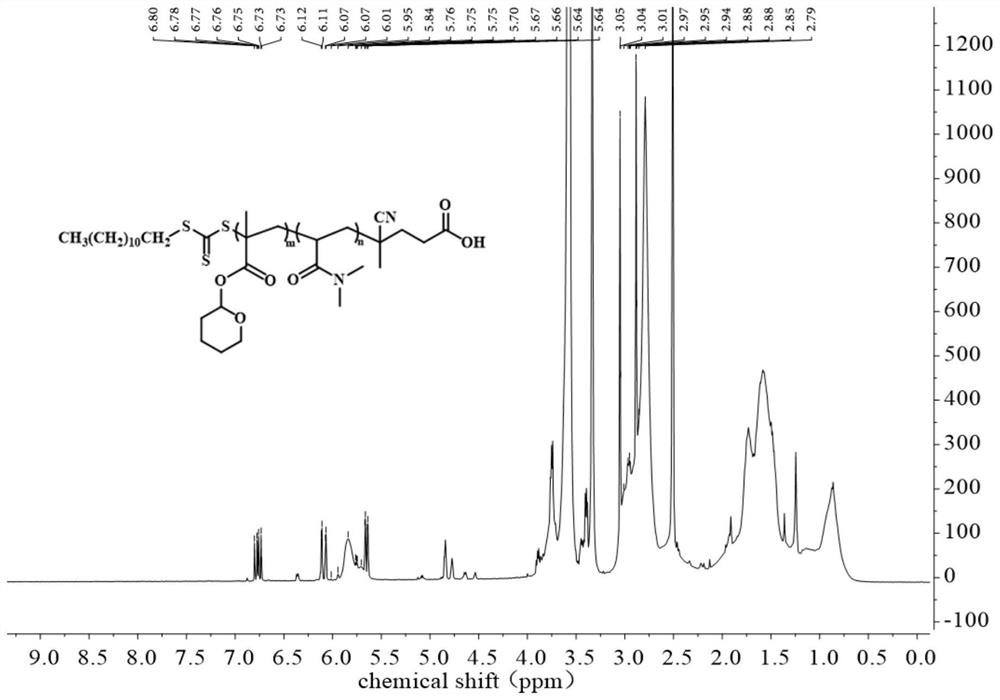
Figure 1 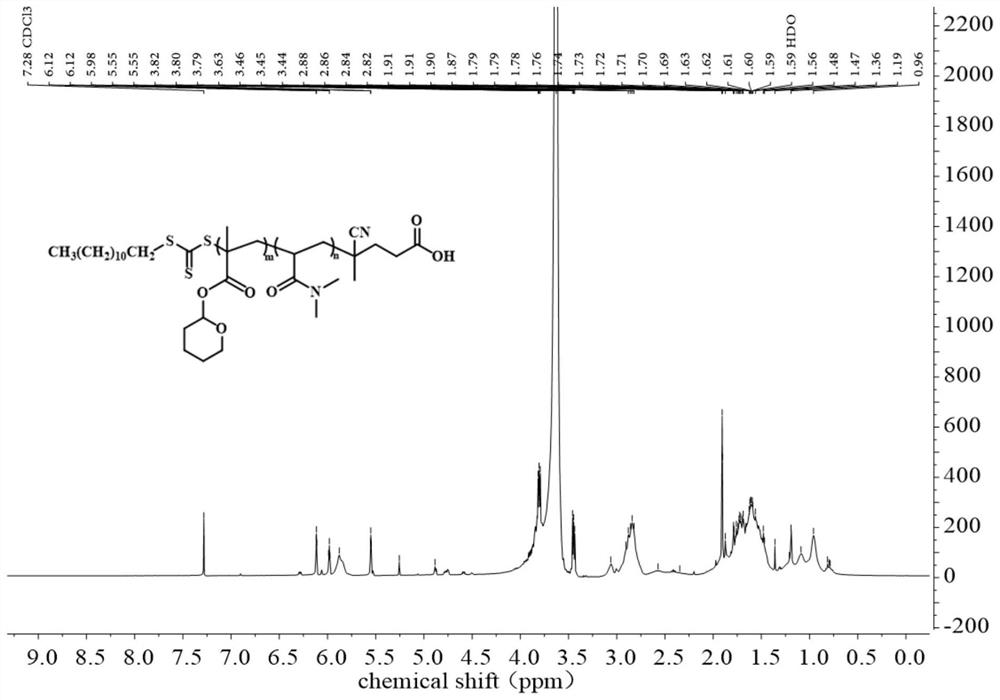
Figure 2 
Figure 3
Abstract
Description
technical field
[0001] The invention belongs to the field of pharmaceutical preparations, and specifically discloses an ultrasonic responsive polymer and its nanoparticle, a preparation method and an application. Background technique
[0002] At present, in the field of biological and new medical technology, the polymer nanoparticles that have been applied cannot achieve fast and fully effective controllable drug delivery and release, because most endogenous stimuli (glutathione, pH gradient, active oxygen gradient , enzyme concentration, etc., and combinations thereof) will be largely depleted during drug release. Therefore, stimuli-responsive polymer nanoparticles to select exogenous stimuli to achieve controllable drug delivery and release have better practical controllability and greater advantages in tumor chemotherapy. At present, researchers have found that the feasible exogenous stimuli sources that can be used for stimuli-responsive polymer nanoparticles include te...
Examples
Embodiment 1
[0073] Embodiment 1 synthetic tetrahydropyranyl methacrylate monomer:
[0074] Firstly, 2-tetrahydropyranyl methacrylate monomer (Tetrahydropyranyl methacrylate, THPMA) was synthesized. 2-tetrahydropyran was synthesized from methacrylic acid (MAA) and 3,4-dihydro-2H-pyran (3,4-Dihydro-2H-pyran, DHP) by addition reaction p-Toluenesulfonic acid monohydrate (p-Toluenesulfonic acid monohydrate, TsOH) is added in the reaction system as the catalyst of reaction; Pyridine (Pyridine, Py) is added in the reaction system to make MAA and DHP An addition reaction occurs to produce the THPMA product.
[0075] TsOH, MAA, and Py were weighed and put into a 500mL round bottom flask according to the amount and ratio of each reactant designed in advance, as shown in Table 1, and 160mL of dichloromethane was added as a solvent, and then The measured DHP was slowly and gradually added dropwise to the reaction system at room temperature, and finally the stirring was turned on at a speed of 300 r...
Embodiment 2
[0081] Example 2 Synthesis and kinetics of PDMA-RAFT (poly N, N'-dimethylacrylamide-RAFT macromolecular chain transfer agent):
[0082] RAFT polymerization can obtain a linear polymer with a small dispersion coefficient of the polymer. In the present invention, all polymers are synthesized by RAFT polymerization.
[0083] First, adopt the method for RAFT polymerization, RAFT chain transfer agent (Chain Transfer Agent, CTA) 4-cyano-4-[(dodecylsulfanylthiocarbonyl) sulfanyl] pentanoic acid ([(dodecylsulfanylthiocarbonyl) )sulfanyl]pentanoic acid, CDSPA) and N,N'-dimethylacrylamide monomer (N,N'-Dimethylacrylamide, DMA) are prepared by copolymerizing the two into PDMA-RAFT (polyN, N'-dimethylacrylamide-RAFT macromolecular chain transfer agent), the synthetic route is as follows, that is, CDSPA and DMA are dispersed in 1,4-dioxane, and then the initiator AIBN is added, at 80°C A copolymerization reaction was carried out to obtain PDMA-RAFT. The proportions of each reaction are s...
Embodiment 3
[0092] The synthesis of embodiment 3 PDMA-co-PTHPMA:
[0093] On the basis of the high-purity ultrasonic response compound THPMA monomer obtained in Example 1, THPMA monomer and N,N',-dimethylacrylamide monomer (N,N'- Dimethylacrylamide, DMA) adopts the method of RAFT polymerization, uses CDSPA chain transfer agent, and AIBN is used as initiator, and the two are prepared by copolymerization into PDMA-co-PTHPMA (poly(N,N'-dimethylacrylamide-co-tetrafluoroethylene Hydropyranyl methacrylate)), the specific reaction equation is shown in the following synthetic route. Subsequent ultrasonic response tests of THPMA and PDMA-co-PTHPMA polymers were carried out separately.
[0094] The synthetic route is as follows:
[0095]
[0096] In the process of synthesizing PDMA-co-PTHPMA using the RAFT polymerization method, according to the proportion of each component calculated in advance, as shown in Table 3, since the purchased DMA contains the polymerization inhibitor p-methoxyphenol...