
Pediococcus acidilactici derived from wolfberry enzyme and having uric acid reducing effect and application of pediococcus acidilactici
A technology of Pediococcus lactis and Lycium barbarum enzymes, applied in the field of microorganisms, can solve problems such as patent publications that have not yet been found, and achieve obvious effects of reducing uric acid, reducing uric acid, and broad application prospects
Patent Information
- Authority / Receiving Office
- CN · China
- Patent Type
- Applications(China)
- Current Assignee / Owner
- Publication Date
- 2021-07-27
Smart Images
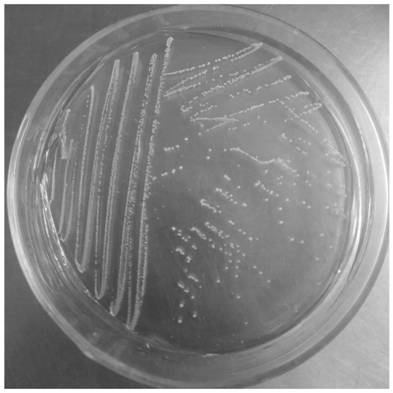
Figure 1 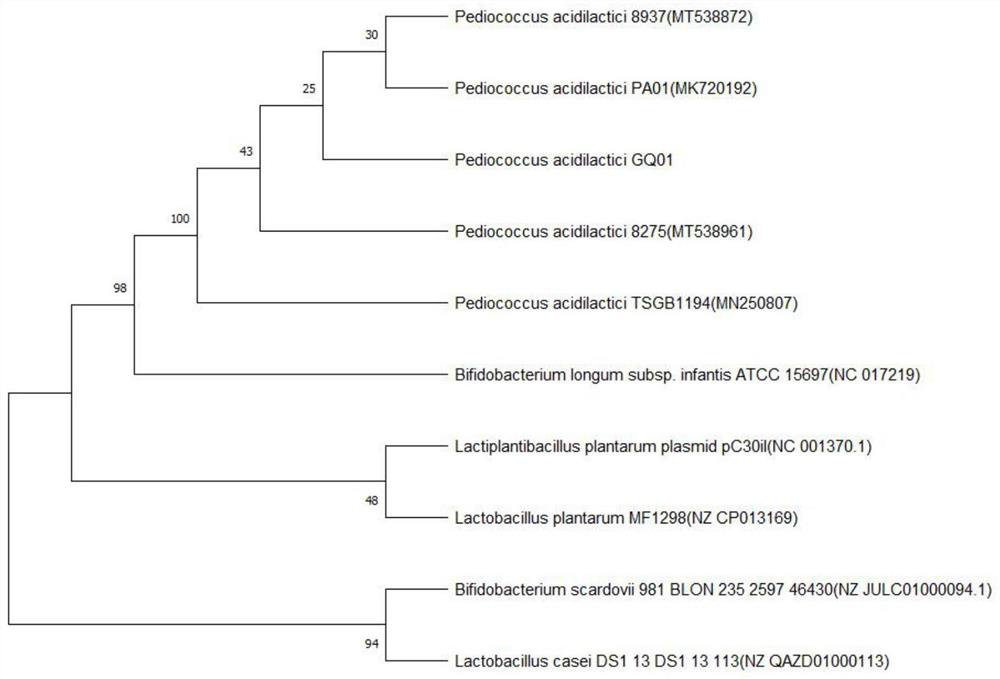
Figure 2 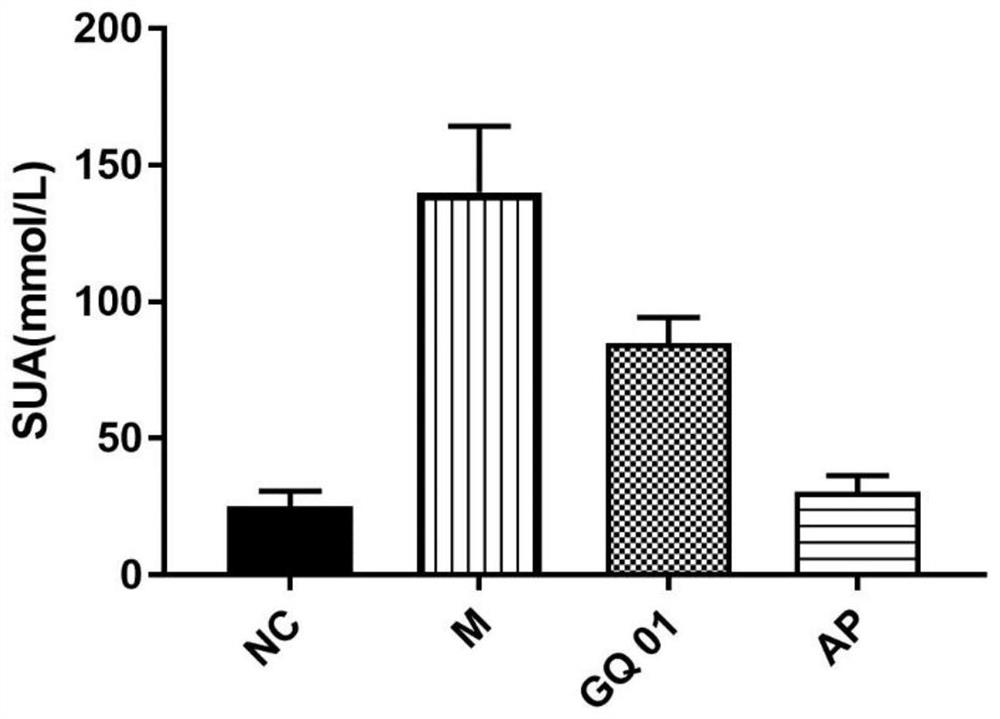
Figure 3
Abstract
Description
technical field
[0001] The invention belongs to the technical field of microbes, in particular to Pediococcus lactis with uric acid-lowering effect derived from Lycium barbarum enzyme and application thereof. Background technique
[0002] In recent years, due to the rapid improvement of my country's social and economic level, the public's living standards and eating patterns have also changed accordingly. The public's intake of seafood, meat, and beer and other high-purine foods has continued to increase, leading to the onset of hyperuricemia The rate is increasing year by year. Hyperuricemia is a metabolic disease caused by excessive production or decreased excretion of uric acid due to purine metabolic disorders. When blood uric acid exceeds the saturation concentration, urate crystals can be deposited directly in joints, cartilage, ureters, etc. , thus causing the aseptic inflammatory reaction of the local tissues of the human body, and then causing gout. Studies have sh...
Examples
Embodiment 1
[0033] Strain Screening:
[0034] Preparation of Lycium barbarum enzyme under natural conditions: Pack Lycium barbarum and sterile water in a sterile environment with a mass ratio of 1:5 in a sterile bottle, place in a cool place, and store sealed for 35 days. Take 1mL enzyme, 10-fold serial dilution to 10 -4 100 μL of each concentration was spread on the MRS selection medium, cultured at 37°C for 48 hours, cultured upside down and observed every 24 hours. A single colony with obvious calcium-dissolving circle was picked with a sterilized inoculation loop, streaked and purified on MRS solid medium, cultured at 37°C for 48 hours, and Pediococcus lactis strain GQ01 was isolated.
Embodiment 2
[0036] Strain identification:
[0037] According to the bacterial strain 01 that embodiment 1 obtains, identification method is as follows:
[0038] Genome extraction and PCR amplification were performed on the obtained single strain, and the PCR amplification products were sequenced. After genetic comparison, the similarity rate with the strain of Pediococcus lactis in Genebank was 99%. Based on the physiological and biochemical identification, it was identified as a strain of Pediococcus lactis and named as Pediococcus lactis GQ01, and the biological properties of the strain were studied. like figure 1 and figure 2 shown.
[0039] (1) Determination of growth curve
[0040] Select the strains at the end of logarithmic growth, inoculate them in MRS liquid medium at an inoculum of 1%, and culture them in a 37°C incubator for 36 hours, take samples every 2 hours and measure the OD 600nm .
[0041] (2) Determination of acid production capacity
[0042]Acid production rate...
Embodiment 3
[0045] Effect of Pediococcus lactis GQ01 intervention on blood uric acid level in mice with hyperuricemia:
[0046] The mouse model of hyperuricemia was established by intraperitoneally injecting the mice with potassium oxonate and supplemented with a high-purine diet. The experimental animals were 24 male Kunming mice, which were raised at room temperature and fed freely. After 1 week of adaptation After feeding, they were randomly divided into normal control group (NC), hyperuricemia model group (M), allopurinol (AP) treatment group and Pediococcus lactis treatment group (GQ01), 6 rats in each group. Except for the normal control group, the mice in the other three groups were intraperitoneally injected with 300 mg / kg·d of potassium oxonate-carboxymethyl cellulose suspension, and gavaged with yeast extract according to the standard of 10 g / kg·d. The mice in the GQ01 group were orally administered at 0.2 mL / d, and the mice in the AP group were orally administered at 30 mg / kg·d...