
Application of eEF-2K protein and coding gene thereof in liver tumor diagnosis and treatment
A technology of eef-2k and 1.eef-2k, applied in gene therapy, antineoplastic drugs, genetic engineering, etc., can solve problems such as unsatisfactory results
Patent Information
- Authority / Receiving Office
- CN · China
- Patent Type
- Applications(China)
- Current Assignee / Owner
- Publication Date
- 2021-08-10
Smart Images
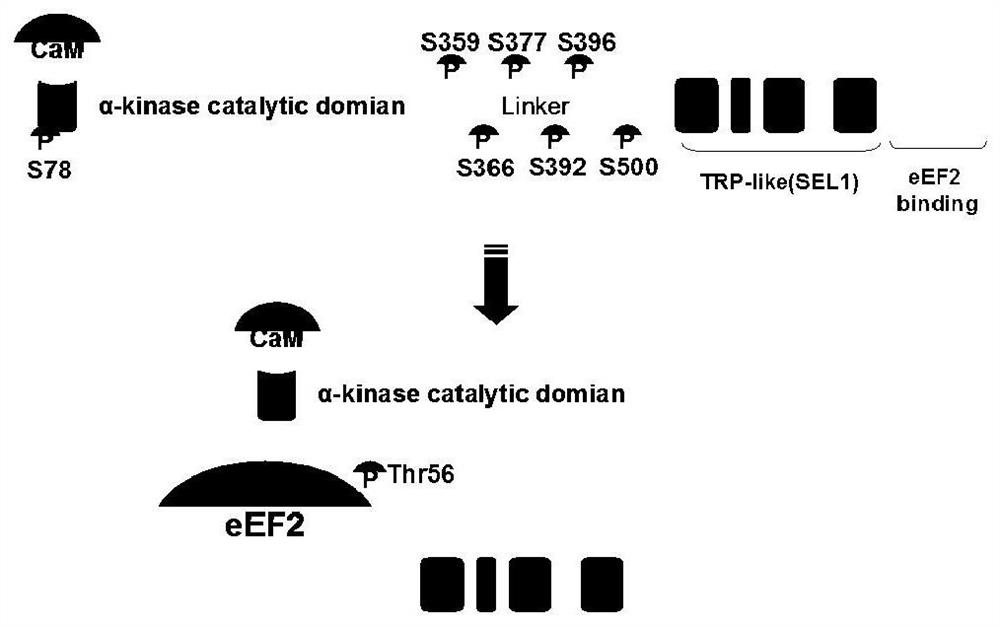
Figure 1 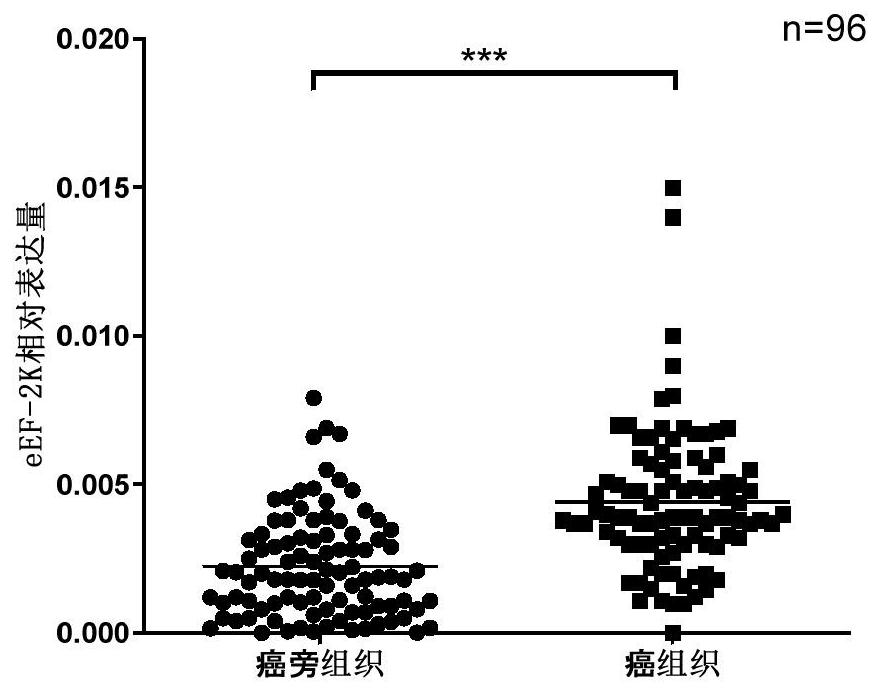
Figure 2 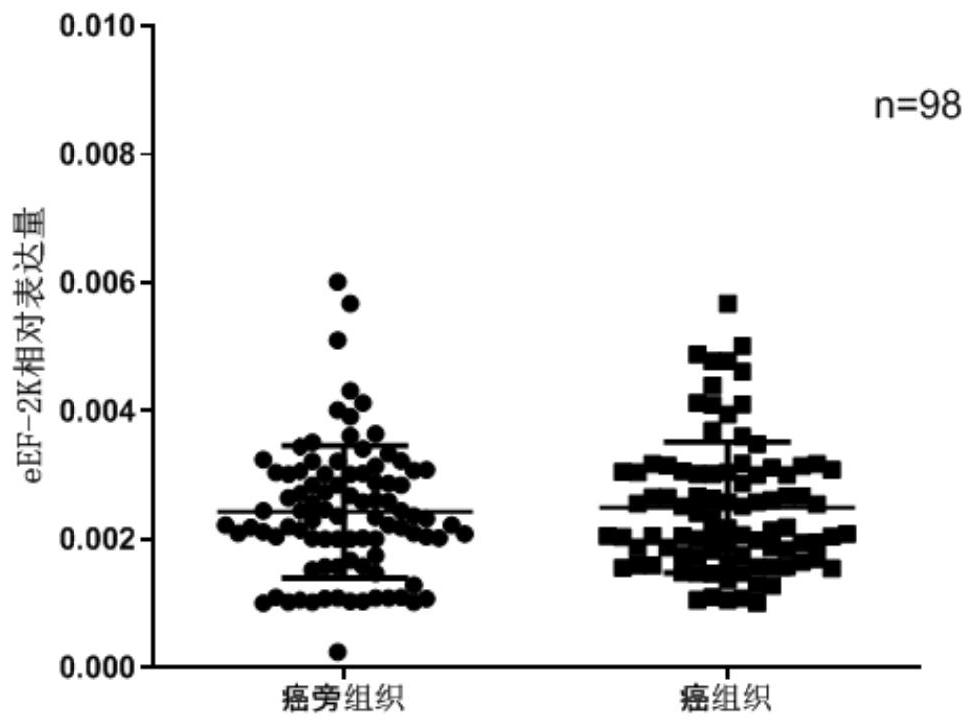
Figure 3
Abstract
Description
technical field
[0001] The invention belongs to the field of biomedicine, and specifically relates to the application of eEF-2K protein and its coding gene in the diagnosis and treatment of liver tumors. Background technique
[0002] Primary hepatocellular carcinoma (Hepatocellular carcinoma, HCC) (hereinafter referred to as liver cancer) is one of the most common malignant tumors in the world. When it is discovered, most patients are already in the middle or late stage, with high mortality and recurrence rates and poor prognosis. Due to the high morbidity and mortality of liver cancer, liver cancer has been paid special attention worldwide, and has become a global and severe public health problem. At present, conventional treatment methods including surgical resection, ablation, molecular targeting, and comprehensive treatment have achieved initial clinical results, but the results are often unsatisfactory.
[0003] The occurrence and development of liver cancer is a compl...
Examples
Embodiment 1
[0078] Example 1, screening of markers
[0079] The cancer tissues and paired paracancerous tissues of 20 patients with liver cancer were collected (all were clinically diagnosed patients in the PLA General Hospital, and the patients all gave informed consent, and all the above specimens were obtained with the consent of the organizational ethics committee), and the differences were discovered through next-generation sequencing analysis. It was found that the expression level of eEF-2K gene in liver cancer tissues was significantly higher than that in paracancerous tissues.
[0080] The eEF-2K gene in the human cDNA is shown as sequence 2 in the sequence listing (the 479th-2656th position is the coding region). The protein encoded by the eEF-2K gene (eEF-2K protein) is shown in sequence 1 of the sequence listing.
Embodiment 2
[0081] Example 2, Verification of differential expression of eEF-2K gene
[0082] 1. Verification of differential expression of eEF-2K gene in cancer tissues and paracancerous tissues of patients with liver cancer
[0083] 1. Collect cancer tissues and paracancerous tissues of 96 patients with liver cancer (all were clinically diagnosed patients in PLA General Hospital, and all patients gave informed consent, and all the above specimens were obtained with the approval of the organizational ethics committee).
[0084] 2. Take the tissue from step 1, extract total RNA and reverse transcribe it into cDNA.
[0085] 3. Using the cDNA obtained in step 2 as a template, the expression of the eEF-2K gene was detected by qPCR (the internal reference gene is the GAPDH gene).
[0086] The primers used to detect the eEF-2K gene are as follows:
[0087] F1 (sequence 3 of the sequence listing): 5'-ATGGCAGACGAAGATCTCATCTTCCGCCTGGAA-3';
[0088] R1 (SEQ ID NO: 4 of the Sequence Listing): 5'...
Embodiment 3
[0105] Example 3, the expression level of eEF-2K gene in the plasma of patients with liver cancer
[0106] 1. Collect plasma samples from 56 healthy people and 88 patients with liver cancer (all were clinically diagnosed patients in the General Hospital of the People's Liberation Army, and the patients gave informed consent, and the acquisition of all the above samples was approved by the organizational ethics committee).
[0107] 2. Take the plasma sample from step 1, extract total RNA and reverse transcribe it into cDNA.
[0108] 3. Using the cDNA obtained in step 2 as a template, the expression of the eEF-2K gene was detected by qPCR (the internal reference gene is the GAPDH gene). Primers are the same as Step 3 of Example 2.
[0109] see results Figure 5 . The results showed that the expression level of eEF-2K gene in the plasma of patients with liver cancer was up-regulated compared with the expression level in the plasma of healthy people, and the difference was stat...