

Positive material and its preparation method, lithium -ion battery
A cathode material, lithium source technology, applied in the field of lithium ion batteries, cathode materials and their preparation, can solve the problems of residual alkali on the surface of ternary cathode materials, battery capacity attenuation, etc., to improve cycle stability and service life, reduce Formation, good biocompatibility
Patent Information
- Authority / Receiving Office
- CN · China
- Patent Type
- Patents(China)
- Current Assignee / Owner
- Publication Date
- 2022-08-05
Smart Images
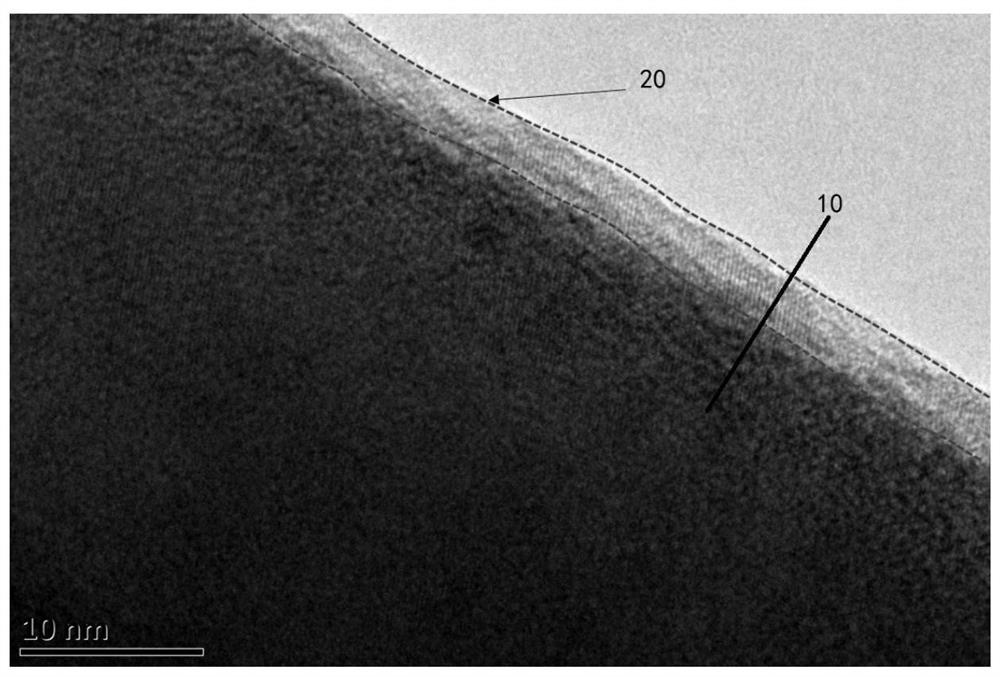
Figure 1 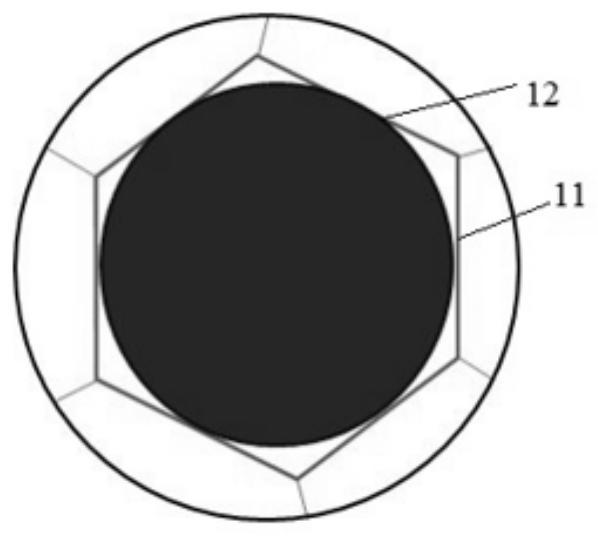
Figure 2 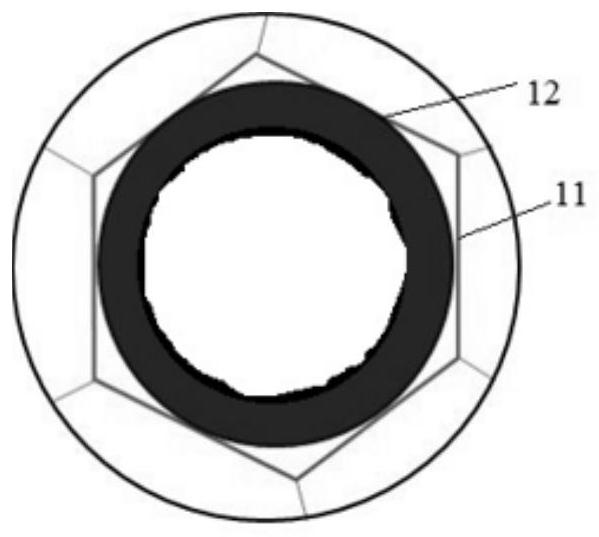
Figure 3
Abstract
Description
technical field
[0001] The present application relates to the technical field of positive electrode materials, in particular, to a positive electrode material, a preparation method thereof, and a lithium ion battery. Background technique
[0002] Lithium-ion batteries are widely used in electric vehicles and consumer electronic products due to their advantages of high energy density, high output power, long cycle life and low environmental pollution.
[0003] Ternary cathode materials have attracted much attention due to their high specific capacity and energy density, but they still have defects in practical applications. Due to the serious problem of residual alkali on the surface of ternary cathode materials, the swelling phenomenon is obvious during long-term cycles, resulting in The capacity of the battery decays. Therefore, how to improve the cycle stability of ternary cathode materials is an urgent problem to be solved. SUMMARY OF THE INVENTION
[0004] In view of...
Examples
preparation example Construction
[0081] The application also provides a preparation method of a positive electrode material, such as Figure 4 As shown, the method includes the following steps S100-S200:
[0082] Step S100, the Ni x Co y M z oxide or Ni x Co y M z The hydroxide and the lithium source are mixed to obtain a mixture, and the mixture is sintered to obtain an active material, wherein 0.8≤x<1, 0<y+z≤0.2, and M is selected from Mn, Al, Cu, Zn, and Cr at least one of;
[0083] Step S200, adding the covalent-organic framework material and the active substance into a solvent to obtain a mixed solution, adding a metal salt to the mixed solution and mixing, then adding 2-methylimidazole, washing with water, stirring, filtering, drying, and sieving , to obtain the positive electrode material.
[0084] In the preparation method provided in this application, the active material obtained by sintering is added to a solvent together with covalent-organic framework materials (COFs), so that the COFs mat...
Embodiment 1
[0115] A preparation method of a positive electrode material, comprising the following steps:
[0116] (1) The nickel-cobalt-manganese precursor Ni 0.8 Co 0.1 Mn 0.1 (OH) 2 After mixing with LiOH in a molar ratio of 1:1.05, dry grinding at 25°C for 1 hour to obtain a mixture;
[0117] (2) The mixture was pre-sintered at 450°C for 5h in a muffle furnace, ground to fine particles, and then transferred to a tube furnace for high-temperature sintering in an oxygen atmosphere for 15h. The sintering temperature was controlled at 750°C, and the sintered active material was ground to The average particle size is 15μm;
[0118] (3) prepare a reaction kettle device that can be stirred and heated, add 0.3g of covalent organic framework material (COF-1) and 10g of active material while stirring to 200ml of deionized water, and after heating for 30min, then in the reaction kettle Add 0.15g zinc acetate dihydrate, 0.05g cobalt acetate tetrahydrate, stir evenly, slowly add 0.056g 2-meth...
Embodiment 2
[0122] A preparation method of a positive electrode material, comprising the following steps:
[0123] (1) The nickel-cobalt-manganese precursor Ni 0.8 Co 0.1 Mn 0.1 (OH) 2 After mixing with LiOH in a molar ratio of 1:1.03, dry grinding at 30°C for 1.5 hours to obtain a mixture;
[0124] (2) The mixture was placed in a muffle furnace at 470°C for pre-sintering for 5h, ground to fine particles, and then transferred to a tube furnace for high-temperature sintering in an oxygen atmosphere for 13h. The sintering temperature was controlled at 720°C, and the sintered active material was ground to The average particle size is 13 μm;
[0125] (3) prepare a reactor device that can be stirred and heated, add 0.4g of covalent organic framework material (COF-102) and 10g of active material while stirring in 400ml of deionized water, after heating for 30min, then in the reactor Add 0.13g of zinc acetate dihydrate, 0.05g of cobalt acetate tetrahydrate, stir evenly, slowly add 0.05g of ...