
2-heteroaryl aminoquinazolinone derivative
a technology of aminoquinazolinone and heteroaryl aminoquinazolinone, which is applied in the field of 2heteroaryl aminoquinazolinone derivative, can solve the problems of high risk of complication for epilepsy patients, unsatisfactory side effects, etc., and achieves the effect of reducing the risk of epilepsy
Patent Information
- Authority / Receiving Office
- US · United States
- Patent Type
- Patents(United States)
- Current Assignee / Owner
- Publication Date
- 2022-08-02
Smart Images
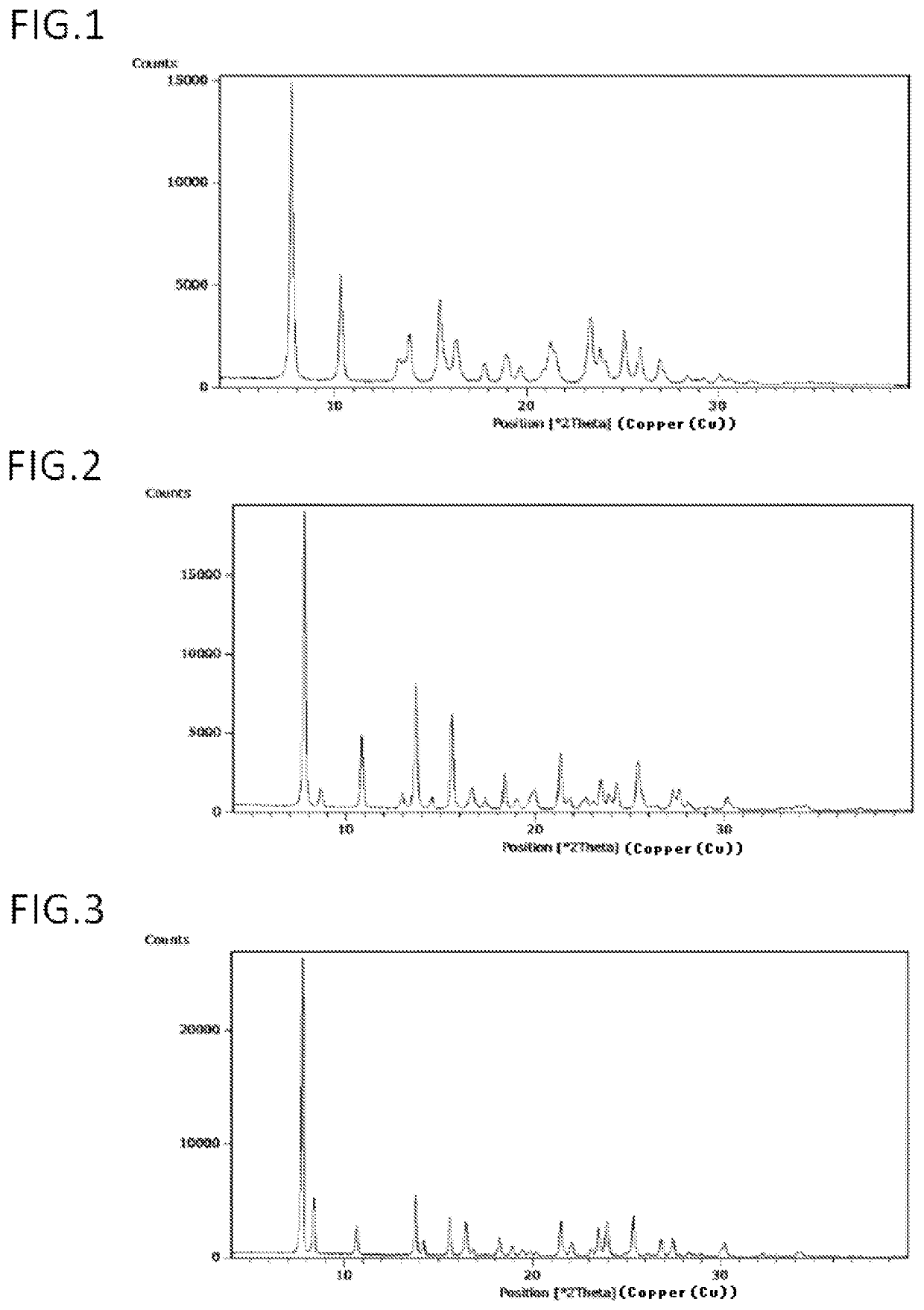
Figure 1 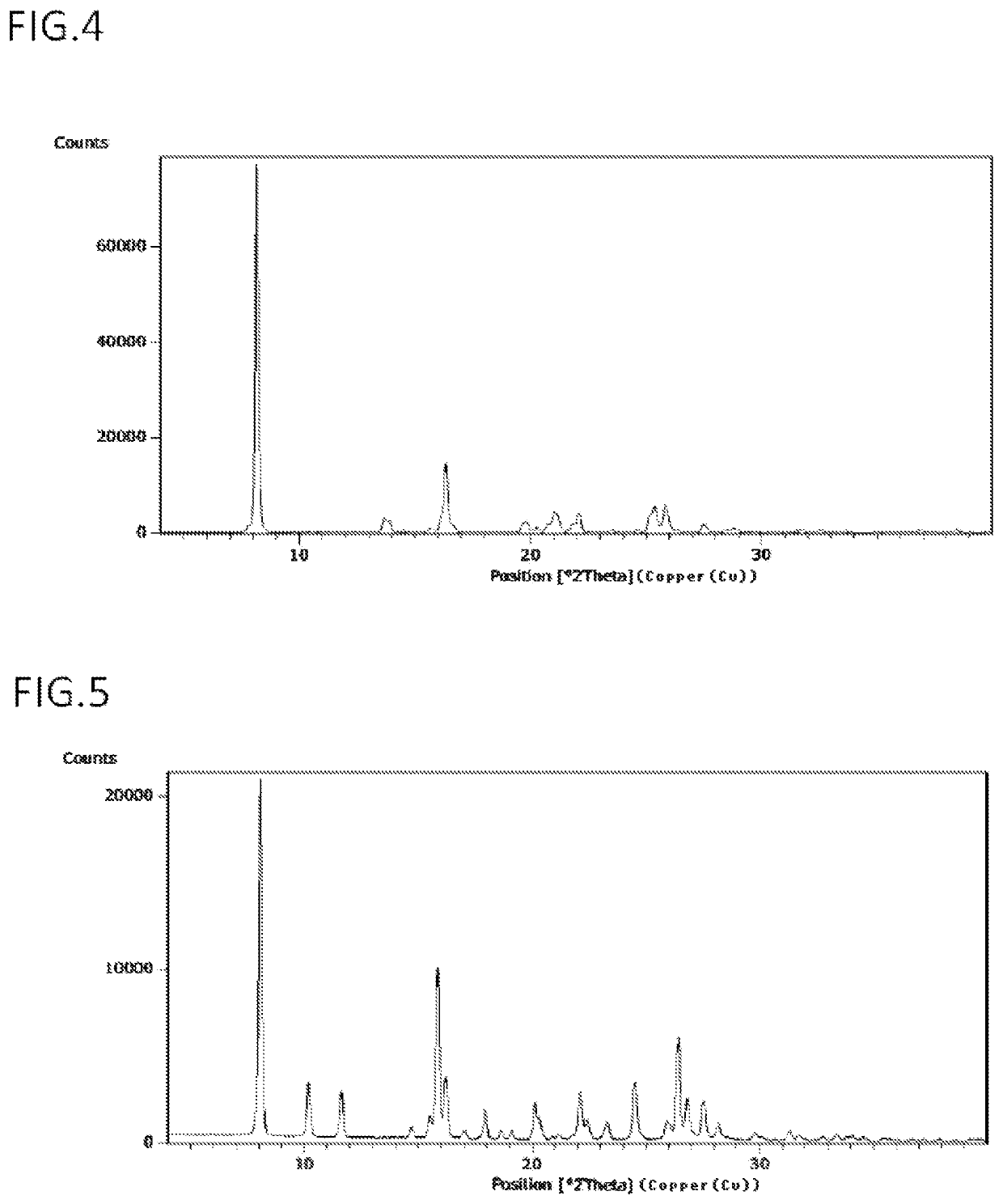
Figure 2 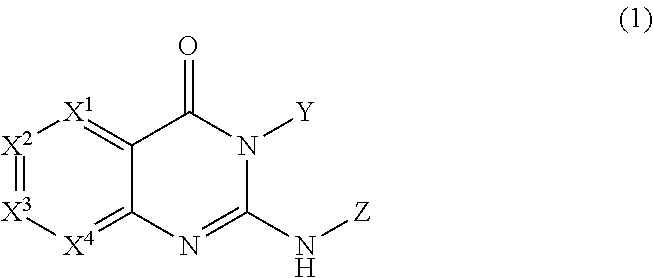
Figure 3
Abstract
Description
CROSS REFERENCE TO RELATED APPLICATIONS
[0001] This application is a continuation of and claims the benefits of priority to U.S. application Ser. No. 17 / 433,193, filed Aug. 23, 2021, which is a national stage application of PCT / JP2021 / 016498, filed Apr. 23, 2021, which claims the benefits of priority to Japanese patent application 2020-077487, filed Apr. 24, 2020. The entire contents of all three applications are incorporated by reference.TECHNICAL FIELD
[0002] The present disclosure relates to a 2-heteroaryl aminoquinazolinone derivative that is useful as a medicament having an effect of suppressing neural circuit hyperexcitation, a pharmaceutically acceptable salt thereof, and a pharmaceutical composition comprising the same as an active ingredient.BACKGROUND ART
[0003] It is known that abnormal excitation of the neural circuit of the brain is associated with various central nervous system diseases. For example, epilepsy is a chronic disease with repeated paroxysmal motor, conscious, or...
Examples
reference example 1
[0586]A mixture of compound A3 (2.8 g), phosphorus pentachloride (3.7 g), and phosphorus oxychloride (21 ml) was stirred for 16 hours at 130° C. The reaction solution was poured into ice water. The resulting solid was filtered out and washed with water. The crude product was dissolved in ethyl acetate and washed with saturated saline and subsequently with saturated sodium bicarbonate water. The organic layer was dried with anhydrous magnesium sulfate, filtered, and concentrated under reduced pressure to obtain Reference Example 1 (2.0 g).
[0587]1H NMR (300 MHz, CDCl3) δ: 7.30-7.35 (2H, m), 7.50-7.64 (4H, m), 7.79-7.92 (2H, m), 8.30 (1H, dd, J=7.9, 1.4 Hz).
reference example 2
2-amino-5-cyano-N-phenylbenzamide
[0588]
[0589]Aniline (1.15 g), N,N-diisopropylethylamine (1.75 g), and HATU (4.69 g) were added to a DMF (12 ml) solution of 2-amino-5-cyanobenzoic acid (2.00 g). The mixture was stirred for 20 hours at room temperature. Water was added to the reaction solution, and the eluted solid was filtered out to obtain Reference Example 2 (2.78 g). LC-MS (measurement condition A), m / z; 238 (M+H)+ESI, Rt; 0.76.
reference example 3
3-fluoro-5-isothiocyanatopyridine
[0590]
[0591]1,1′-thiocarbonylbis(pyridin-2(1H)-one) (1.15 g) was added to a dichloromethane (10 ml) solution of 5-fluoropyridin-3-amine (0.56 g). The mixture was stirred for 1 hour at room temperature. The reaction solution was purified by silica gel column chromatography (eluent; hexane: ethyl acetate) to obtain Reference Example 3 (0.5 g).
[0592]1H-NMR (400 MHz, DMSO-d6) δ: 8.60-8.61 (2H, m), 8.03 (1H, d, J=9.6 Hz).