
Phospholipid-based pharmaceutical formulations and methods for producing and using same
a technology of phospholipids and pharmaceutical formulations, applied in the field of phospholipid-based pharmaceutical formulations, can solve the problems of difficult preparation of pharmaceutical applications, complicated processing steps, and inability to inject intravenous formulations, and achieve enhanced dilution ability, greater physiological compatibility, and subject to tolerability
Patent Information
- Authority / Receiving Office
- US · United States
- Patent Type
- Applications(United States)
- Current Assignee / Owner
- Publication Date
- 2006-10-12
- Estimated Expiration
- Not applicable · inactive patent
Smart Images
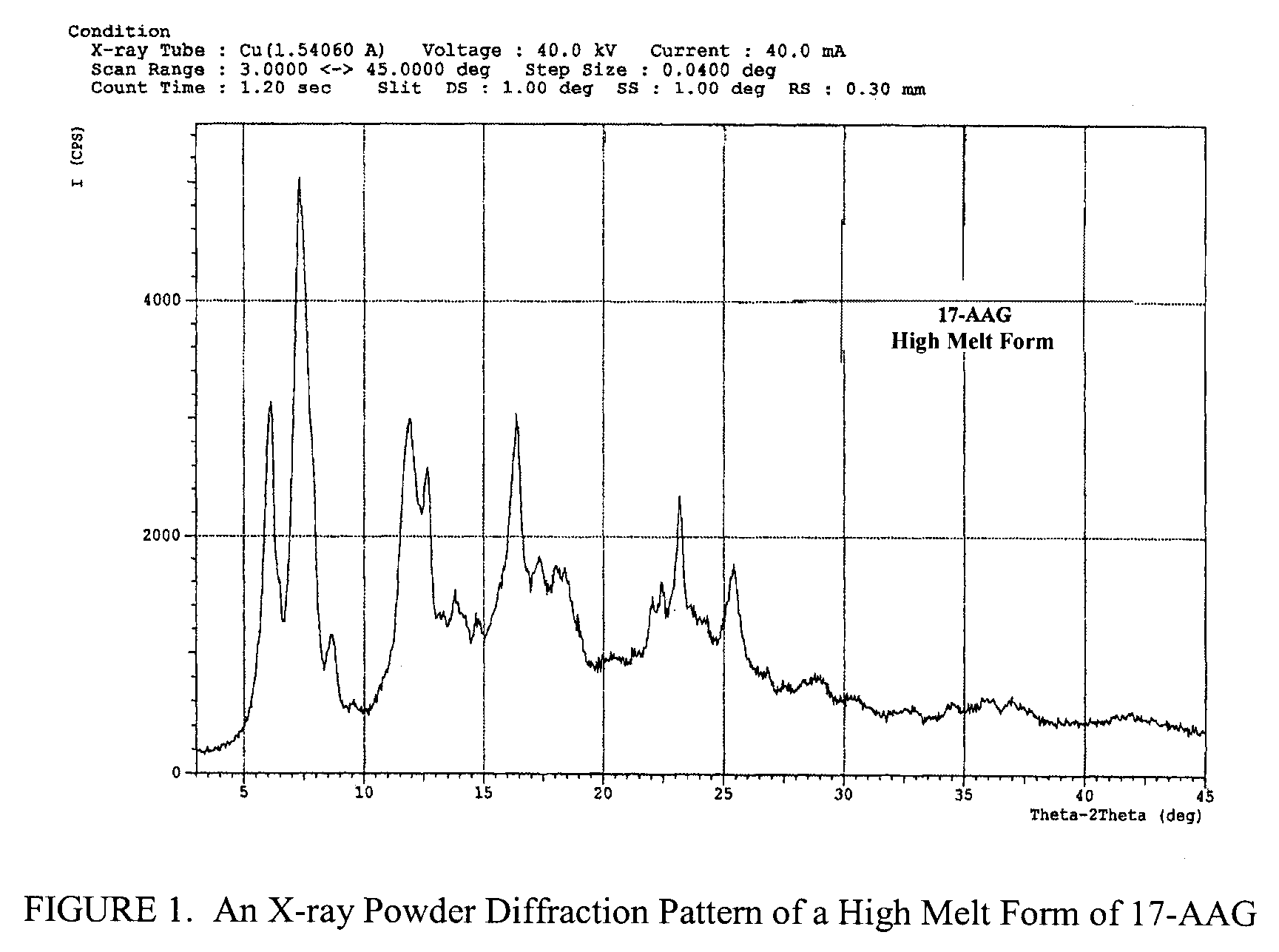
Figure 1 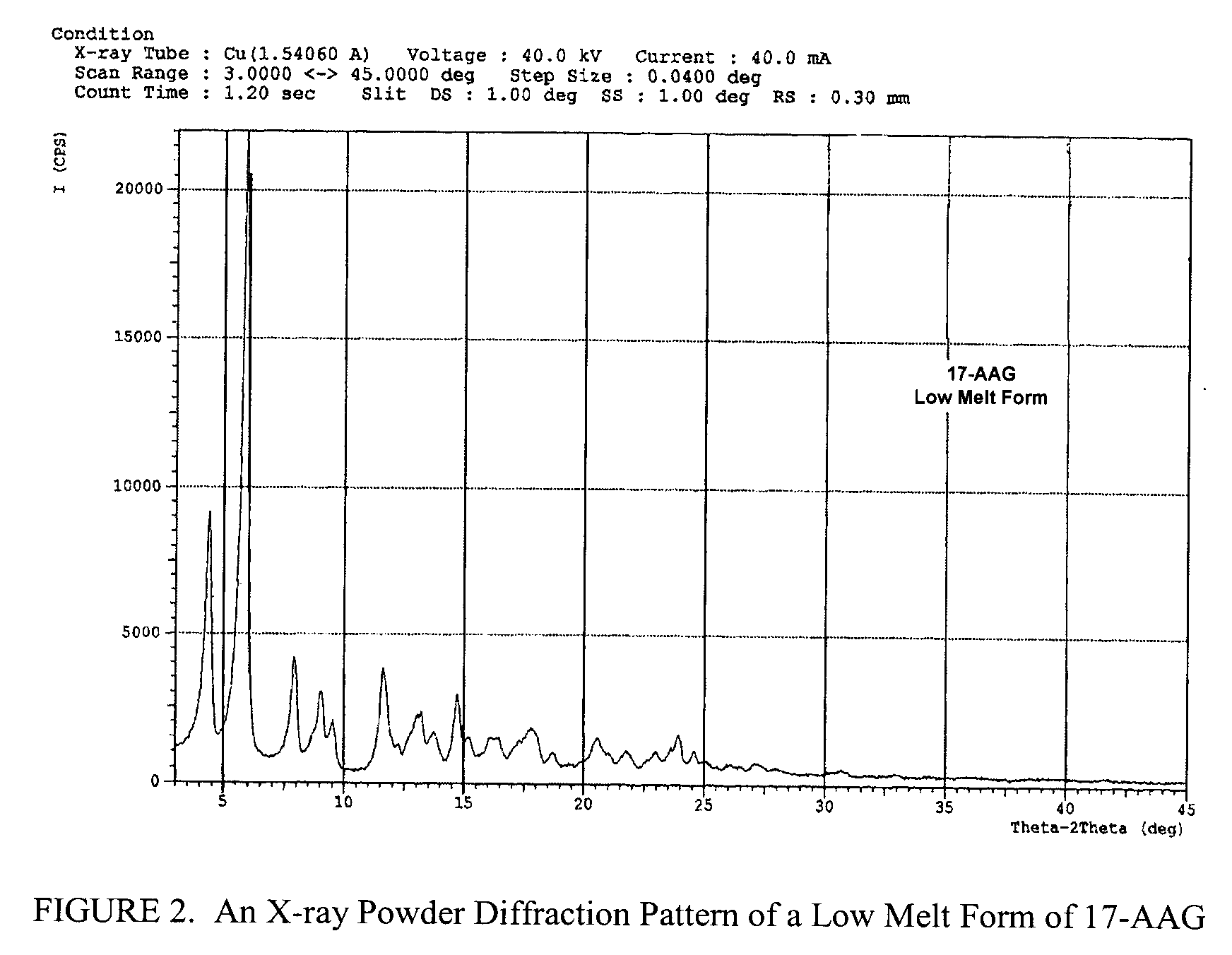
Figure 2 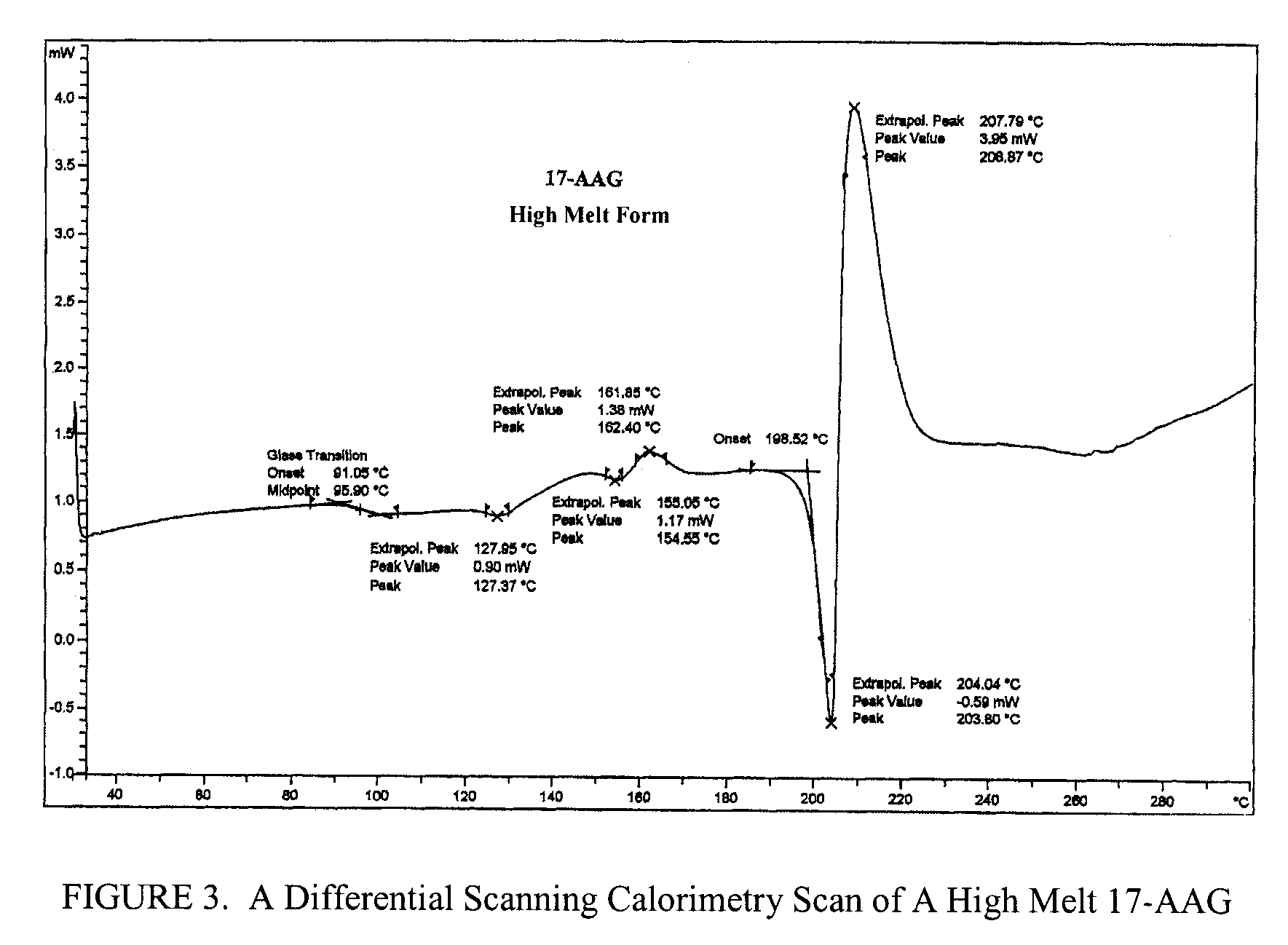
Figure 3
Abstract
Description
CROSS-REFERENCE
[0001] This application claims the benefit of U.S. Provisional Application No. 60 / 669,591, filed Apr. 7, 2005, which is incorporated herein by reference in its entirety.FIELD OF INVENTION
[0002] The invention relates in general to pharmaceutical formulations and methods of producing and using the same; more particularly, the invention relates to phospholipid formulations of ansamycins, which are substantially devoid of medium and long chain triglycerides; more particularly, to phospholipid formulations of 17-allylamino-17-desmethyl-geldanamycin (17-AAG). BACKGROUND
[0003] The following description includes information that may be useful in understanding the present invention. It is not an admission that any of the information provided herein is prior art or relevant to the presently claimed inventions, or that any publication specifically or implicitly referenced is prior art.
[0004] Ansamycins are antibiotic molecules characterized by an “ansa” structure which compr...
Examples
example 1
Preparation of 17-AAG
[0098] To 45.0 g (80.4 mmol) of geldanamycin in 1.45 L of dry THF in a dry 2 L flask was added drop-wise over 30 minutes 36.0 mL (470 mmol) of allyl amine in 50 mL of dry THF. The reaction mixture was stirred at room temperature under nitrogen for 4 hr at which time TLC analysis indicated the reaction was complete [(GDM: bright yellow: Rf=0.40; (5% MeOH-95% CHCl3); 17-AAG: purple: Rf=0.42 (5% MeOH-95% CHCl3)]. The solvent was removed by rotary evaporation and the crude material was slurried in 420 mL of H2O:EtOH (90:10) at 25° C., filtered and dried at 45° C. for 8 hr to give 40.9 g (66.4 mmol) of 17-AAG as purple crystals (82.6% yield, >98% pure by HPLC monitored at 254 nm). m.p. 206-212° C. 1H NMR and HPLC are consistent with the desired product.
example 2
Preparation of a Low Melt Form of 17-AAG
[0099] The crude 17-AAG from Example 1 was dissolved in 800 mL 2-propyl alcohol (isopropanol) at 80° C. and then cooled to room temperature. Filtration followed by drying at 45° C. for 8 hr gave 44.6 g (72.36 mmol) of 17-AAG as purple crystals (90% yield, >99% pure by HPLC monitored at 254 nm). m.p.=147-153° C. 1H NMR and HPLC are consistent with the desired product.
example 3
Solvant Stability of a Low Melt Form of 17-AAG
[0100] The 17-AAG product from Example 2 was dissolved in 400 mL of H2O:EtOH (90:10) at 25° C. Filltration followed by aging at 45° C. for 8 hr gave 42.4 g (68.6 mmol) of 17-AAG as purple crystals (95% yield, >99% pure by HPLC monitored at 254 nm). m.p.=147-175° C. 1H NMR and HPLC are consistent with the desired product.