
Polymer, resist composition and patterning process
a technology of composition and polymer, applied in the field of polymer, resist composition and patterning process, can solve the problems of pattern collapse, difficult use as resist base resin, and the likelihood of polymer swelling during development, and achieve the effect of reducing the influence of swelling due to immersion, low affinity, and high affinity
Patent Information
- Authority / Receiving Office
- US · United States
- Patent Type
- Applications(United States)
- Current Assignee / Owner
- Publication Date
- 2007-05-03
Smart Images
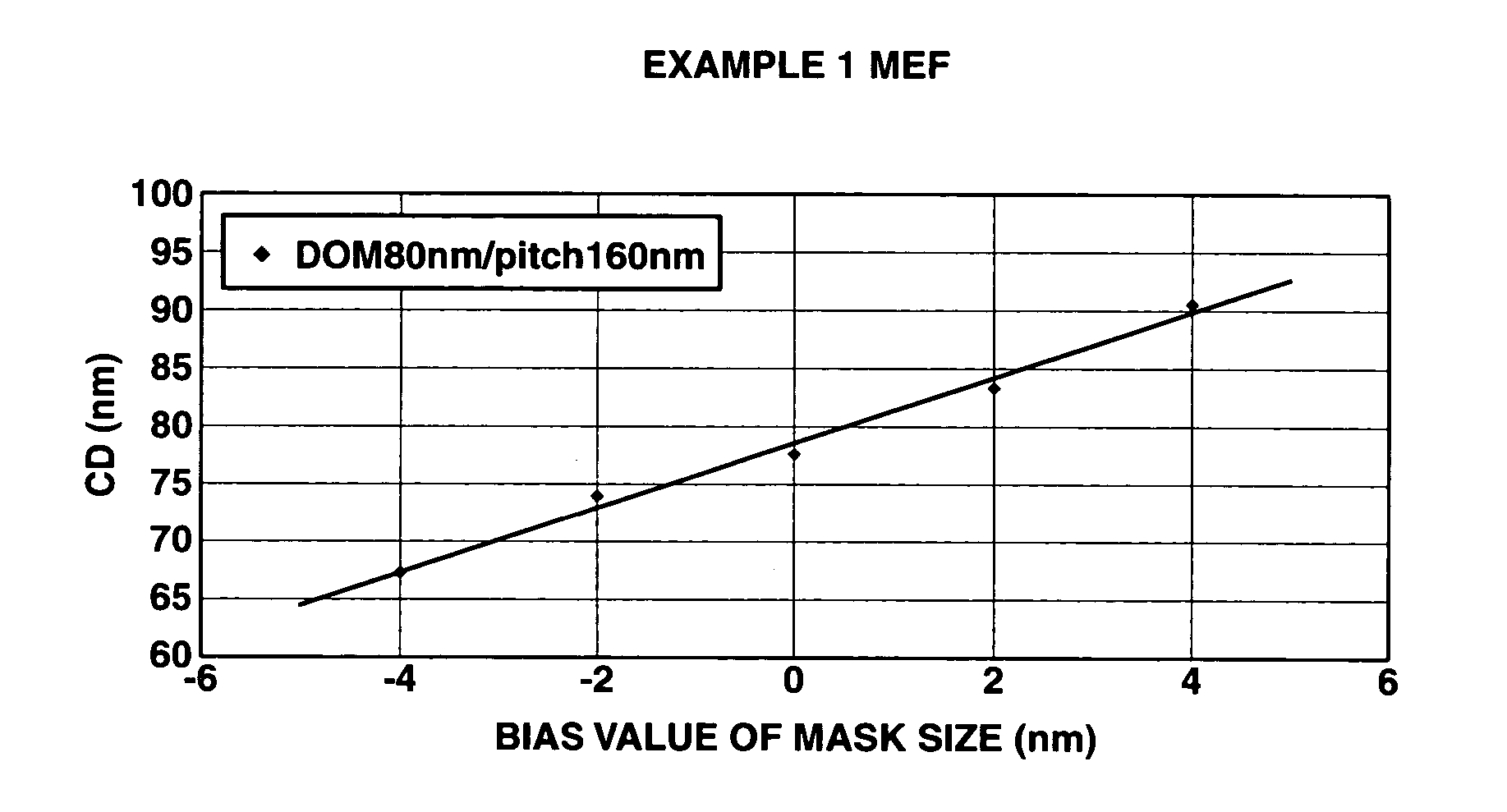
Figure 1 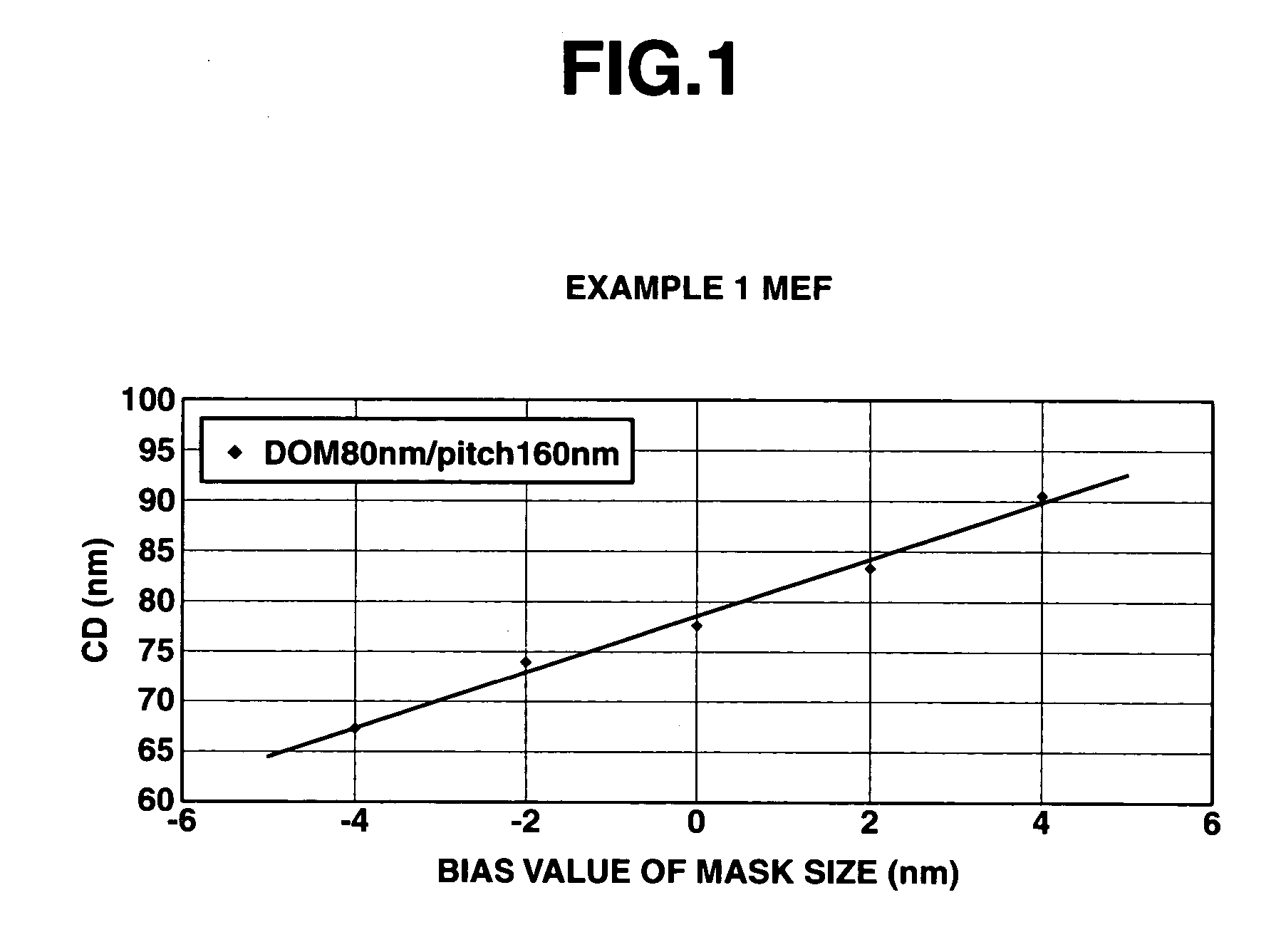
Figure 2 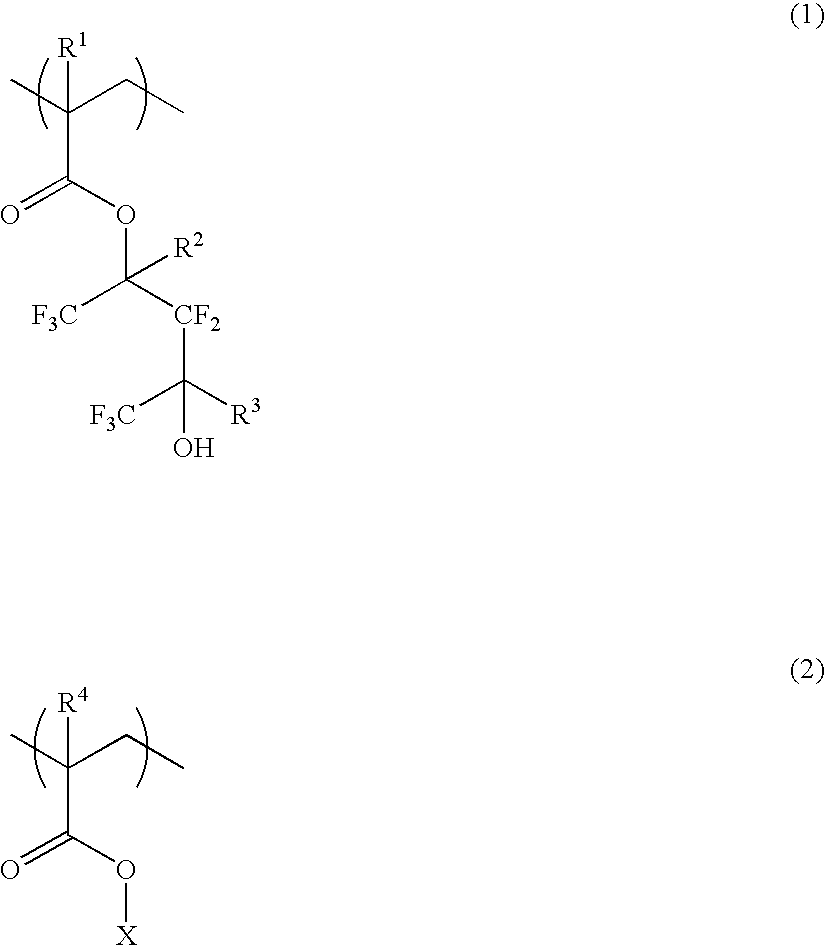
Figure 3
Abstract
Description
CROSS-REFERENCE TO RELATED APPLICATION
[0001] This non-provisional application claims priority under 35 U.S.C. §119(a) on Patent Application No. 2005-316400 filed in Japan on Oct. 31, 2005, the entire contents of which are hereby incorporated by reference.
[0002] This invention relates to (1) novel polymers suitable for use as the base resin in resist compositions for lithographic micropatterning, (2) resist compositions comprising the same, and (3) a patterning process using the resist compositions. BACKGROUND OF THE INVENTION
[0003] In the drive for higher integration and operating speeds in LSI devices, the pattern rule is made drastically finer. The rapid advance toward finer pattern rules is grounded on the development of a projection lens with an increased NA, a resist material with improved performance, and exposure light of a shorter wavelength. In particular, the change-over from i-line (365 nm) to shorter wavelength KrF laser (248 nm) brought about a significant innovation,...
Examples
synthesis example 1
Monomer Synthesis Example 1
Synthesis of 2,2,4,4,4-pentafluoro-3-hydroxy-1,3-bis(trifluoromethyl)butyl methacrylate
[0395]
[1-1] Synthesis of 1,1,1,3,3,5,5,5-octafluoro-2-(trifluoromethyl)pentane-2,4-diol
[0396] With stirring in a nitrogen blanket, a mixture of 109 g of 1,1,1,3,3,3-hexafluoro-2-propanol and 500 g of tetrahydrofuran was cooled at 5° C. To the mixture, 500 mL of a solution of 2.71M n-butyllithium in n-hexane was added dropwise, followed by stirring for 2 hours at 5° C. 119 g of hexafluoroacetone was admitted to the reaction solution, which was stirred for 3 hours at 5° C. A mixture of 37.0 g of sodium borohydride and 800 g of water was added dropwise to the reaction mixture, which was stirred for 10 hours at room temperature. 330 g of 20% aqueous hydrochloric acid was added to the reaction mixture to quench the reaction, followed by conventional work-up steps of washing, drying and concentration to give a crude product. It was purified by silica gel column chromatograp...
synthesis example 2
Monomer Synthesis Example 2
Synthesis of 2,2,4,4,4-pentafluoro-3-hydroxy-1,3-bis(trifluoromethyl)butyl acrylate
[0398]
[0399] The procedure of Monomer Synthesis Example 1 was repeated except that acrylic acid chloride was used instead of the methacrylic acid chloride in stage [1-2], yielding 2,2,4,4,4-pentafluoro-3-hydroxy-1,3-bis(trifluoromethyl)butyl acrylate.
synthesis example 3
Monomer Synthesis Example 3
Synthesis of 2,2,4,4,4-pentafluoro-3-hydroxy-1-methyl-1,3-bis(trifluoromethyl)butyl methacrylate
[0400]
[0401] The procedure of Monomer Synthesis Example 1 was repeated except that a tetrahydrofuran solution of methylmagnesium chloride was used instead of the mixture of sodium borohydride and water in stage [1-1], yielding 2,2,4,4,4-pentafluoro-3-hydroxy-1-methyl-1,3-bis(trifluoromethyl)butyl methacrylate.