
Antimicrobial hand wash formulations
Patent Information
- Authority / Receiving Office
- US · United States
- Current Assignee / Owner
- Publication Date
- 2007-11-22
- Estimated Expiration
- Not applicable · inactive patent
Smart Images
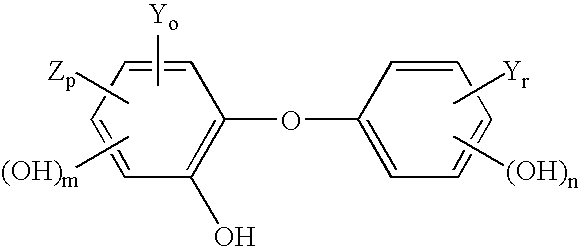
Figure 1 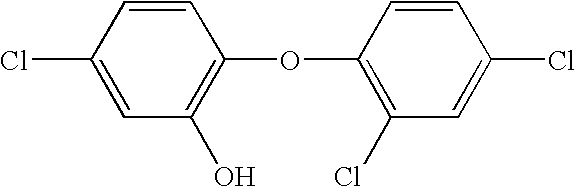
Figure 2 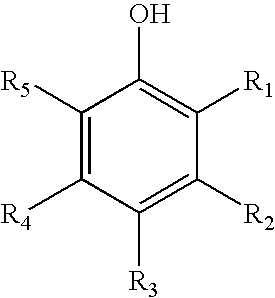
Figure 3
Abstract
Description
TECHNICAL FIELD OF THE INVENTION
[0001] The present invention resides in the art of antimicrobial hand wash formulations. More particularly, the present invention relates to a highly efficacious antimicrobial hand wash containing relatively low levels of skin-irritating surfactants and active ingredients.BACKGROUND OF THE INVENTION
[0002] Most antimicrobial hand wash formulations exhibiting broad spectrum activity contain surfactants, active ingredients, or both. Surfactants are employed, in part, to help solubilize the active ingredients, and to make them useful in the formulation. The surfactants are typically selected from anionic, non-ionic, amphoteric, quaternary ammonium, and amine oxide surfactants. As is generally appreciated, all of these classes of surfactants have their positive and negative properties. For example, quaternary ammonium compounds are compatible with phenol-based active ingredients such as 2,3,4′-trichloro-2′-hydroxydiphenylether (triclosan), 2,2′-dihydroxy-5,5...
Examples
example one
[0029]The use of amphoteric surfactants in antimicrobial hand washes containing triclosan, and / or p-chloro-m-xylenol, is a rarity because these amphoteric surfactants normally deactivate the active ingredients. Unexpectedly, it has been found that there are a few amphoteric surfactants, more specifically zwitterionic surfactants, that do not inhibit the antimicrobial properties of the active ingredient. The following sample creation and testing will demonstrate this discovery.
[0030]Multiple hand wash test samples were made in accordance with the formulation provided directly below, wherein the zwitterionic surfactant was changed for each sample. The zwitterionic surfactants employed, as well as the efficacy of the resultant hand wash in reducing Escherichia coli, are reflected in Table 1. The process for making the samples was as follows: the active ingredient was added to the surfactant and mixed until all of the solid active ingredient dissolved into the surfactant. If required, h...
example two
[0032]The efficacy of a particular hand wash in accordance with this invention was tested against multiple microorganisms and strains thereof. The organisms tested varied greatly, including bacterial, yeast and fungal species, and are of the type most commonly found in settings where clean, sanitized hands are most desired. The test procedure was as follows: the hand wash was diluted to 99% volume / volume of the original concentration, and this new sample was then added to a second solution containing the microorganism to be tested. This inoculation occurred at 15 and 30 seconds. The samples were then plated onto agar plates and incubated. The log reduction was calculated by comparing the values between a non-inoculated sample and the sample inoculated with the hand wash.
[0033]The hand wash contained the following ingredients:
ChemicalAmountProcessed Waterq.s. to100 gDipropylene Glycol3.0 gHuntsman (Dipropylene Glycol-LO)Triclosan0.3 gCiba Specalities (Irgasan DP300)PEG-5 Oleammonium0...
example three
[0035]As disclosed, hand washes made in accordance with the particularly preferred embodiments of this invention have a reduced level of solids. To show this, the solids content of the hand wash formulation of Example Two, above, was compared with competitive antimicrobial hand washes. Competitive antimicrobial hand washes were tested for solids content by placing a weighed sample into a 50° C. oven for 48 hours to ensure all the volatile components were removed. After the 48 hours the samples were removed from the oven and allowed to cool to room temperature. Then the samples were weighed a second time and the percent solids calculated from the two values.
Percentsolids=1-(MassStart-MassLeft)MassStart
TABLE THREEHand WashPercent Solids (% w / w)Dial Complete - Foaming Hand Wash27.96Dial Complete - HCPHW31.88Flora Free15.50Acute-Kare12.86Foam Care12.68Bacti-Stat16.27Medi-Scrub17.74Bacti-Foam15.70Endure 25018.74Keystone18.62Average:18.95
[0036]The total solids amount of the hand wash of E...