
Anode active material, anode including the anode active material, method of manufacturing the anode, and lithium battery including the anode
a lithium battery and active material technology, applied in the field of anode active material, anode including anode active material, method of manufacturing anode, lithium battery including anode, can solve the problems of non-carbonaceous materials, cycle lifetime characteristics of non-carbonaceous materials, poor stability, etc., and achieve the effect of improving cycle lifetime characteristics
Patent Information
- Authority / Receiving Office
- US · United States
- Patent Type
- Applications(United States)
- Current Assignee / Owner
- Publication Date
- 2010-06-03
- Estimated Expiration
- Not applicable · inactive patent
Smart Images
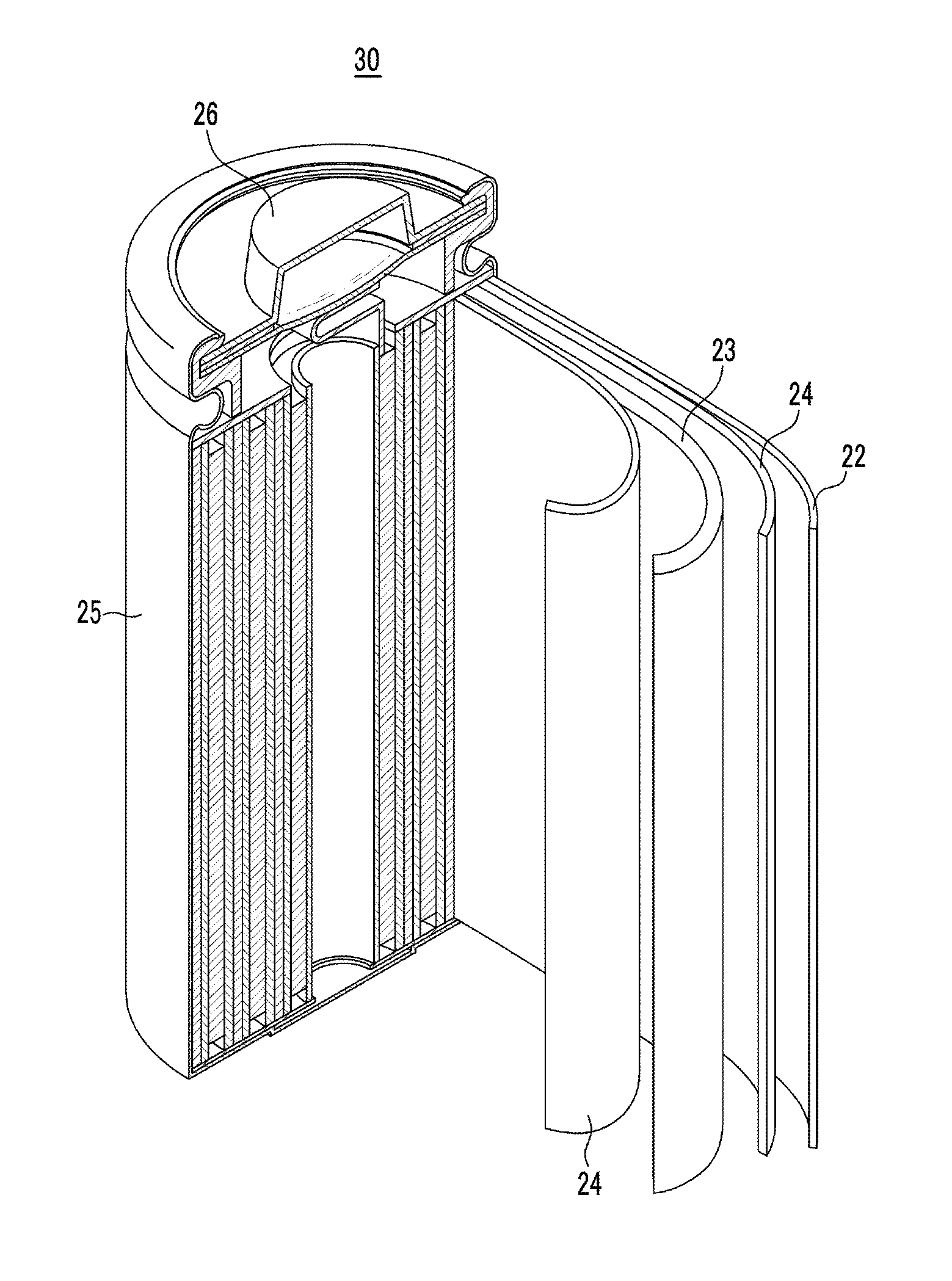
Figure 1 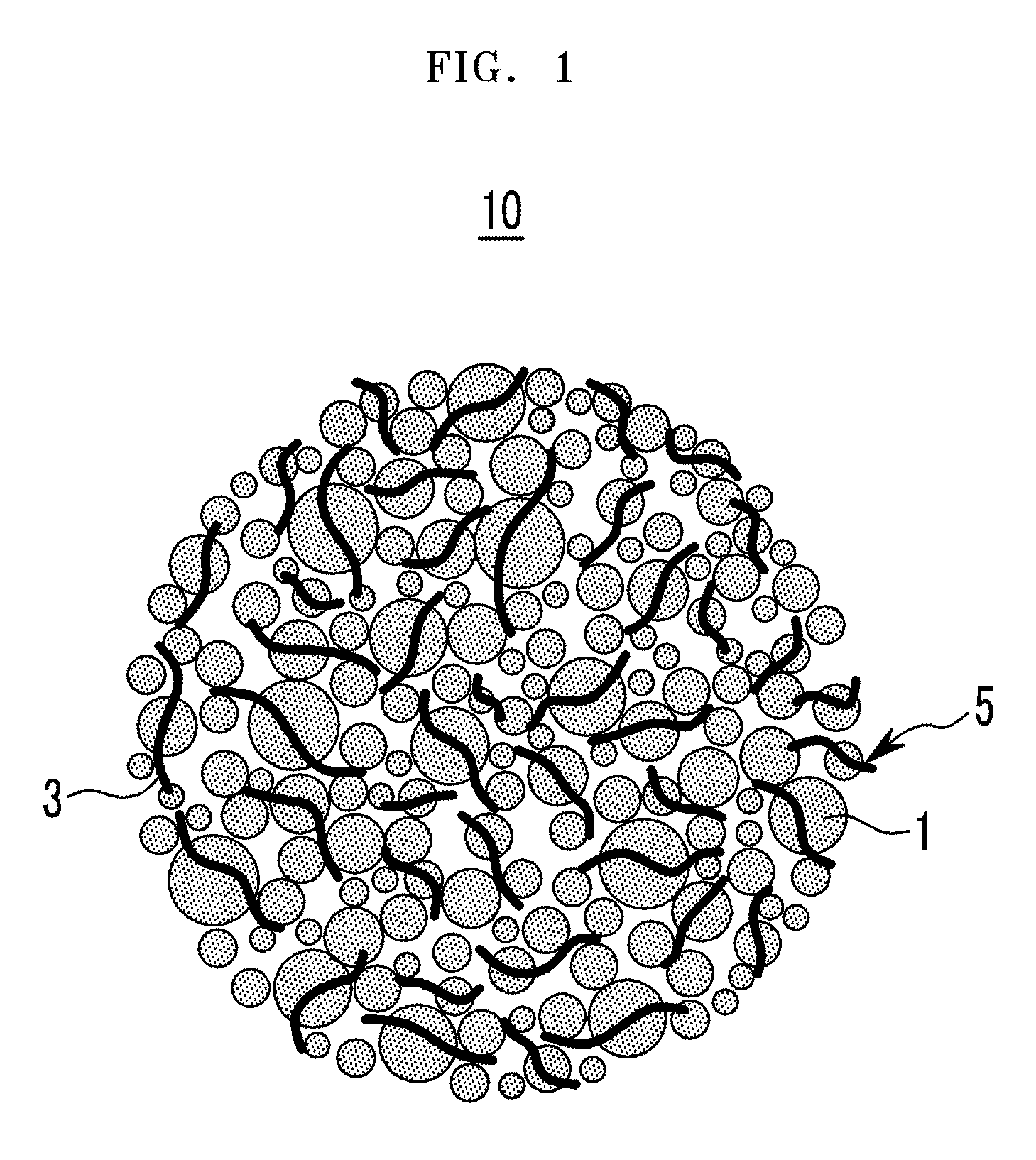
Figure 2 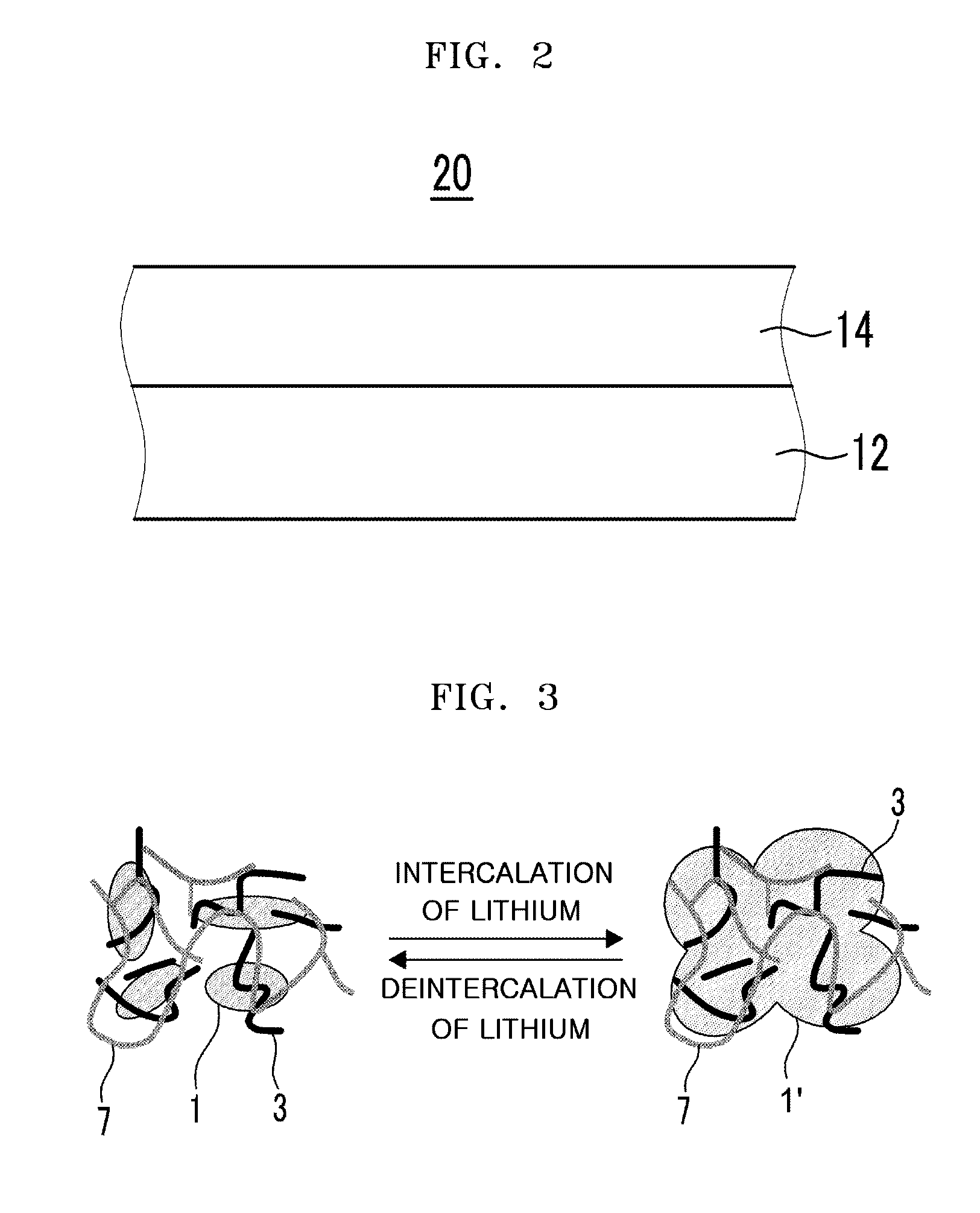
Figure 3
Abstract
Description
CROSS-REFERENCE TO RELATED APPLICATION
[0001] This application claims the benefit of Korean Patent Application No. 10-2008-0120863, filed on Dec. 2, 2008, in the Korean Intellectual Property Office, the disclosure of which is incorporated herein, by reference.BACKGROUND
[0002] 1. Field
[0003] The present teachings relate to an anode active material, an anode including the anode active material, a method of manufacturing the anode, and a lithium battery including the anode.
[0004] 2. Description of the Related Art
[0005] Lithium batteries are widely used as a power source for portable electronic devices. Lithium batteries use an organic electrolyte and have twice the discharge voltage of a conventional alkali battery. Accordingly, lithium batteries also have a higher energy density.
[0006] As anode active materials for lithium batteries, lithium-transition metal oxides, such as LiCoO2, LiMn2O4, LiNi1−xCOxO2 (0≦x≦1), which have a structure that allows for the reversible intercalation of lithium i...
Examples
example 1
[0083]Silicon (Si) having an average particle diameter of 4 μm and carbon nanotubes were mixed in a mixing ratio of 90:10%, by weight, in ethanol, using a ball mill, and then dried to prepare an anode active material. Herein, the mixing process was performed at a speed of 55 Hz, for 1 hour. The drying process was performed at 85° C., for 24 hours. The carbon nanotubes had an average diameter of 1 nm and an aspect ratio of 1000 or greater.
[0084]The resulting anode active material included secondary particles that were formed by the agglomeration of primary nanoparticles including Si particles bound to the carbon nanotubes. Herein, the average particle size of the Si particles was 14 nm, as calculated using X-ray diffraction (XRD) and the Scherrer equation.
[0085]Next, the anode active material, artificial graphite as a conducting agent, and polyethyleneimine as a binder were mixed in water, to prepare an anode active material composition in slurry form. Herein, the proportions of the ...
example 2
[0087]An anode was manufactured in the same manner as in Example 1, except that no conducting agent was used, and the proportions of the anode active material and the binder were 85% by weight (76.5% by weight of Si and 8.5% by weight of carbon nanotubes) and 15% by weight, respectively, excluding the solvent.
example 3
[0104]An anode was manufactured in the same manner as in Example 1, except that a mixture of Si, having an average particle size of 4 μm, and carbon nanotubes, in a ratio of 80%:20% by weight, was used.