
Gamma ray detector and gamma ray reconstruction method
a gamma ray and detector technology, applied in the field of nuclear medicine diagnosis equipment, can solve the problems of increasing cost and practically impossible realization of laminated structures, and achieve the effects of reducing the amount of radiation exposure, increasing the sensitivity of gamma ray detection, and reducing the amount of radioactive substances
Patent Information
- Authority / Receiving Office
- US · United States
- Current Assignee / Owner
- Publication Date
- 2010-12-02
- Estimated Expiration
- Not applicable · inactive patent
Smart Images
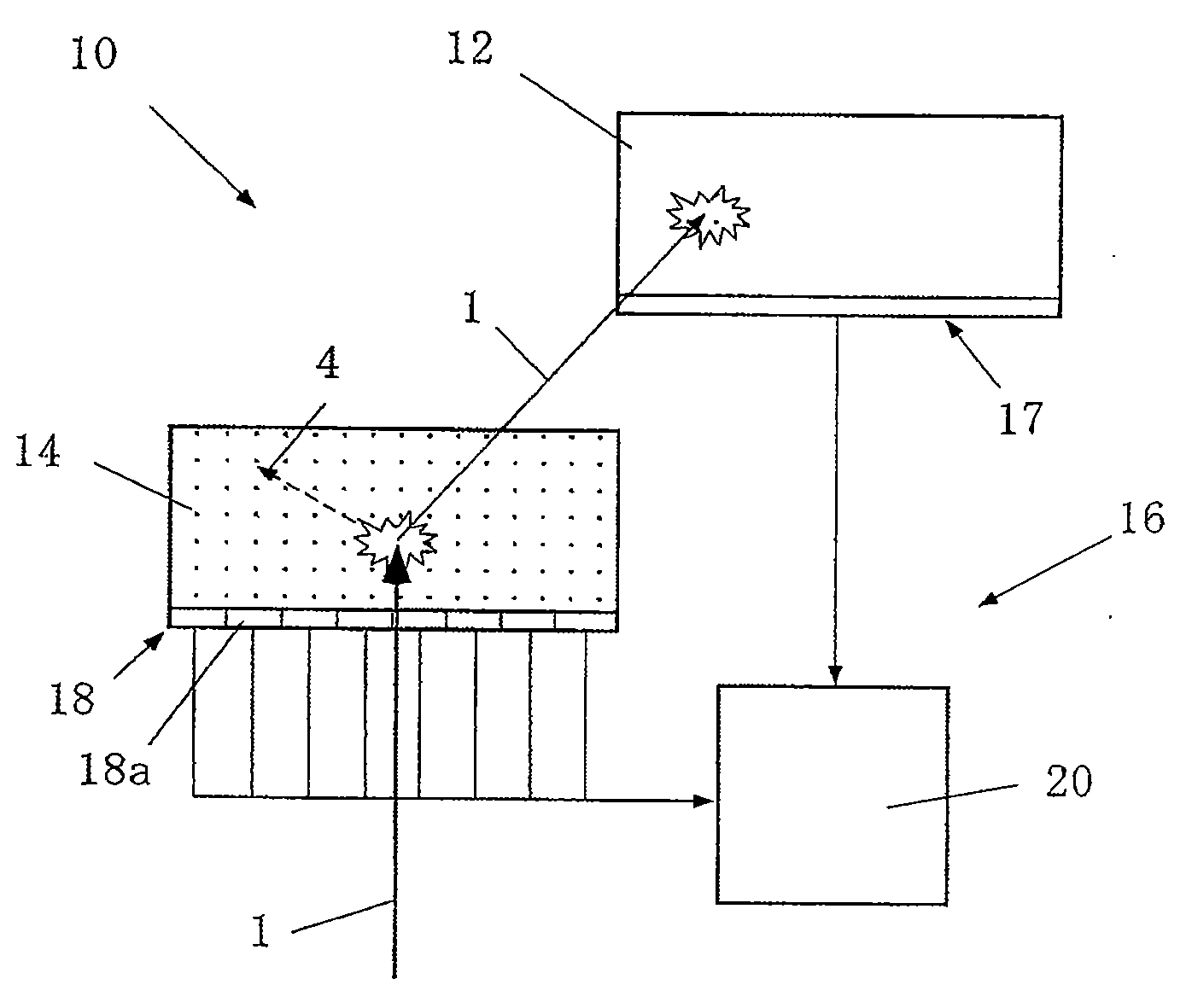
Figure 1 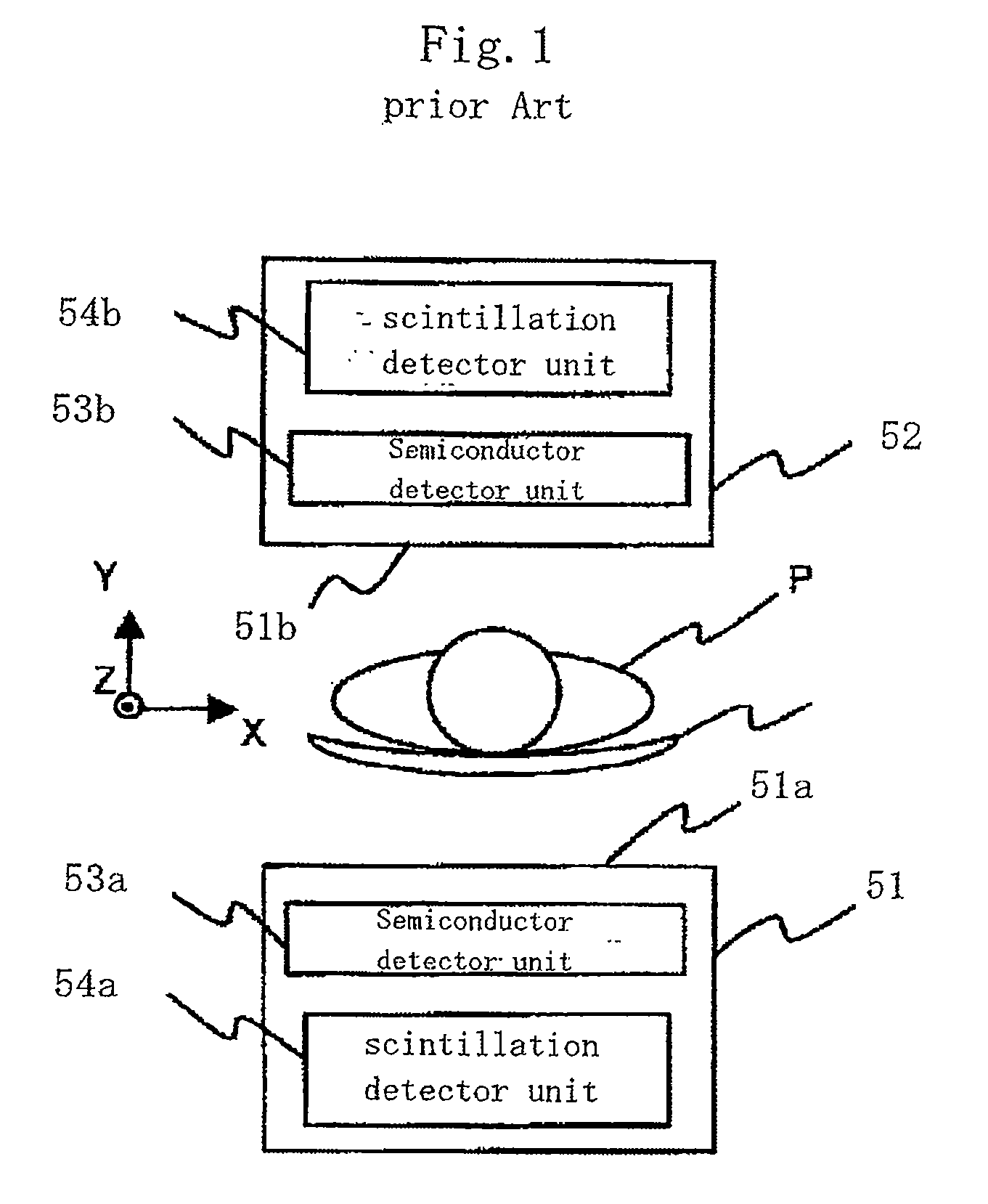
Figure 2 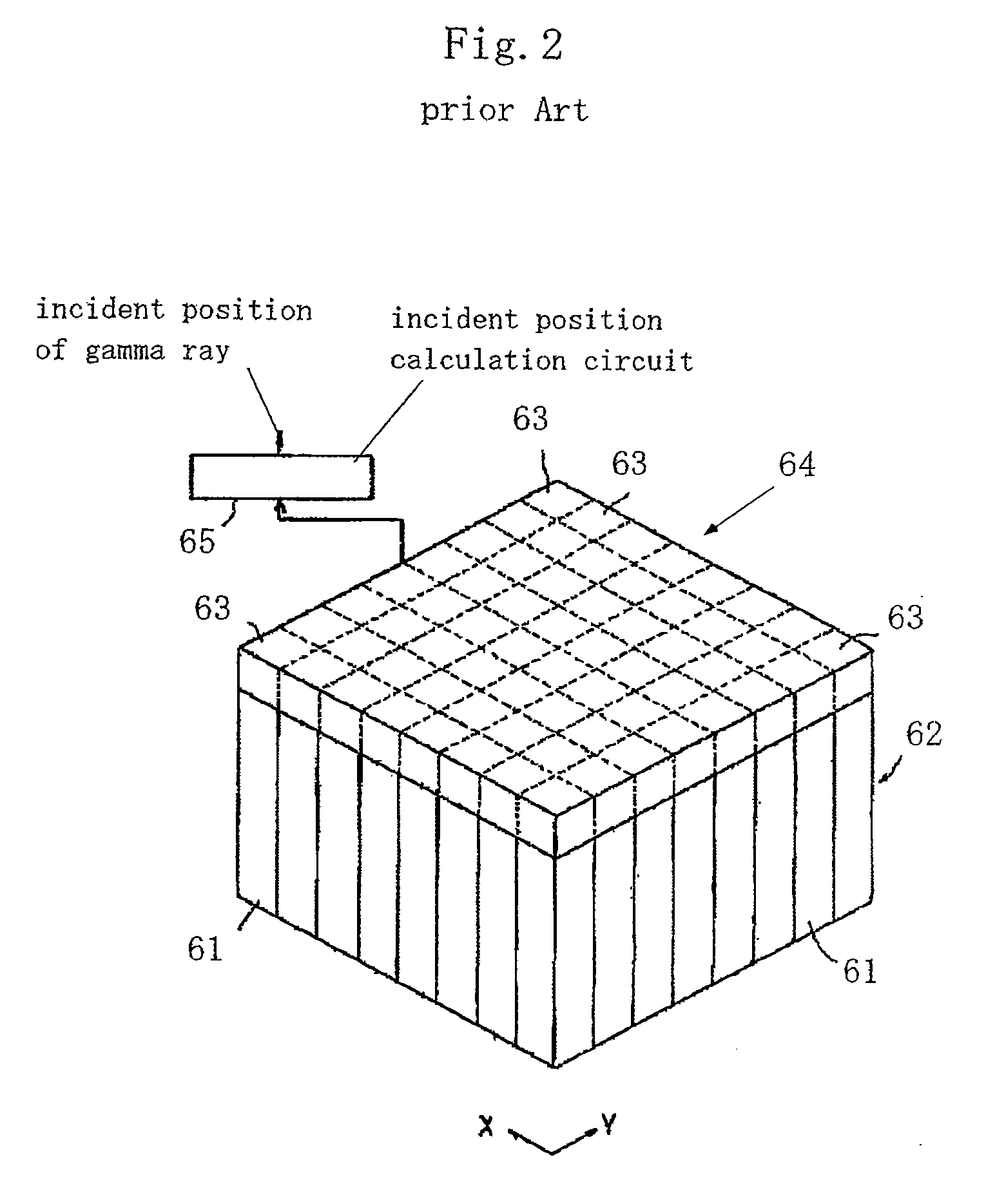
Figure 3
Abstract
Description
BACKGROUND OF THE INVENTION
[0001] 1. Technical Field of the Invention
[0002] The present invention relates to a nuclear medicine diagnosis equipment, and particularly, to a gamma ray detector and a gamma ray reconstruction method for use in SPECT and PET.
[0003] 2. Description of the Related Art
[0004] The gamma ray detector is a radiation detector and is an equipment used in nuclear medicine diagnosis for measuring gamma rays (γ rays) emitted from radioactive medicines given to a patient.
[0005] A conventional radiation detector is a laminate of a collimator, a NaI (sodium iodide) and a PMT (photomultiplier tube), in which a lead collimator with parallel micro-pores allows only gamma rays coming from the direction of the pores to reach single crystals of the NaI, whereby fluorescent light is emitted proportional to the amount of gamma ray energy deposited therein, and the PMT detects the light to detect the intensity and the position of the gamma rays.
[0006] SPECT is an abbreviation for sing...
Examples
Embodiment Construction
[0049]Preferred embodiments of the present invention will be described hereinbelow with reference to the accompanying drawings. In the respective drawings, the same components or elements will be denoted by the same reference numerals, and the redundant descriptions thereof will be omitted.
[0050]In recent years, researches regarding tumor metabolism have been progressed successively from treatment to diagnosis and to prevention. In these researches, vigorous efforts are being made to enable positron labeling agents (C11-methionine; FDG) to be used for estimation of tissue energy metabolism. In such researches and inspection, since the positron labeling agents are radioactive substances, a radiation detector capable of reducing the mental burden of a subject to the minimum level and making quick and appropriate determinations becomes of importance. Another problem is related to its popularization, which is how to suppress the increase in radiation exposure to the subject.
(Interaction...