
Thermosetting resin composition, method for forming protective film for flexible wiring board, and flexible wiring board
Patent Information
- Authority / Receiving Office
- US · United States
- Current Assignee / Owner
- Publication Date
- 2012-08-30
Smart Images
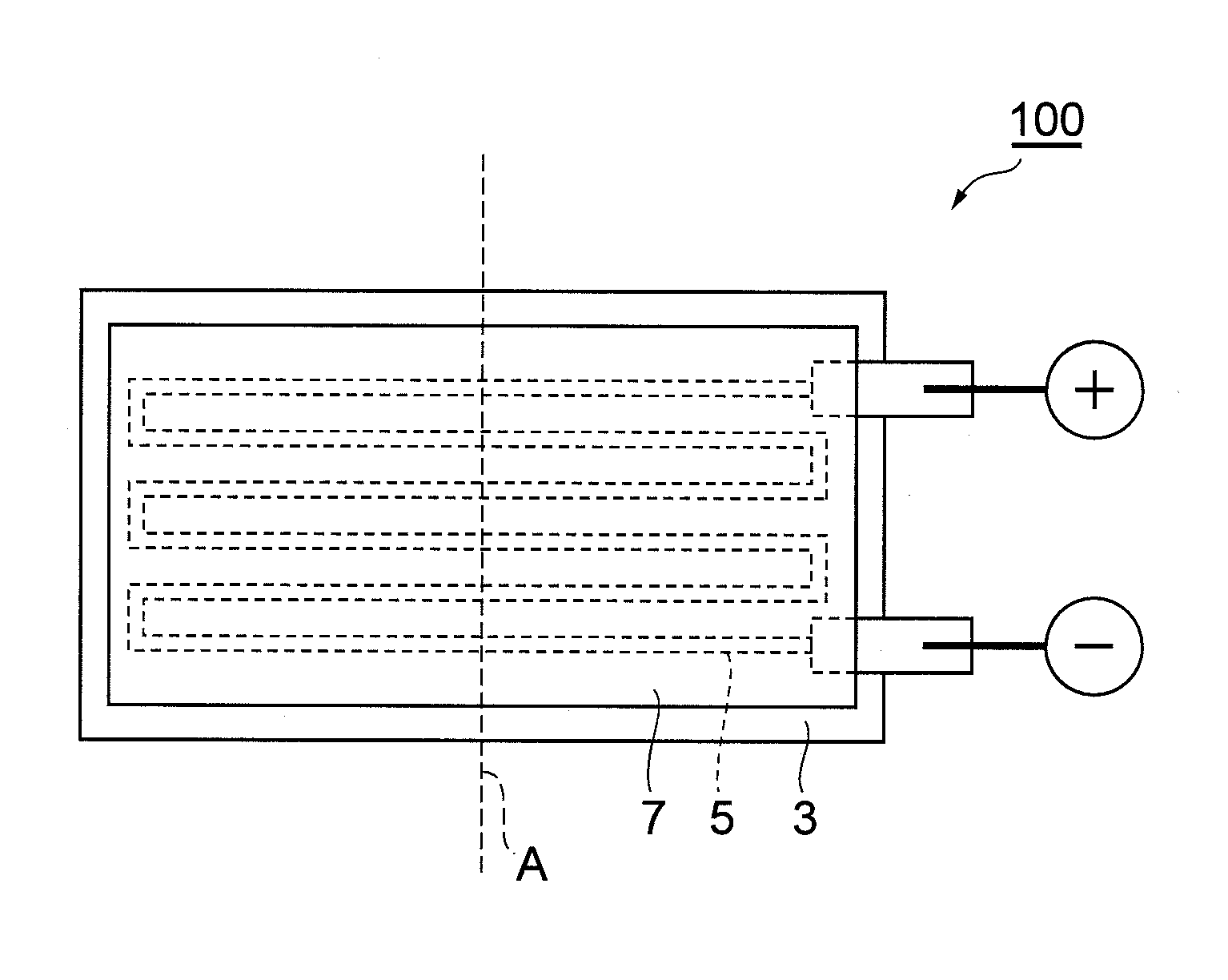
Figure 1 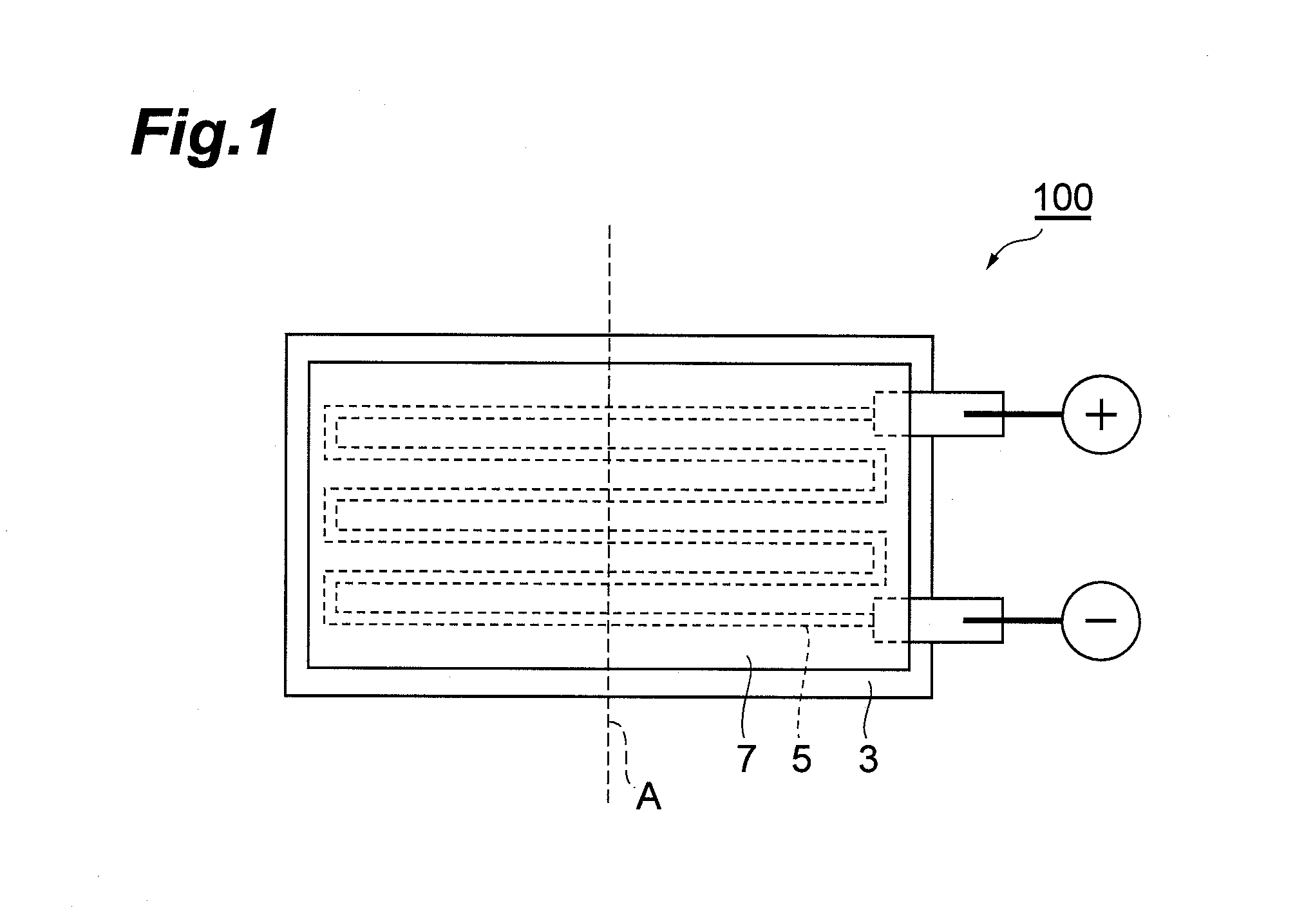
Figure 2 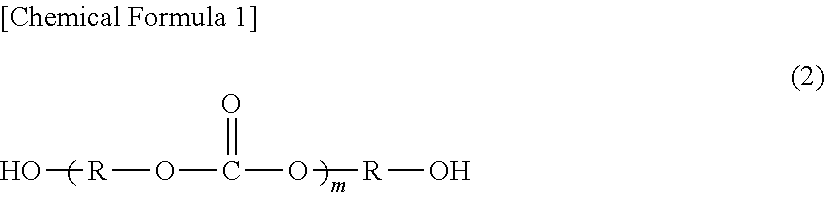
Figure 3
Abstract
Description
TECHNICAL FIELD
[0001] The present invention relates to a thermosetting resin composition, a method for forming a protective film for a flexible wiring board, and a flexible wiring board.BACKGROUND ART
[0002] In recent years, in the field of electronic components, resin compositions (for example, sealing agents, solder resist, etc.) for use in the electronic components have been required to have better heat resistance, electrical properties, and moisture resistance in order to deal with reduction in size, reduction in thickness, and increase in speed. Therefore, polyimide resins, polyamideimide resins, and polyamide resins have been used as resins constituting the resin compositions, in place of epoxy resins. However, these resins have a rigid resin structure, and the cured films lack flexibility. Therefore, the case of using the resins for thin film base materials has problems such as significant warpage of the base materials after curing, and poor flexibility.
[0003] For the resins ment...
Examples
synthesis example 1
[0128]Polycarbonatediol (UM-CARB90(3 / 1), from Ube Industries, Ltd., Average Molecular Weight: approximately 900) represented by the above chemical formula (1B) was prepared which included, as R2, a constitutional unit derived from 1,4-cyclohexanedimethanol and a constitutional unit derived from 1,6-hexanediol at a molar ratio of 3:1, with n in the range of 4 to 6 on average. In a reaction container equipped with a stirring device, a thermometer, and a condenser, 156.98 g (0.175 mol) of the above polycarbonatediol, 91.70 g (0.350 mol) of Desmodur-W (from Sumitomo Bayer Urethane Co., Ltd.) as 4,4-dicyclohexylmethanediisocyanate, and 165.80 g of γ-butyrolactone (from Mitsubishi Chemical Corporation) as a solvent were put, to dissolve all of the raw materials at 150° C. and react the materials for 4 hours, and thereby produce a polyisocyanate having an urethane linkage.
[0129]Then, the temperature of the reaction solution was lowered down to 80° C., and with the addition of 45.85 g (0.17...
synthesis example 2
Polycarbonatediol (UM-CARB90(1 / 1), from Ube Industries, Ltd., Average Molecular Weight: approximately 900) represented by the above chemical formula (1B) was prepared which included, as R2, a constitutional unit derived from 1,4-cyclohexanedimethanol and a constitutional unit derived from 1,6-hexanediol at a molar ratio of 1:1, with n in the range of 4 to 6 on average. In a reaction container equipped with a stirring device, a thermometer, and a condenser, 158.12 g (0.175 mol) of the above polycarbonatediol, 91.70 g (0.350 mol) of Desmodur-W, and 166.55 g of γ-butyrolactone were put, to dissolve all of the raw materials at 150° C. and react the materials for 4 hours, and thereby produce a polyisocyanate having an urethane linkage.
[0132]Then, the temperature of the reaction solution was lowered down to 80° C., and with the addition of 45.85 g (0.175 mol) of Desmodur-W, 33.60 g (0.175 mol) of trimellitic anhydride, and 162.72 g of γ-butyrolactone, all of the raw materials were dissolv...
synthesis example 3
[0135]Polycarbonatediol (UM-CARB90(1 / 3), from Ube Industries, Ltd., Average Molecular Weight: approximately 900) represented by the above chemical formula (1B) was prepared which included, as R2, a constitutional unit derived from 1,4-cyclohexanedimethanol and a constitutional unit derived from 1,6-hexanediol at a molar ratio of 1:3, with n in the range of 4 to 6 on average. In a reaction container equipped with a stirring device, a thermometer, and a condenser, 156.48 g (0.175 mol) of the above polycarbonatediol, 91.70 g (0.350 mol) of Desmodur-W, and 166.55 g of γ-butyrolactone were put to dissolve all of the raw materials at 150° C. and react the materials for 4 hours.
[0136]Then, the temperature of the reaction solution was lowered down to 80° C., and with the addition of 45.85 g (0.175 mol) of Desmodur-W, 33.60 g (0.175 mol) of trimellitic anhydride (from Mitsubishi Gas Chemical Company, Inc.), and 161.08 g of γ-butyrolactone, all of the raw materials were dissolved at 150° C. a...