

Method for Reducing the Precursor of Ethyl Carbamate in Soy Sauce
Patent Information
- Authority / Receiving Office
- US · United States
- Current Assignee / Owner
- Publication Date
- 2015-10-08
Smart Images
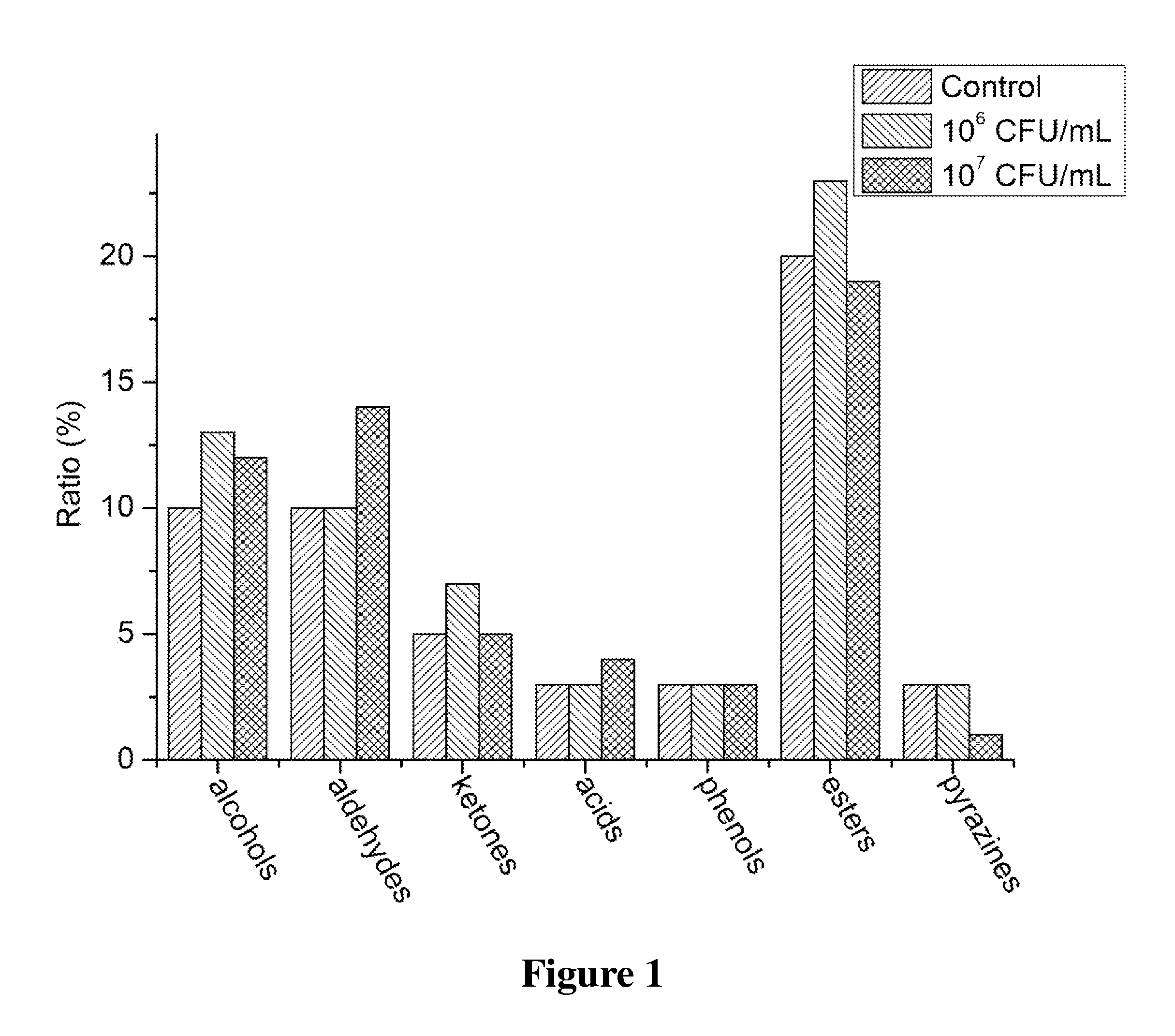
Figure 1 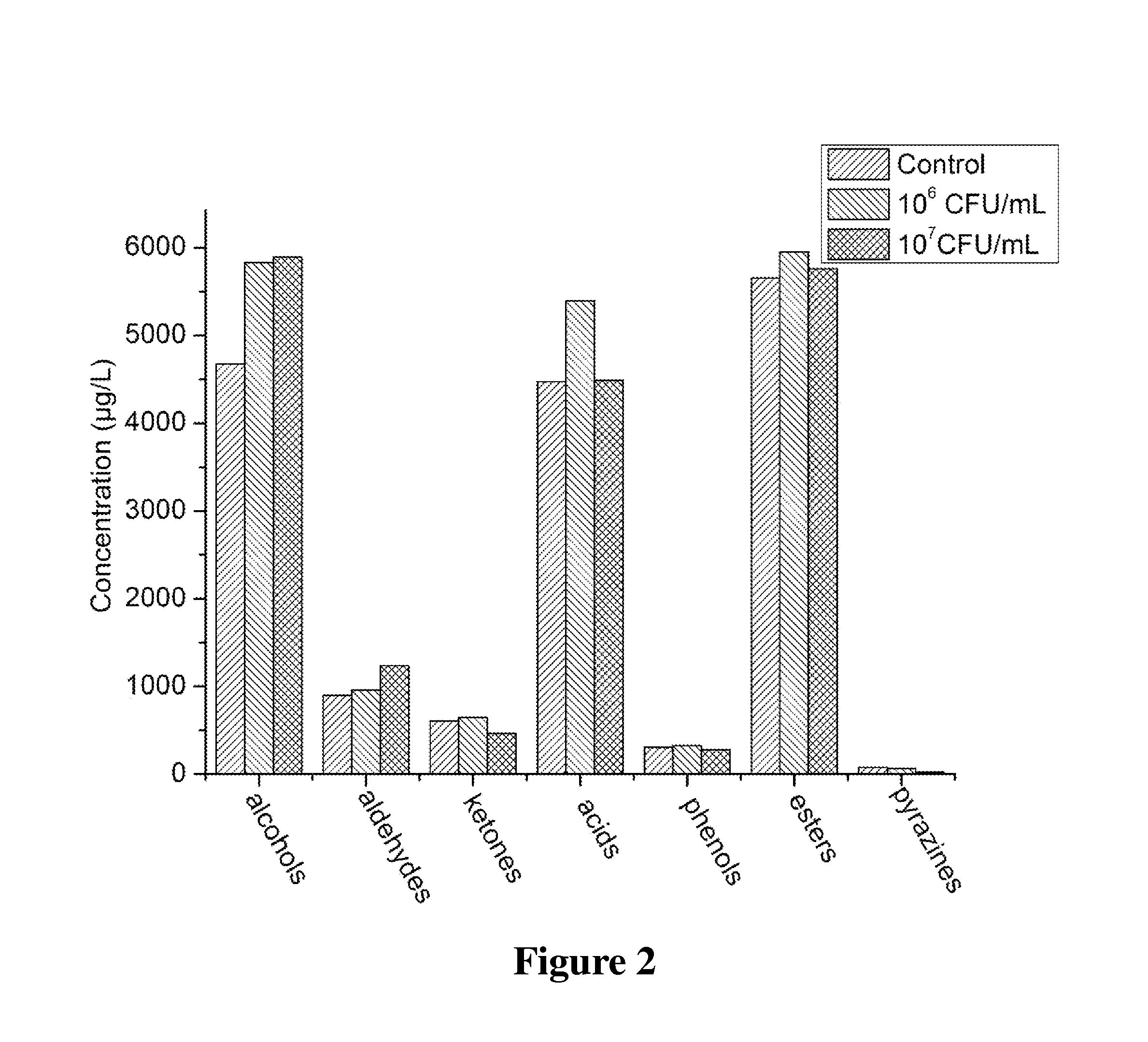
Figure 2
Abstract
Description
[0001] CROSS-REFERENCES AND RELATED APPLICATIONS
[0002] This application claims the benefit of priority to Chinese Application No. 201410132103.3, entitled “A method for reducing the precursor of ethyl carbamate in soy sauce”, filed Apr. 2, 2014, which is herein incorporated by reference in its entirety.BACKGROUND OF THE INVENTION
[0003] 1. Field of the Invention
[0004] The present invention relates to the field of microbial production. In particular, it relates to a method of using a novel microorgarnism to reduce the precursor of ethyl carbamate in soy sauce.
[0005] 2. Description of the Related Art
[0006] Ethyl carbamate (EC) widely exists in fermented products such as rice wine, wine, soy sauce and soybean paste. EC is classified as a class 2A carcinogen by the World Health Organization (WHO). It has been reported that EC could induce lung cancer, liver cancer, skin cancer and other cancers. It has aroused widespread concerns as to the food safety issue caused by EC in fermented products. ...
Examples
example 1
Determination of the Precursors of EC in Soy Sauce
[0037]Sterilization process, the final step before people get the end products, is the step that generates most of the EC in soy sauce because. It was measured earlier that Japanese soy sauce contains 57.7 mg / L urea, 2.2 g / L citrulline before sterilization and 40 μg / L EC after sterilization. In order to study the reaction kinetics between EC and its precursors, different concentrations of the precursors were mixed as shown Reaction 1-3 below and sterilized at 95° C. for 30 min.
[0038]Reaction 1: urea 0 mg / L, citrulline 2 g / L, ethanol 2% (v / v).
[0039]Reaction 2: urea 50 mg / L, citrulline 0 g / L, ethanol 2% (v / v).
[0040]Reaction 3: urea 50 mg / L, citrulline 2 g / L, ethanol 0% (v / v).
TABLE 2Concentrations of EC (After sterilization)and its precursors (Before sterilization)CompoundsUrea (mg / L)Citrulline (g / L)Ethanol (%)EC (μg / L)Raw soy sauce57.72.22-2.540Reaction 1500210.2Reaction 202232.3Reaction 35020NDNote:ND, not detected.
[0041]As it can bee...
example 2
Procedure of Making Soy Sauce with Addition of T. halophilus BBE R23
[0042]Preparation of koji: defatted soybean and parched wheat were soaked in water for 8 hours and sterilized at 121° C. for 8 minutes. The cooled soybean, parched wheat, bran and flour were mixed according to a mass ratio of 20:15:1:1, and the mixture was inoculated with Aspergillus oryzae spore (inoculation rate: 300 gram microbe per ton of mature koji) to obtain a preliminary koji. The preliminary koji was incubated at 30° C. for 46-48 hours, with occasional mixing every 6-8 hours, until the color of the preliminary koji turned light green to obtain a mature koji.
[0043]Fermentation process: the mature koji and 20% salted water were mixed with a mass ratio of 1:1.7. 105, 106 or 107 CFU / mL T. halophilus BBE R23 was simultaneously inoculated into the koji mixture and cultivated at 10-15° C. for 7 days. The koji fermentation without inoculation of T. halophilus BBE R23 was used as the control. Zygosaccharomyces rouxi...
example 3
Effects of Inoculation of T. halophilus BBE R23 on EC and Amino Acid Concentrations of Soy Sauce
[0044]1. Preparation of Concentrated T. halophilic
[0045]1% T. halophilic was inoculated into the MRS culture medium (pH=7.0) with 10% NaCl and cultured at 30° C. for 3 days until the cell concentration reached the maximum (OD600 is 3.95). The cells were collected by centrifugation at 10,000 rpm for 5 minutes, and resuspended in 1% saline to obtain a concentrated suspension of T halophilic.
[0046]2. Culture of Mature Koji and T. halophilic BBE R23
[0047]In the process of soy sauce brewing, the mature koji mixed with 20% saline was inoculated with different concentrations of T. halophilic BBE R23. The final inoculation concentration of T. halophilic BBE R23 is 105, 106 or 107 CFU / mL. The koji fermentation without inoculation of T. halophilus BBE R23 was used as the control. Each sample was repeated for three times.
[0048]3. Measurement of EC and Free Amino Acid Concentration in Soy Sauce
[004...