
Lithium ion battery
a lithium ion battery and lithium ion technology, applied in batteries, electrical equipment, electrochemical generators, etc., can solve the problems of high electrical resistance of ptc polymer, carbon black particles then no longer form electrically conducting chains of sufficient length
Patent Information
- Authority / Receiving Office
- US · United States
- Current Assignee / Owner
- Publication Date
- 2017-11-23
- Estimated Expiration
- Not applicable · inactive patent
Smart Images
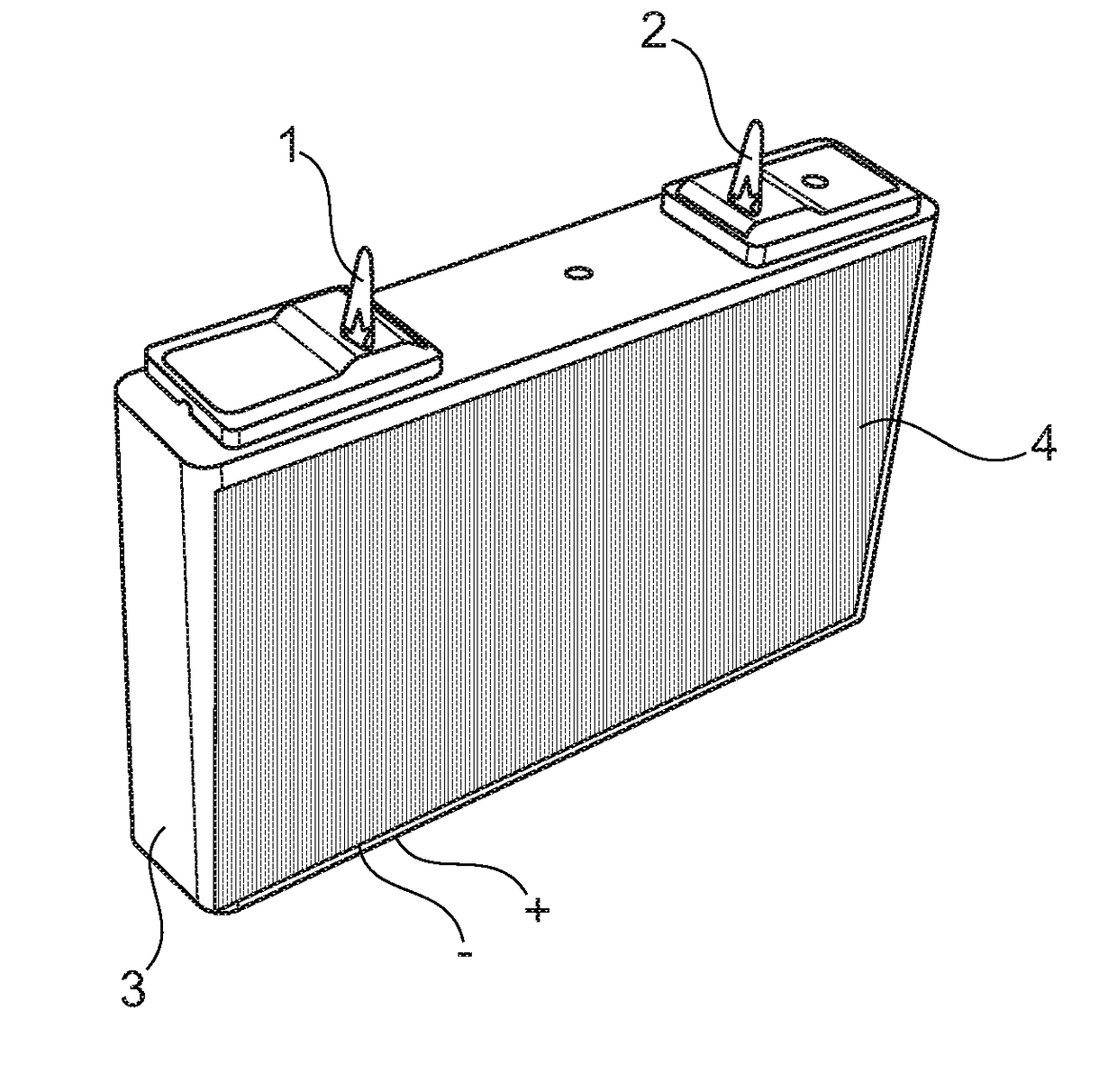
Figure 1 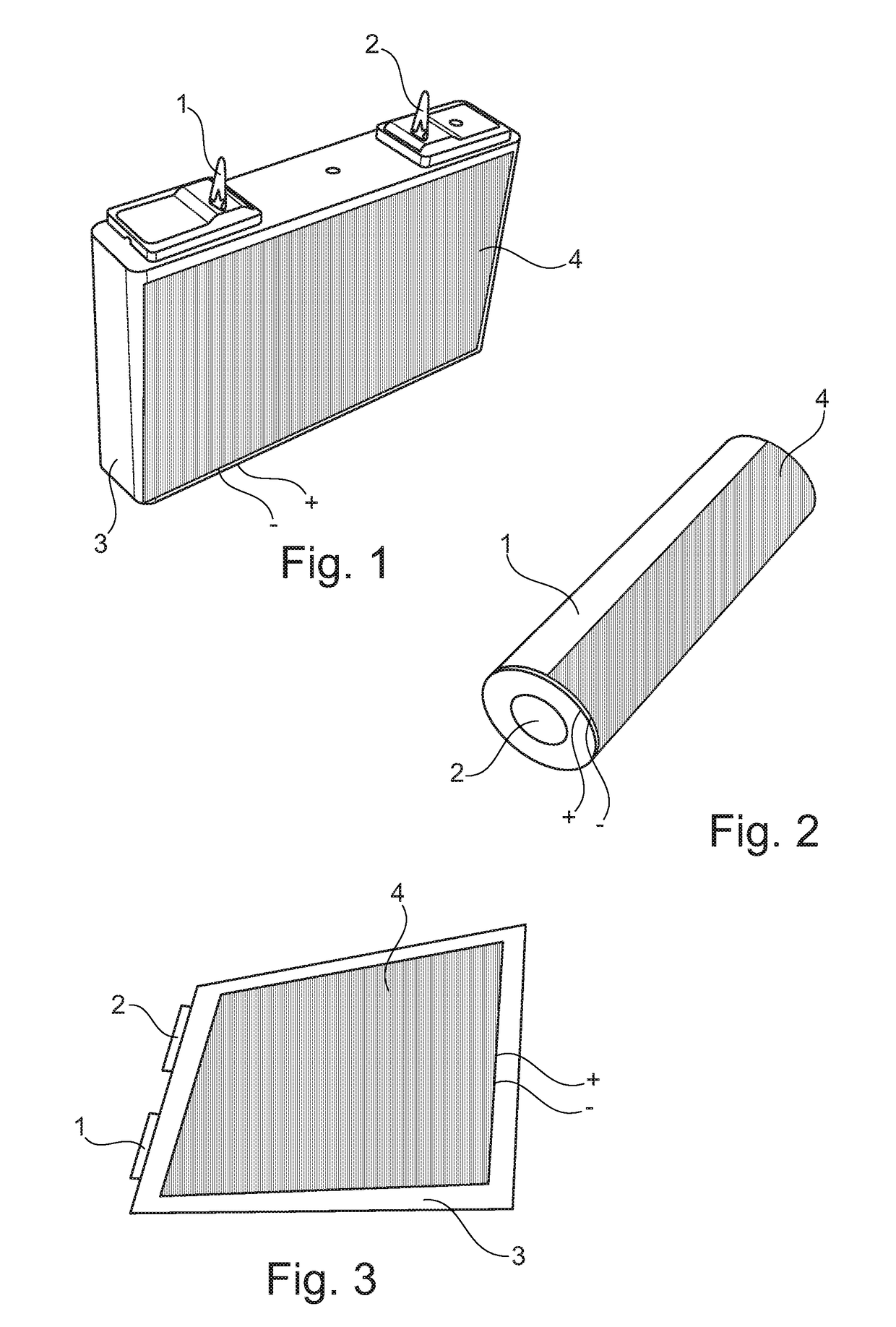
Figure 2
Abstract
Description
CROSS-REFERENCE TO RELATED APPLICATIONS
[0001] NoneDESCRIPTIONField of the Invention
[0002] The invention relates to a lithium ion battery.Background of the Invention
[0003] Lithium ion batteries comprise a positive electrode, a negative electrode and an electrolyte which comprises a lithium salt and contacts the electrodes. Lithium ion batteries are known, e.g., from US 2012 / 0082893 A1 which is incorporated herein by reference.
[0004] Lithium ion batteries lose performance if it is too hot or too cold. When used in a vehicle, winter weather and freezing temperatures can adversely affect battery operation. It has been tried to heat vehicle batteries by means of cooling fluid which transports waste heat away from a vehicle motor. Such cooling fluid can run through channels provided in the battery for this purpose. However, such cooling fluid is rather cold at the beginning of driving when heating is needed the most.
[0005] Another possibility is to heat batteries electrically by means of heati...
Examples
Embodiment Construction
[0019]FIG. 1 shows a lithium ion battery comprising a positive electrode 1, a negative electrode 2, a casing 3 containing an electrolyte, e.g. a lithium salt in an organic solvent, and a heating layer 4 provided as PTC polymer. The lithium salt may be lithium hexafluorophosphate (LiPF6), lithium hexafluoroarsenate monohydrate (LiAsF6), lithium perchlorate (LiClO4), lithium tetrafluoroborate (LiBF4), or lithium triflate (LiCF3SO3), for example.
[0020]In the embodiment shown, the PTC polymer heating layer 4 is provided on an outer surface of the casing 3. Another possibility is to provide the PTC polymer heating layer 4 on an inside surface of the casing 3. A PTC polymer heating layer on an inner surface of the casing may offer the advantage of improved thermal coupling. A PTC polymer heating layer on an outer surface of the casing may offer the advantage of an easy electrical connection of the PTC polymer heating layer.
[0021]The terminals for applying a voltage to the PTC polymer heat...