
Hemostatic composition comprising cross-linked hyaluronic acid derivative matrix
Patent Information
- Authority / Receiving Office
- US · United States
- Current Assignee / Owner
- Publication Date
- 2019-07-04
Smart Images
Figure 1 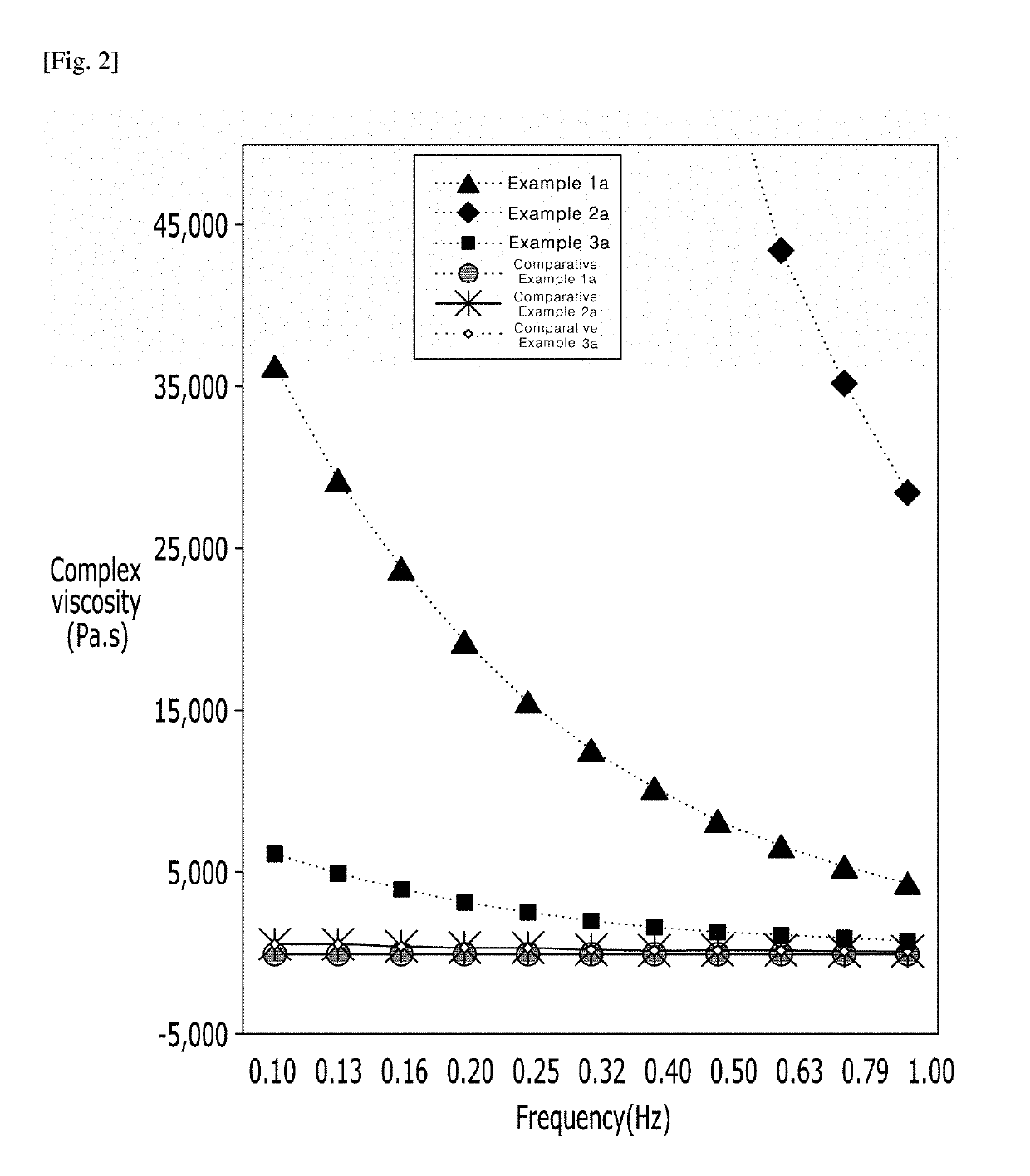
Figure 2 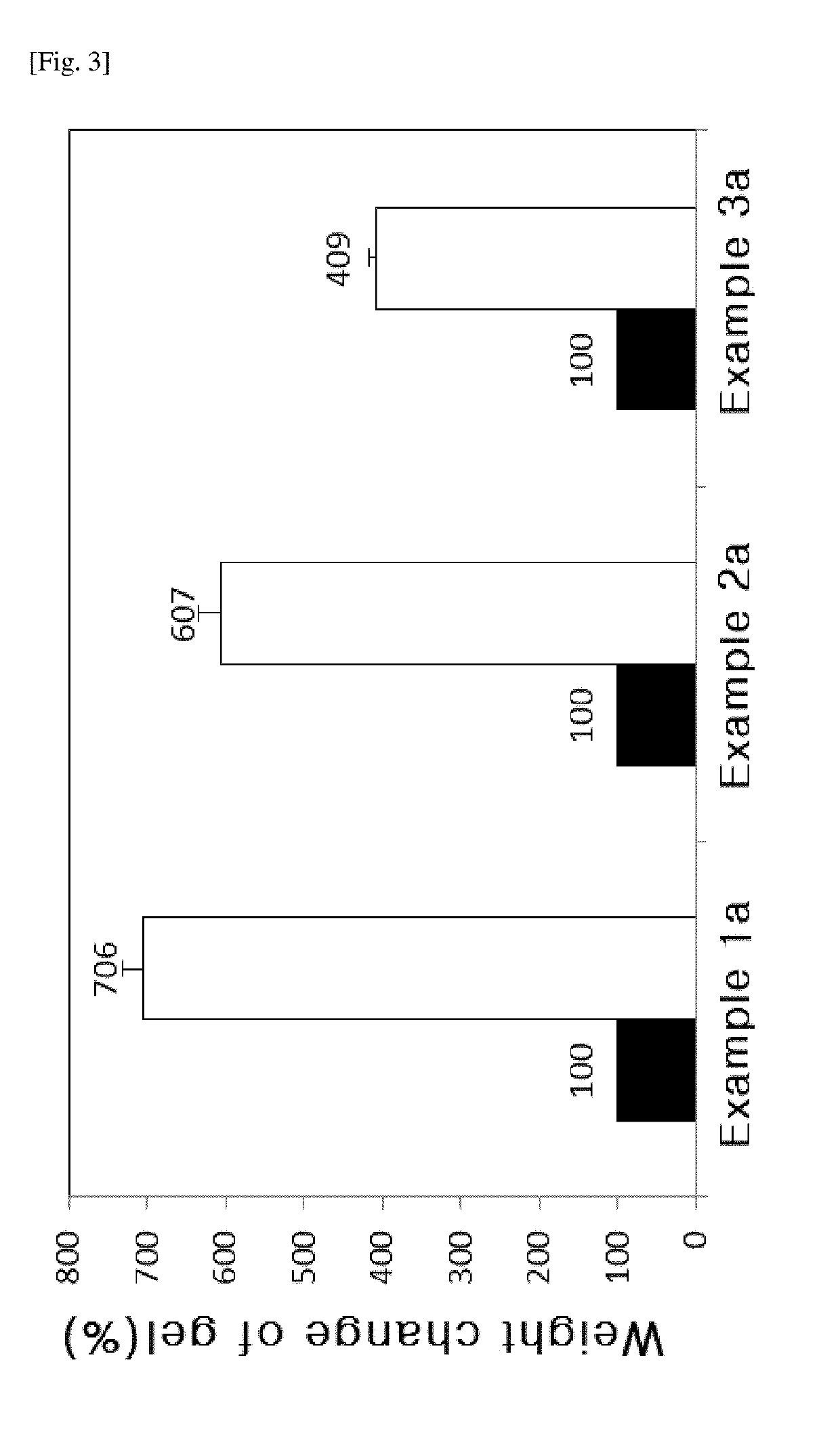
Figure 3
Abstract
Description
TECHNICAL FIELD
[0001] The present invention relates to a hemostatic composition and a method for preparing thereof, and more specifically, relates to a hemostatic composition comprising a cross-linked hyaluronic acid derivative matrix which is suitable to be used for hemostasis and a method of preparation of such a composition.BACKGROUND ART
[0002] In many areas of surgical operations, bleeding which is not effectively controlled by ligature or general procedures or is uncontrollable can be induced. To stop such severe bleeding, a hemostatic composition can be applied for wounds, and as such a hemostatic composition, it is required to provide a material with strong adhesive force and adequate swelling when applied to human tissues such as wounds.
[0003] As an example of a hemostatic composition comprising a biocompatible and biodegradable dry stable granular material, there is Floseal®, and this is a multipurpose hemostatic agent composed of a granular gelatin matrix which swells in a th...
Examples
example 1-3
of Hyaluronic Acid Derivatives for Hemostatic Compositions
[0053]A. Preparation of Cross-Linked Hyaluronic Acid Derivative Matrices
[0054]After 1 g of sodium hyaluronic acid was prepared in each of 3 reactors, it was added to reach the final weight of 10.0 g (Example 1a), 8.3 g (Example 2a), and 7.1 g (Example 3a) using 0.25 N NaOH solution. To the completely dissolved solution, 1,4-butanediol diglycidyl ether (BDDE) of 70 uL (Example 1a), 60 uL (Example 2a) and 50 uL (Example 3a) was added, and then they were mixed. The mixed solutions were put in a constant-temperature water bath and reacted at 30° C. for 18 hours, and then washed with a buffer solution to remove non-reacted materials. The prepared gels were homogenized 3 times or more by a compression method to control the particle size, and then they were sterilized at 121° C. for 15 minutes. 3.0 g of the prepared hyaluronic acid derivatives were aseptically weighed in 5 ml syringes, and then terminal-sterilized at 127° C. for 2 m...
example 4
al Characteristics of Hyaluronic Acid Derivatives
[0059]To investigate rheological characteristics of the hyaluronic acid derivatives prepared as Examples 1a to 3a, and an anti-adhesion agent of B company (Comparative example 1a), and a cross-linked hyaluronic acid filler of G company (Comparative example 2a) and a cross-linked hyaluronic acid filler of L company (Comparative example 3a), which were commercially available and contained hyaluronic acid, rotational rheometer test was conducted. The complex viscosity and tan δ result values in the frequency range of 0.1 Hz to 1 Hz were shown in FIG. 2.
[0060]By FIG. 2 and Table 1, Examples 1a to 3a shows higher complex viscosity values than Comparative examples 1a to 3a. Through this, it can be seen that the hyaluronic acid derivatives of the present invention (Examples 1a to 3a) have higher viscosity than Comparative examples 1a to 3a, and they formed a structure with high structural stability.
TABLE 1Frequency (1 Hz)Complex viscosity (P...
example 5
Degree of Hyaluronic Acid Derivatives
[0061]After 100 ml of physiological saline solution was added to 3.0 mL of the hyaluronic acid derivatives prepared as Examples 1a to 3a, they were stirred for 10 minutes. After keeping them at 37° C. for 1 hour, the unabsorbed physiological saline solution was removed, and then the volume of the solution absorbed to the hyaluronic acid derivatives was confirmed.
[0062]FIG. 3 is the result of the swelling degree of the hyaluronic acid derivatives prepared as Examples 1a to 3a, and the swelling degree of Example 1a is 706%, and the swelling degree of Example 2a is 607%, and the swelling degree of Example 3a is 409%. The hyaluronic acid derivatives of the present invention (Examples 1a to 3a) exhibited the absorbing ability to absorb moisture of 4 to 7 times of their volumes or more.