
Proteins for the treatment of epithelial barrier function disorders
Patent Information
- Authority / Receiving Office
- US · United States
- Current Assignee / Owner
- Publication Date
- 2022-06-16
- Estimated Expiration
- Not applicable · inactive patent
Smart Images
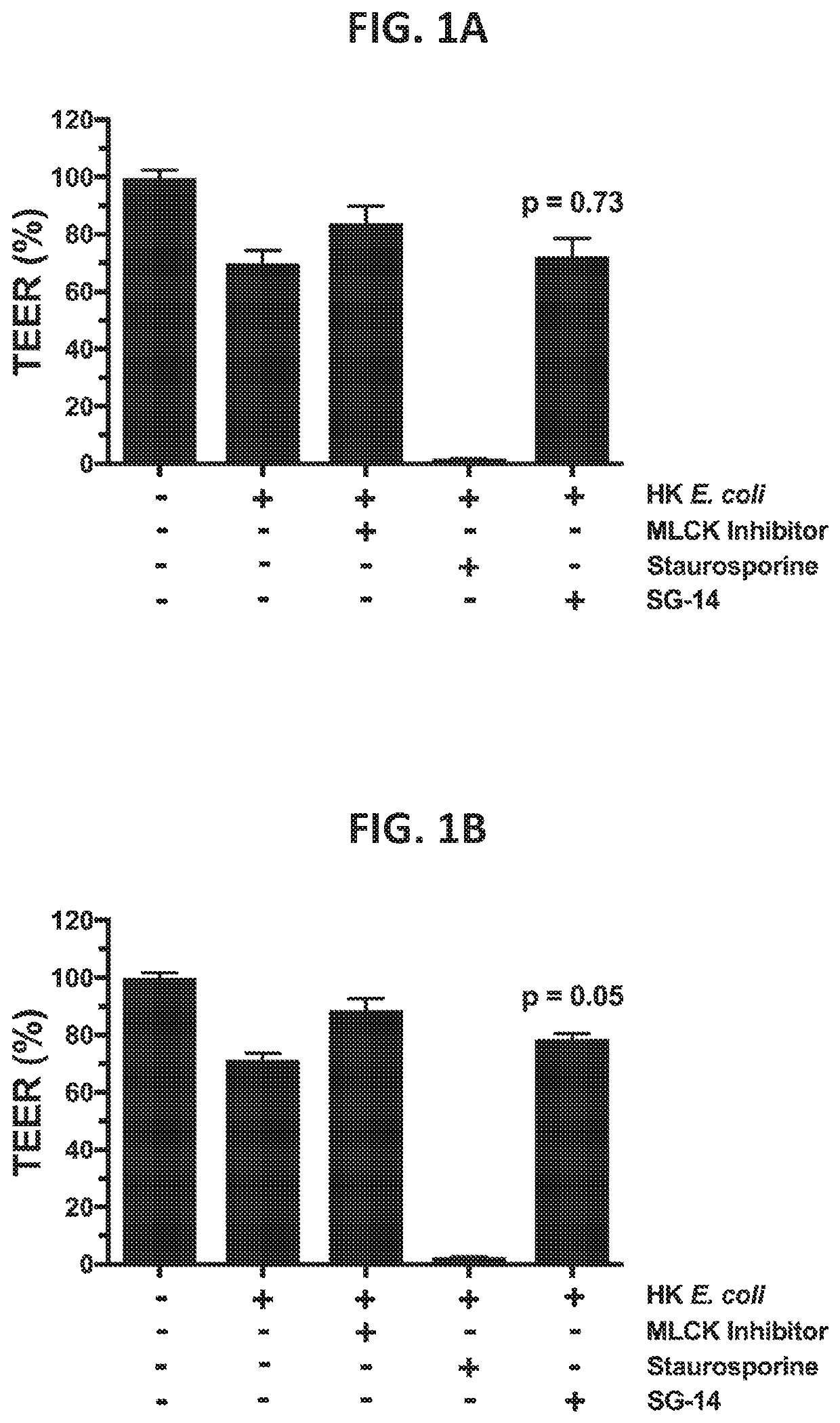
Figure 1 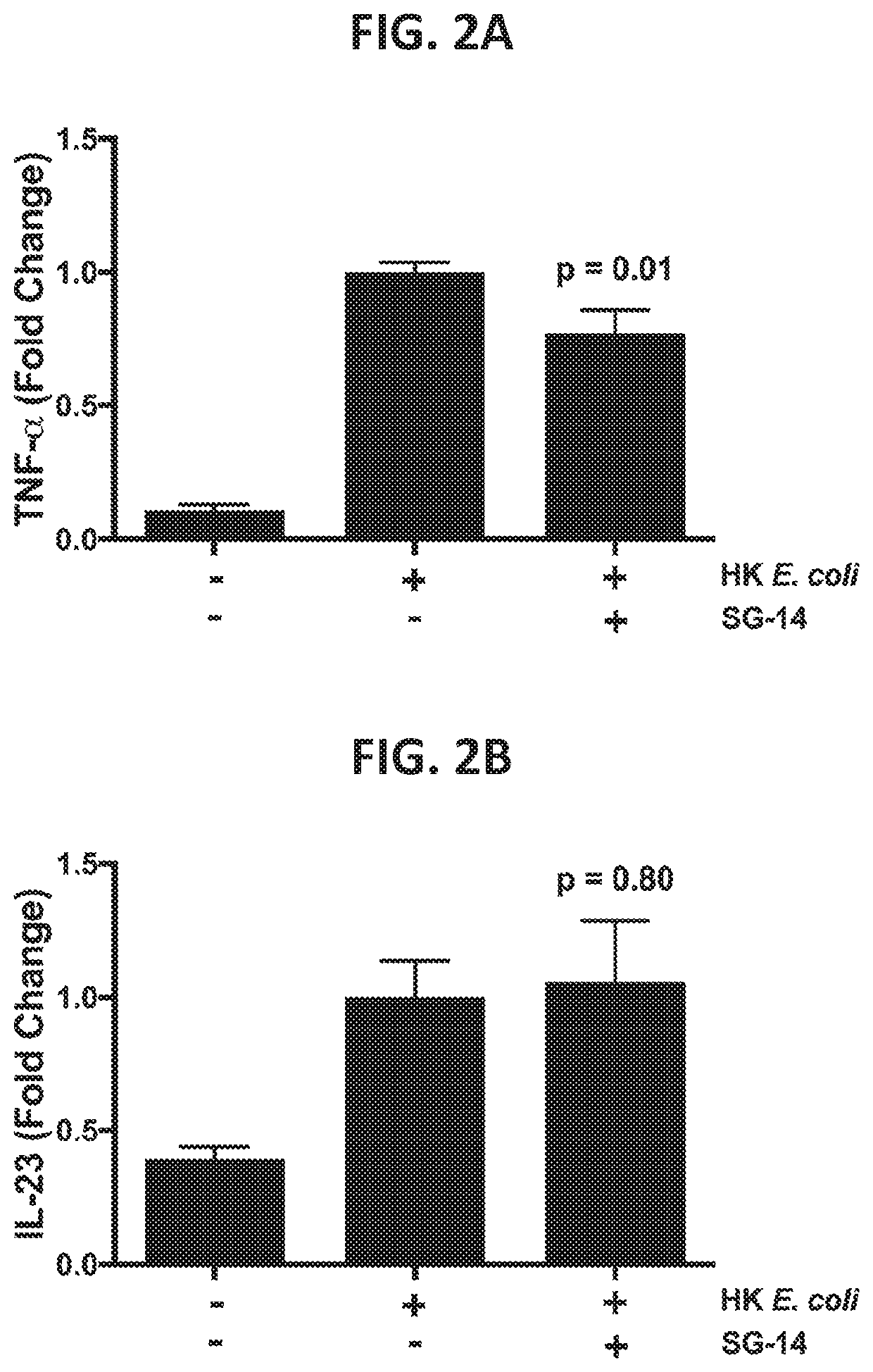
Figure 2 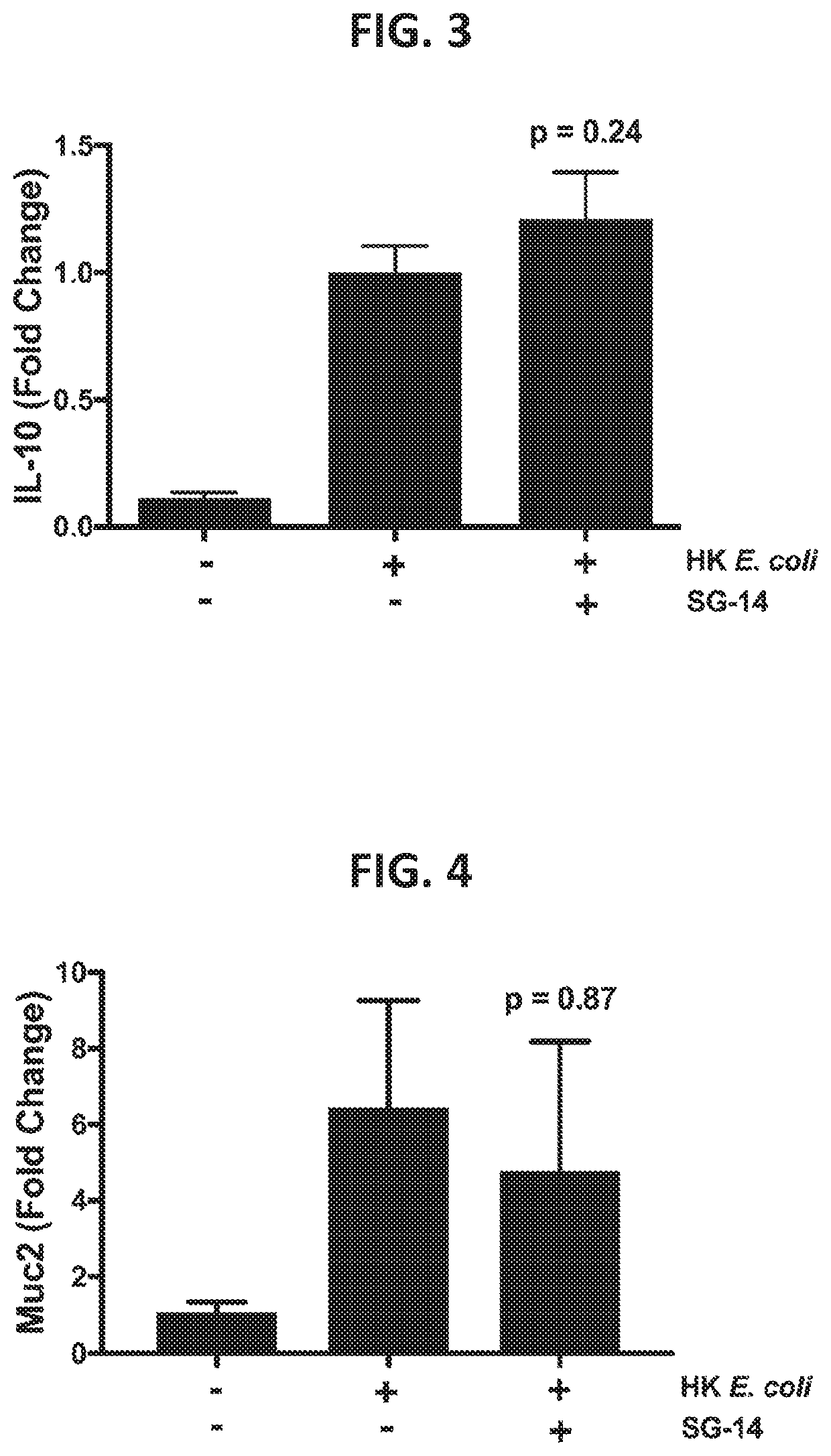
Figure 3
Abstract
Description
CROSS-REFERENCE TO RELATED APPLICATIONS
[0001] This application is a National Stage Application under 35 U.S.C. § 371 and claims the benefit of International Application No. PCT / US2018 / 033347, filed on May 18, 2018, which claims the benefit of priority to U.S. Provisional Application No. 62 / 508,501 filed on May 19, 2017, the contents of which are hereby incorporated by reference in their entirety.SEQUENCE LISTING
[0002] This application contains a Sequence Listing that has been submitted electronically as an ASCII text file named “61874293.TXT”. The ASCII text file, submitted on Nov. 15, 2019, is 38.0 kilobytes in size. The material in the ASCII text file is hereby incorporated by reference in its entirety.FIELD
[0003] The present disclosure relates to novel proteins and pharmaceutical compositions comprising said proteins that have application, inter alia, in the treatment of gastrointestinal inflammatory diseases and epithelial barrier function disorders. In some embodiments, the protei...
Examples
example 1
Expression of SG-14
[0228]For experiments described in the examples below, a polynucleotide comprising a sequence encoding residues 1-631 of SEQ ID NO:3 (SG-14) was obtained by PCR amplification of genomic DNA obtained from Eubacterium eligens (C15-B4; DSM 3376 type strain; See, e.g., Holdeman, L. V., Moore, W. E. C. (1974) New genus, Coprococcus, twelve new species, and amended descriptions of four previously described species of bacteria from human feces. Int J Syst Bacteriol 24, 260-277. The encoding polynucleotide was then subcloned into an inducible expression vector and used to transform E. coli BL21(DE3) cells for expression and purification of SG-14 as detailed below, using culturing and purification methods which are routine in the art.
[0229]Expression and purification of proteins for use in various experiments pertaining to the present disclosure and for the following examples is described here. Expression was achieved using a pGEX vector system which is designed for induci...
example 2
Effect of SG-14 on Restoration of Epithelial Barrier Integrity Following Inflammation Induced Disruption
[0233]The following experiment demonstrates the therapeutic ability of a SG-14 protein or variant or fragment thereof as disclosed herein to restore gastrointestinal epithelial barrier integrity. The experiment is therefore a demonstration of the functional utility of the therapeutic protein SG-14 to treat a gastrointestinal inflammatory disorder or disease involving impaired epithelial barrier integrity / function.
[0234]Assays were performed as described below in trans-well plates where co-cultures of multiple cell types were performed utilizing a permeable membrane to separate cells. In the apical (top) chamber, human colonic epithelial cells, consisting of a mixture of enterocytes and goblet cells, were cultured until cells obtained tight junction formation and barrier function capacity as assessed by measurement of trans-epithelial electrical resistance (TEER). In the basolatera...
example 3
Effect of SG-14 on TNF-α and IL-23 Production in a TEER Assay
[0241]The following experiment demonstrates the therapeutic ability of a SG-14 protein or variant thereof as disclosed herein to reduce immune activation as measured by cytokine production. The experiment thereby demonstrates potential functional utility of the therapeutic protein to treat a gastrointestinal inflammatory disease, or disease involving impaired epithelial barrier integrity / function, where modulation of cytokine levels would affect the disease state in a host.
[0242]Production of the pro-inflammatory cytokines TNF-α and IL-23 by monocytes was measured in the tissue culture supernatant from the basolateral chamber of the co-culture TEER assay performed in Example 2. Following TEER readings, the supernatants were centrifuged at 10,000 g for 5 minutes at 4° C. to remove cell debris. Luminex analysis was performed according to the manufacturer's instructions (Magpix instrument and xPonent software version 4.2; Lum...