
Method of controlling chemical bath composition in a manufacturing environment
Patent Information
- Authority / Receiving Office
- US · United States
- Current Assignee / Owner
- Publication Date
- 2002-10-29
- Estimated Expiration
- Not applicable · inactive patent
Smart Images
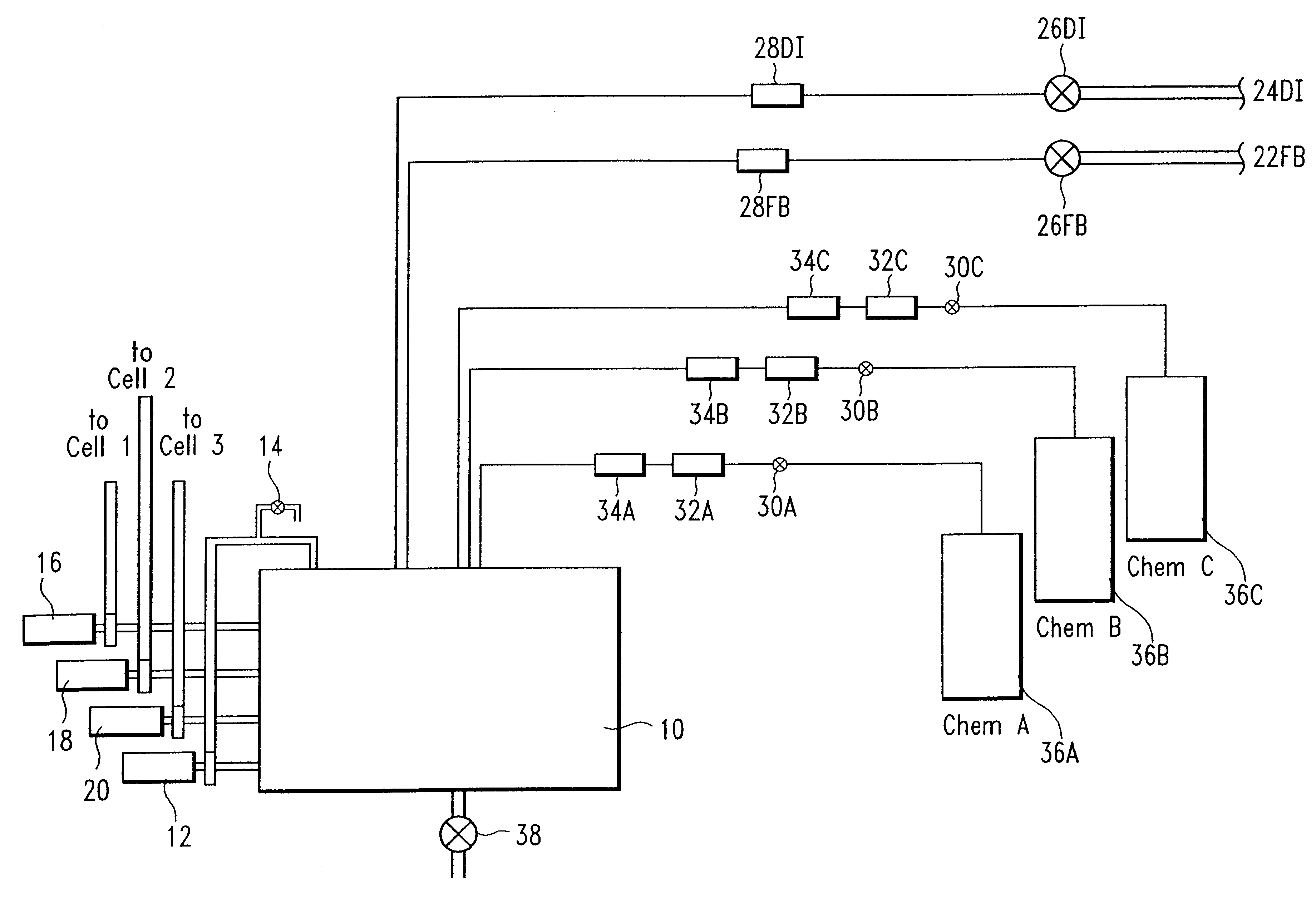
Figure 1 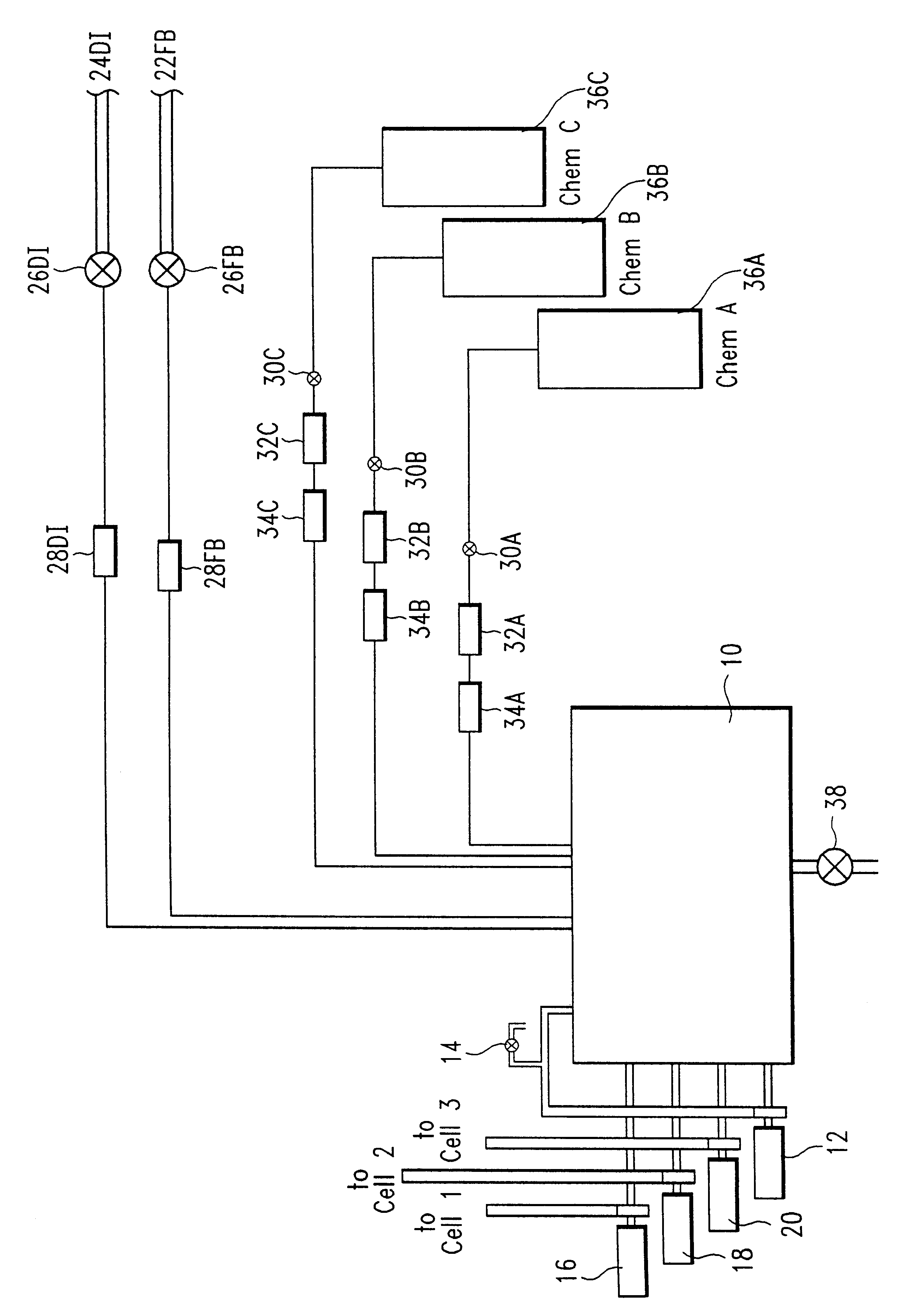
Figure 2 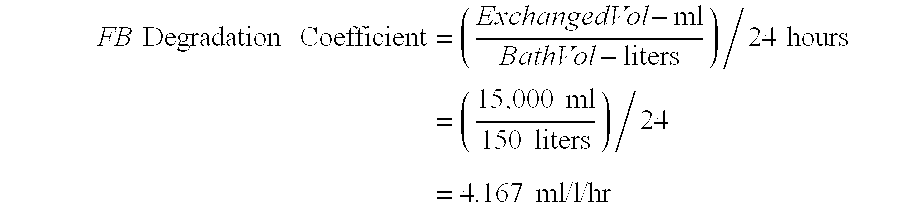
Figure 3
Abstract
Description
1. Field of the InventionThis invention relates generally to the field of wet chemical processing and more specifically to methods for controlling the composition of baths used in chemical processing, especially those baths used in plating processes. Specifically, the invention relates to semiconductor processing methods and apparatus for accurately controlling the concentration of chemical constituents which vary over time due to any of several causes.2. Description of the Prior ArtIn the field of chemical processing it is important that the composition and concentration of various constituents be controllable. The use of chemical wet processing has been used in semiconductor manufacturing since its inception in the early 1950s. Control of chemical composition has not been considered a problem in applications such as rinsing and cleaning as the implemented chemical processes were not based on a critical material balance. In such instances, excess volume of reagents or other constit...
Examples
Embodiment Construction
We describe a method and apparatus for controlling the chemical composition of a plating bath. The method is especially useful for achieving precise control of the concentrations of additives used in electroplating of high-value electronic parts.
The control system is based on predictor-corrector scheme of replenishment similar to that described in the above mentioned patent U.S. Pat. No. 5,352,350. Since frequent direct measurement of additive concentration may be time consuming and costly, it is advantageous to make the best possible use of predictive dosing, i.e., dosing prescribed by a dynamic model of the plating solution. Schemes for predictive replenishment of plating baths are known in the art. The effectiveness of the predictive component of the dosing system depends on how realistic and accurate the model is. The model used in the present invention accounts for a number of factors that are not accounted for in the prior art.
One such factor that is very important is time-bas...