
Thermal-sprayed tooling
a tooling and spraying technology, applied in the field of tools, can solve the problems of inability to manufacture very large molds, inability to meet the requirements of large molds, and inability to meet the requirements of large molds, and achieve the effects of simple techniques, improved heat transfer, and economic manufacturing
Patent Information
- Authority / Receiving Office
- US · United States
- Patent Type
- Patents(United States)
- Current Assignee / Owner
- Publication Date
- 2005-03-29
- Estimated Expiration
- Not applicable · inactive patent
Smart Images
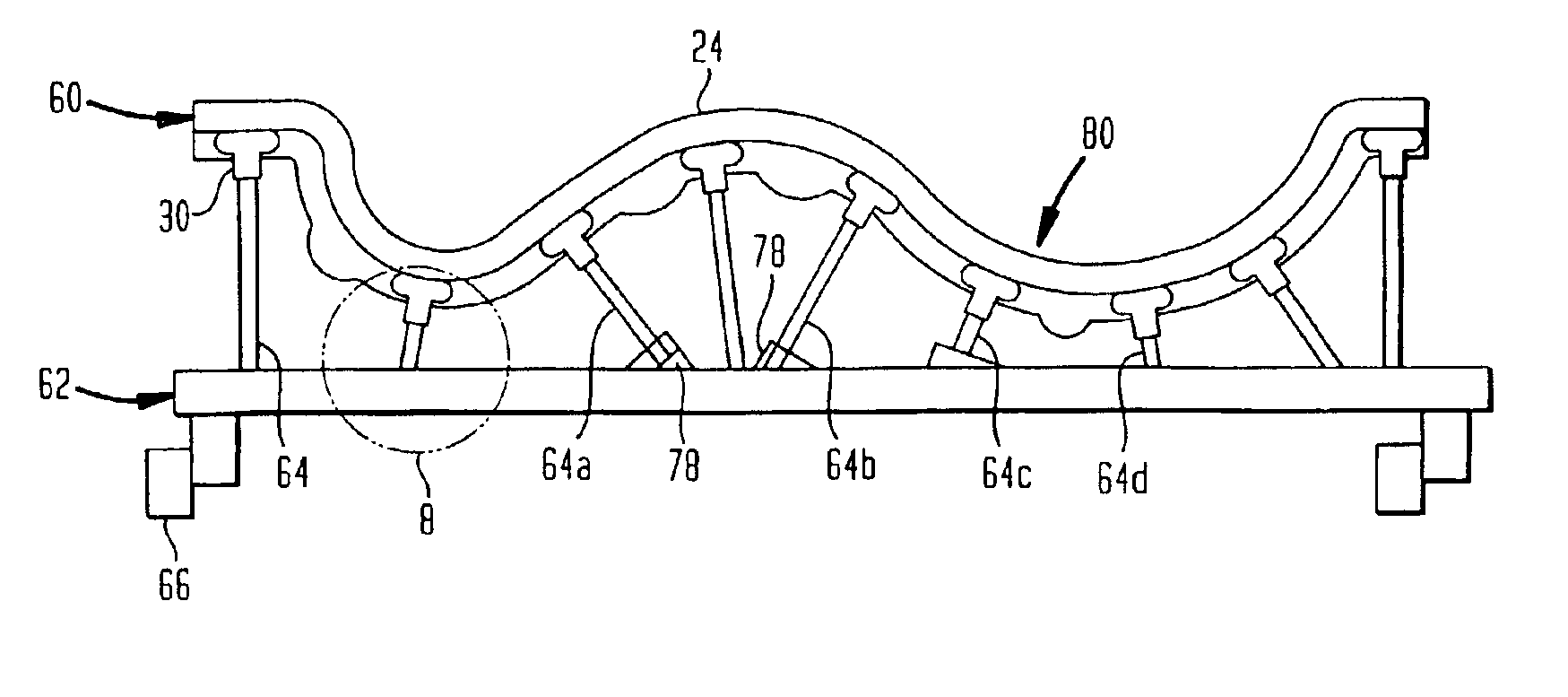
Figure 1 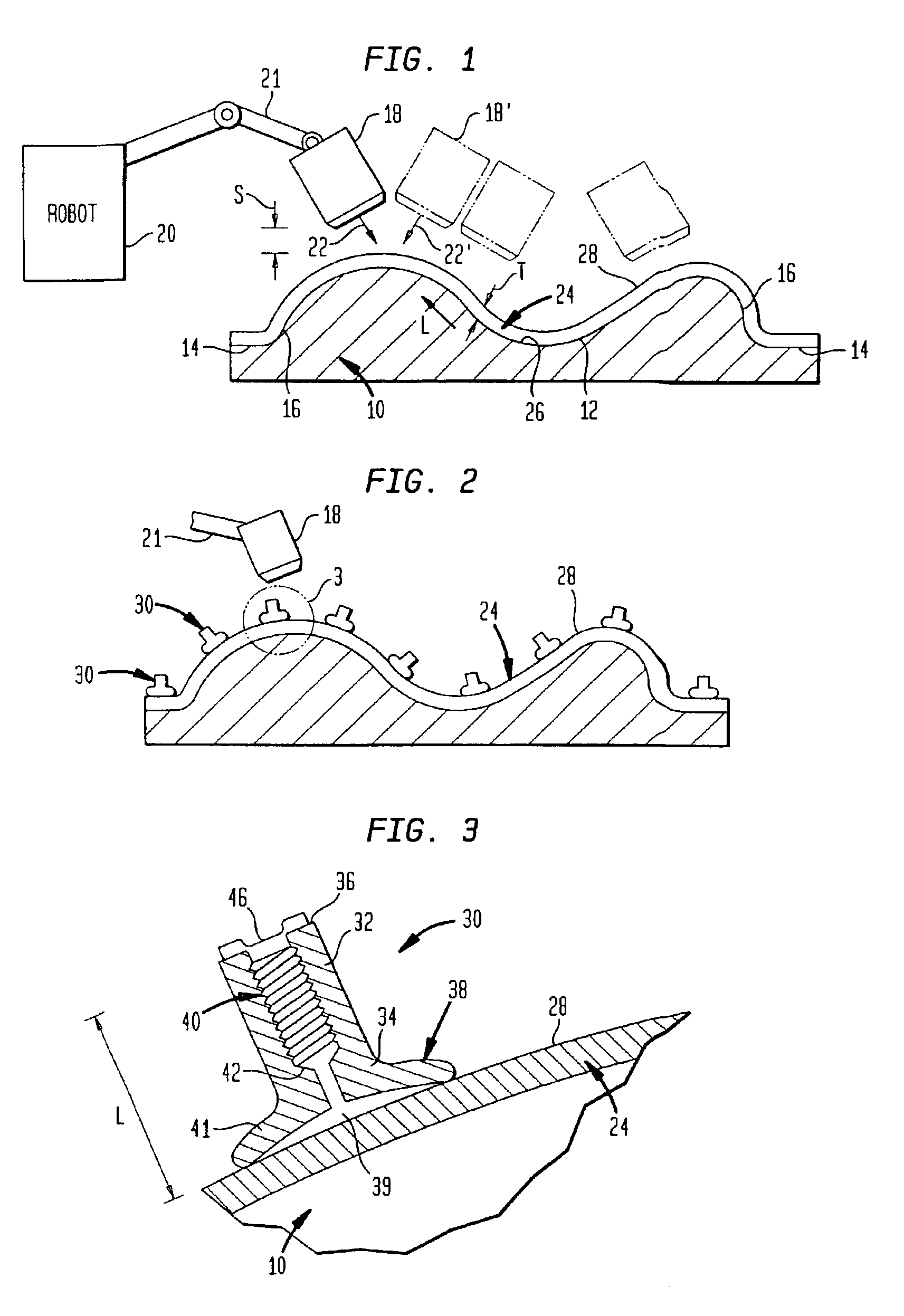
Figure 2 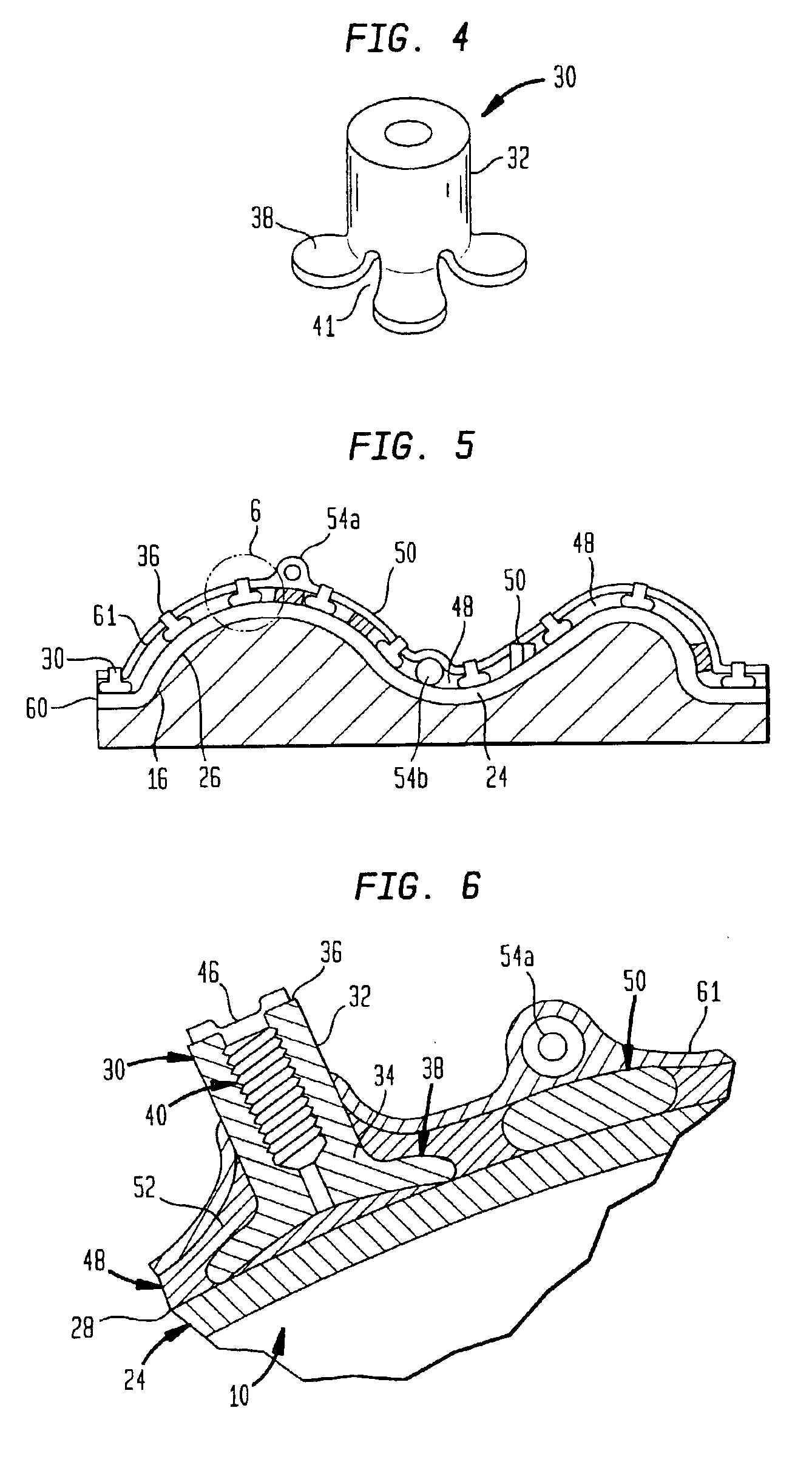
Figure 3
Abstract
Description
FIELD OF THE INVENTIONThe present invention relates to tools such as molds fabricated by thermal spraying of metals.BACKGROUND OF THE INVENTIONIndustrial processes such as molding and lay up of composite materials, thermoforming, injection molding and reaction injection molding require tools having a shape specific to the article to be made. For example, a composite article can be formed in a mold having a shape corresponding to the shape of the desired article by laying up fibers and a matrix composition such as an epoxy or other polymeric material on the surface of the mold and curing the polymer composition. In some cases, the fibers and composition are held between two mating mold parts so that the fibers and composition are squeezed between the surfaces of the mold parts. In reaction injection molding, two or more mating mold parts are brought together to form a substantially closed cavity and a reactive polymer composition is placed within the cavity and cured to form a shape ...
Examples
Embodiment Construction
A process in accordance with one embodiment of the invention uses a matrix 10 having an active surface 12 with a shape corresponding to the shape of the part to be molded. As described in greater detail in the '267 patent, the matrix desirably also includes edge regions 14 projecting outwardly from the active surface and side walls 16 extending between the edge regions and active surface 12. The matrix 10 can be formed from essentially from any material having useful structural strength at the temperatures attained by the matrix during application of the sprayed metal, typically on the order of 220° F. (104° C.). The matrix can be formed by any conventional process. For example, high-temperature epoxy composite tooling compounds can be cast to shape using a master tool (not shown). Readily machinable materials such as polymeric materials, metals such as aluminum or brass and graphite may be machined to shape using conventional methods such as numerically controlled machining methods...