

Specific steady-state R-type CA2+ channel blockers and use thereof
Patent Information
- Authority / Receiving Office
- US · United States
- Current Assignee / Owner
- Publication Date
- 2006-09-19
- Estimated Expiration
- Not applicable · inactive patent
Smart Images
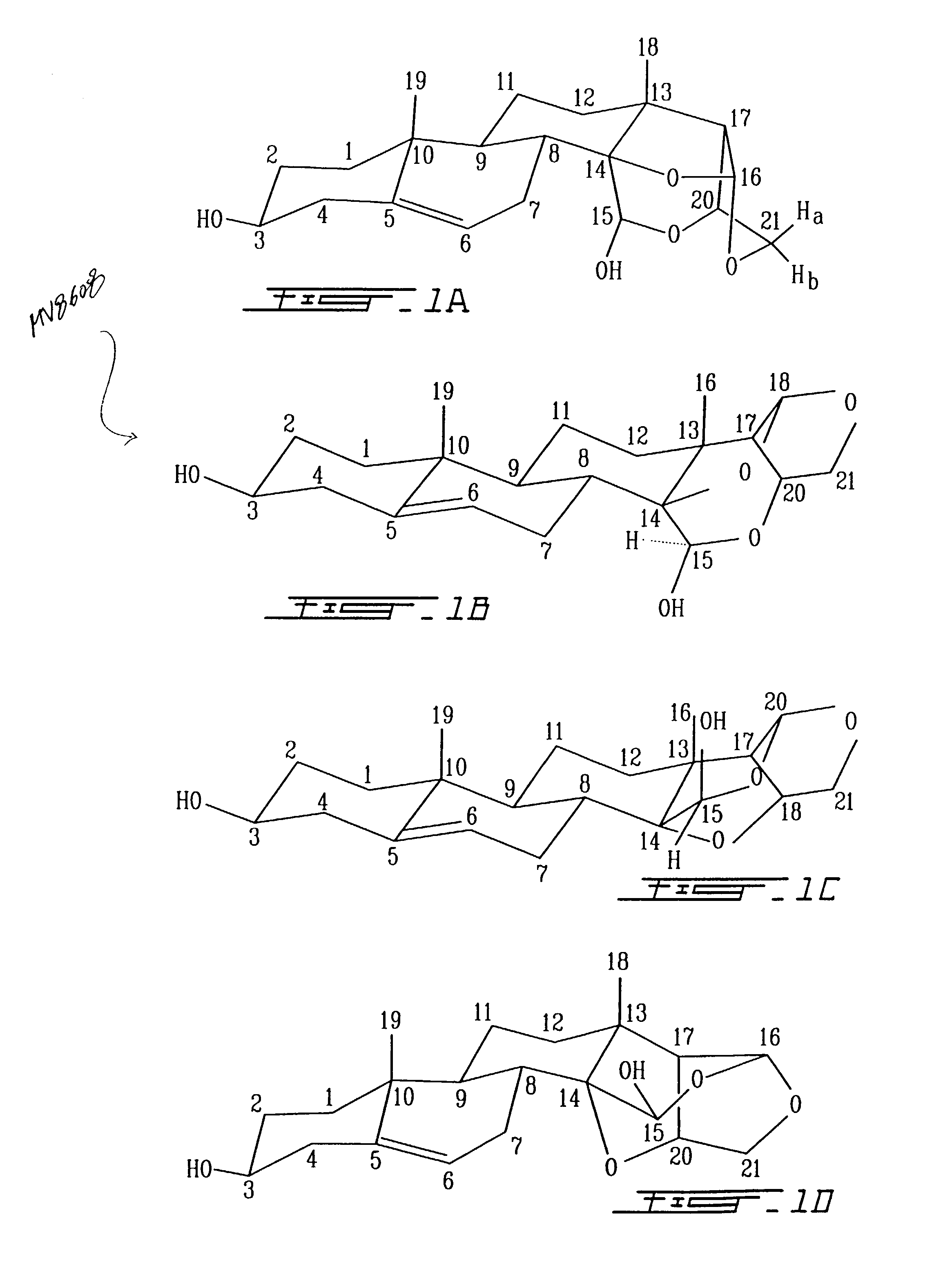
Figure 1 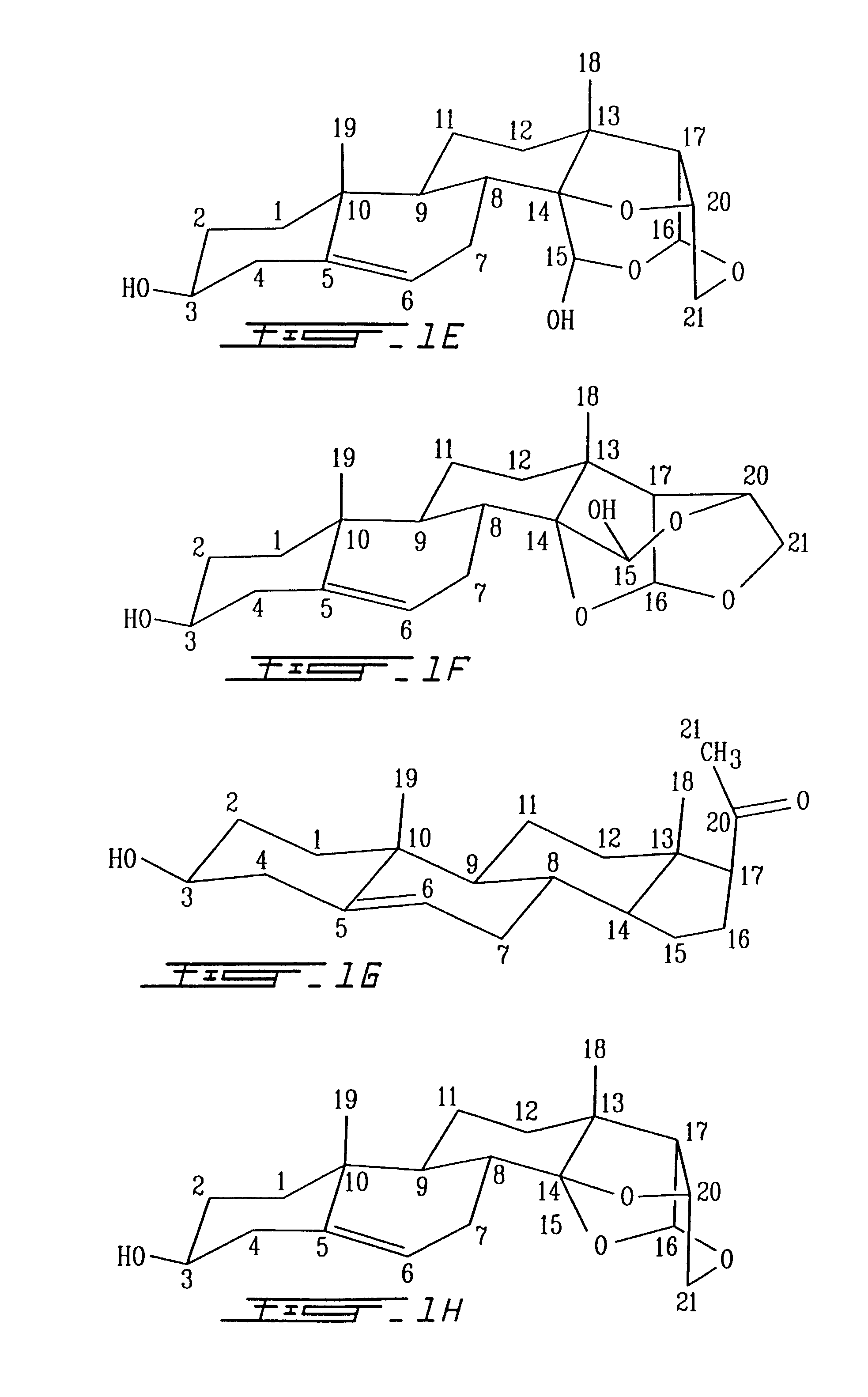
Figure 2 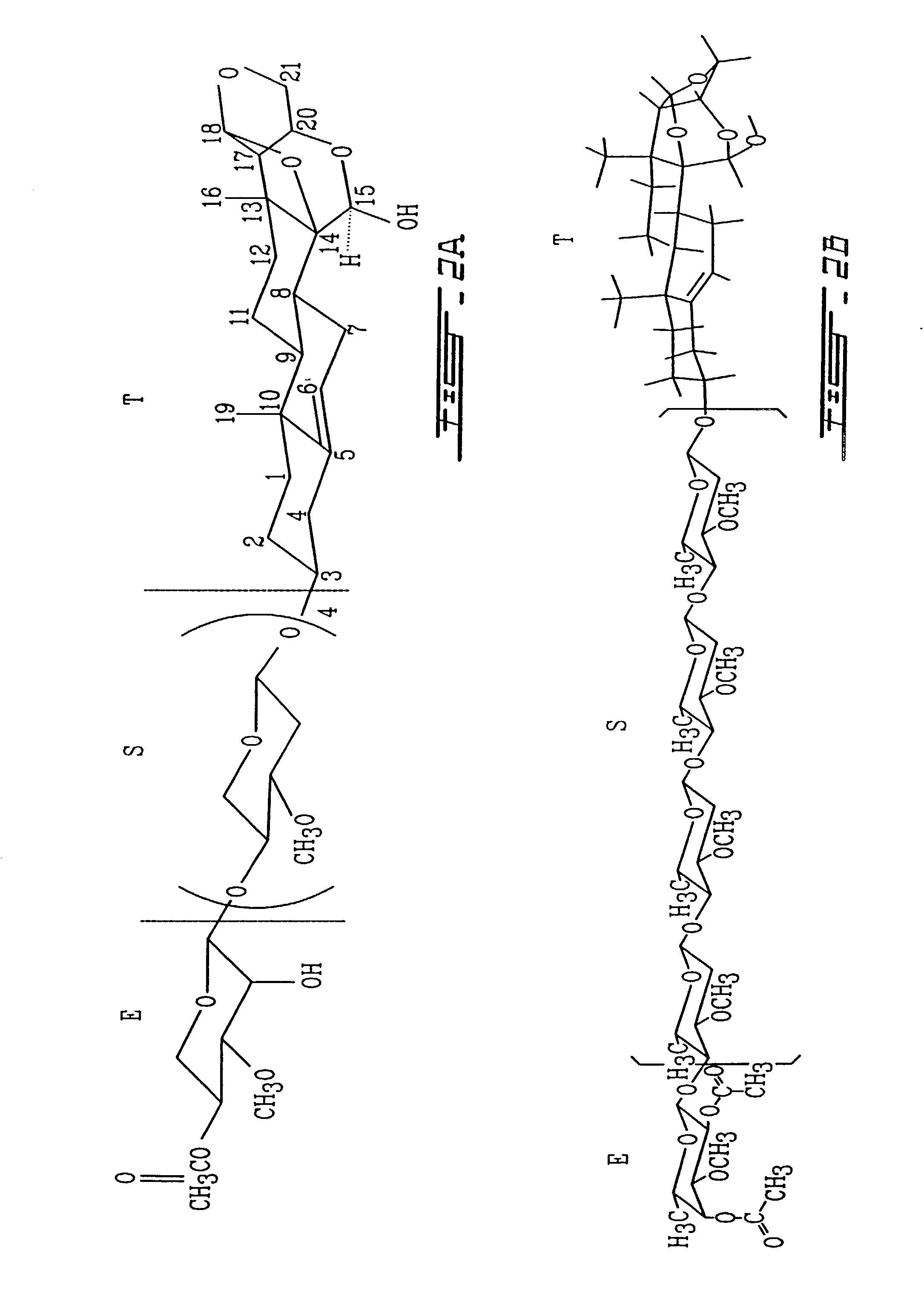
Figure 3
Abstract
Description
[0001] This application is a continuation of application Ser. No. 09 / 509,462, filed Jul. 20, 2000, now abandoned which application(s) are incorporated herein by reference.FIELD OF THE INVENTION
[0002] The present invention relates to Ca2+ channel blockers and more particularly to the R-type Ca2+ channel blockers. More specifically, the invention relates to Ca2+ channel blockers activity of Mandevilla velutina and Mandevilla illustris. The present invention further concerns saponin-like compounds isolated from Mandevilla species. The present invention also relates to the treatment of several pathologies that involve the nifedipine-insensitive but isradipine sensitive steady-state R-type Ca2+ channel and the use of steady-state R-type Ca2+ channel blockers in the treatment of these pathologies.BACKGROUND OF THE INVENTION
[0003] Sustained increase of intracellular Ca2+ or sustained Ca2+ overload (cytosolic, nuclear and mitochondrial) is known to be associated with many abnormal cell functio...
Examples
example 1
Procedure for Isolation and Purification of Compound MV8612 (FIG. 2)
[0138]The rhizomes of Mandevilla velutina were grounded into small pieces and extracted repeteadly with ethyl acetate. The extract was filtered and evaporated to yield a brown powder that accounts for 9% of the rhizomes. The extract was fractioned by silica gel column chromatography with a methylene chloride system containing increasing amounts of ethyl acetate.
[0139]Fractions were collected and monitored by thin layer chromatography (TLC; Silica Gel G), eluted with toluene-EtoAc-MeOH (55:45:5) and visualized with short and long wavelength u.v. light or with an arylaldehyde-AcOH—MeOH—H2SO4 (0:5:10:85:5) spray.
[0140]Fractions rich in velutinol glycoside MV8612 were rechromatographed in the same manner several times. Further purification by TLC yields the pure compound VIIB (FIG. 2) crystallized in ethanol.
[0141]Compound VI (0.0001% of dry weight) mp 148–150° C., white needles from ethanol responded positively to the ...
example 2
NMR Experiments
The results of the NMR experiments are shown in FIGS. 3–6.
1) 1HNMR Spectrum
[0143]The analysis of the 600 Mhz 1H NMR spectrum can be divided into three distinct regions. The first region [5.78 ppm–4.28 ppm] with the best resolved signals, corresponds to the five anomeric protons and protons at C2 and C4 of the sugar ring 5, besides protons 16, 6, 15 (H), 15(OH), 10 and 21b of the genin part (velutinol).
[0144]For the second region [3.93 ppm–3.15 ppm], a very crowded region, the integration is proportional to 31 protons and were assigned as protons 3 and 21 a of the genin part, five methoxy and fourteen methine protons of the sugar rings.
[0145]The integration of the last region (2.53–1.08 ppm] showed the presence of fifty protons; five secondary methyl, eight methylenic, two methyl from acetyl groups and twenty-one protons from the genin part.
2) 1 D Selective TOCSY
[0146]The 1 D selective TOCSY was used to define each one of the five spin systems for the sugar rings attac...
example 3
Structure of the Compounds
[0171]In the formula EST for analog VIIB (FIG. 2) the structure of the T part of the molecule is a 5-pregnane-3-ol-20-one, cholesterol, cholic acid, ergosterol, stigmasterol, androstenon, digitoxygenin, -sitosterol, uvaol, ursolic acid, sarsasapogenin, 18, -glycylrhetinic acid, betulin, betulinic acid, oleanoic acid, padocarpic acid, and preferably 5-pregnane-3-ol oxytricyclo 15-ol as shown in FIG. 1 (I, IA, IB, II, III, IV).
[0172]S for analog B is preferably (1–4) (2-deoxy, 3-methoxy, 5-methyl)-L-lyxotetrose, (1–4) (2-deoxy, 3-methoxy) L-xylotetrose, (1–4) (2-deoxy, 3-methoxy)-L-arabinotetrose, (1–4)(2-deoxy, 3-methoxy)-1-xylotetrose, (1–4)(2-deoxy, 3-methoxy-L-ribopyranotetrose, (1–4) (2-deoxy, 3 methoxy-L-sorbotetrose, (1–4)-L-lyxotetrose, (1–4)-L-xylote-trose, (1–4)-L-arabinotetrose, (1–4)-L-xylotetrose, (1–4)-3,4 methoxy-L-lyxotetrose, (1–4)-3,4 methoxy-L-xylotetrose, (1–4)-3,4 methoxy-L-arabinotetrose, (1–4)-3,4 methoxy-L-xylotetrose, (1–4)-3,4 methox...