

Use of jasmonate ester derivatives for treating benign hyperproliferative skin disorders
Patent Information
- Authority / Receiving Office
- US · United States
- Current Assignee / Owner
- Publication Date
- 2015-03-19
Smart Images
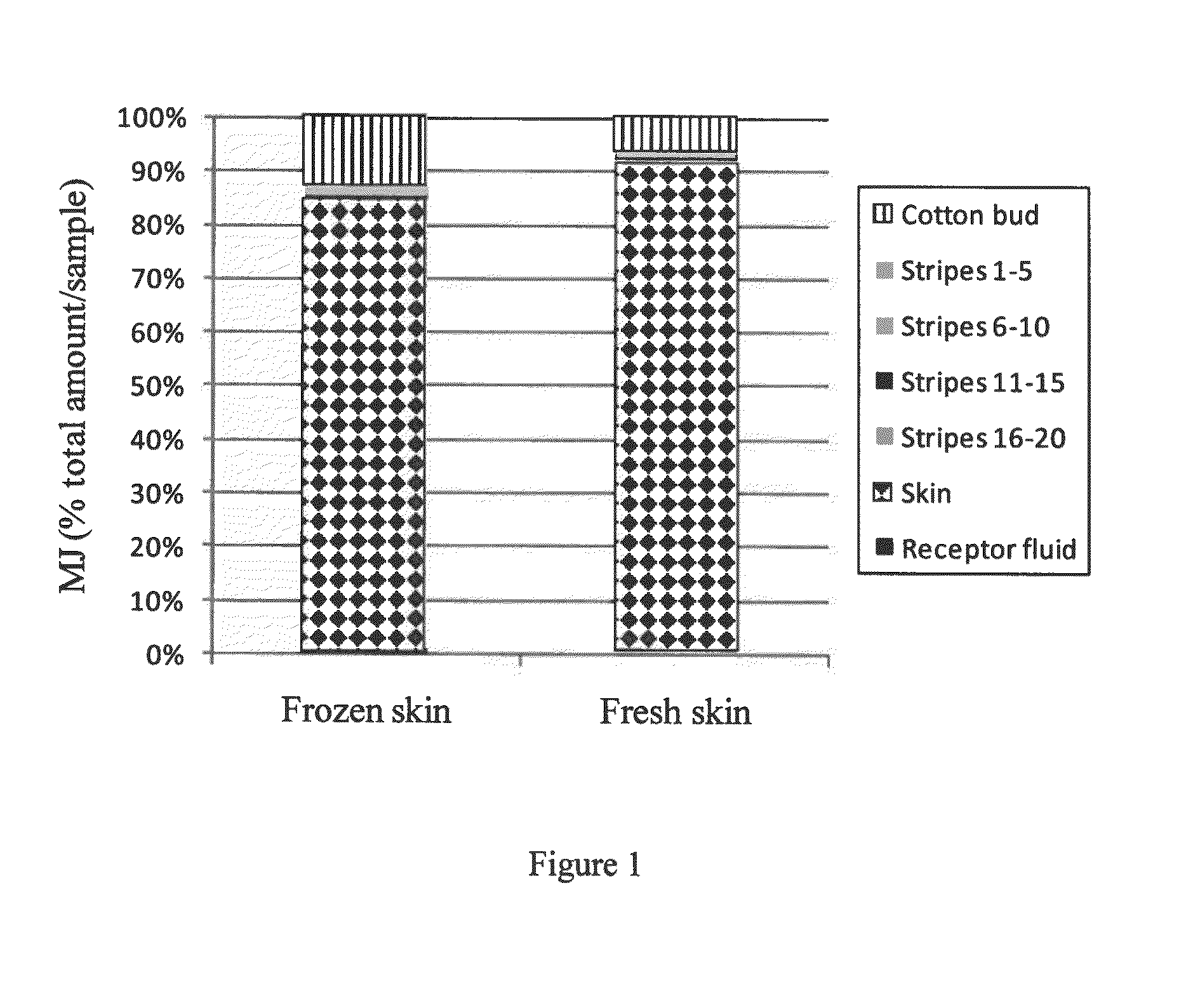
Figure 1 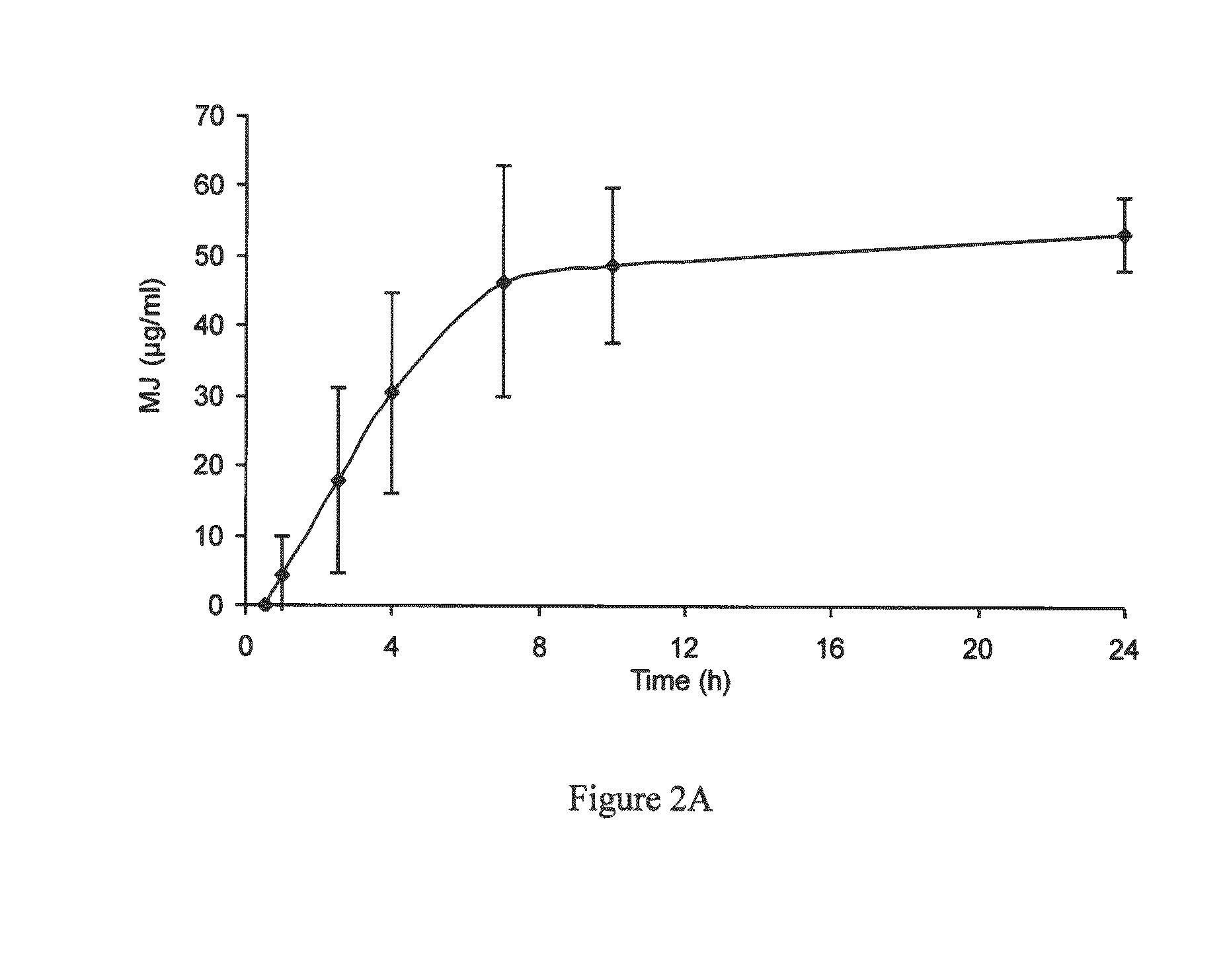
Figure 2 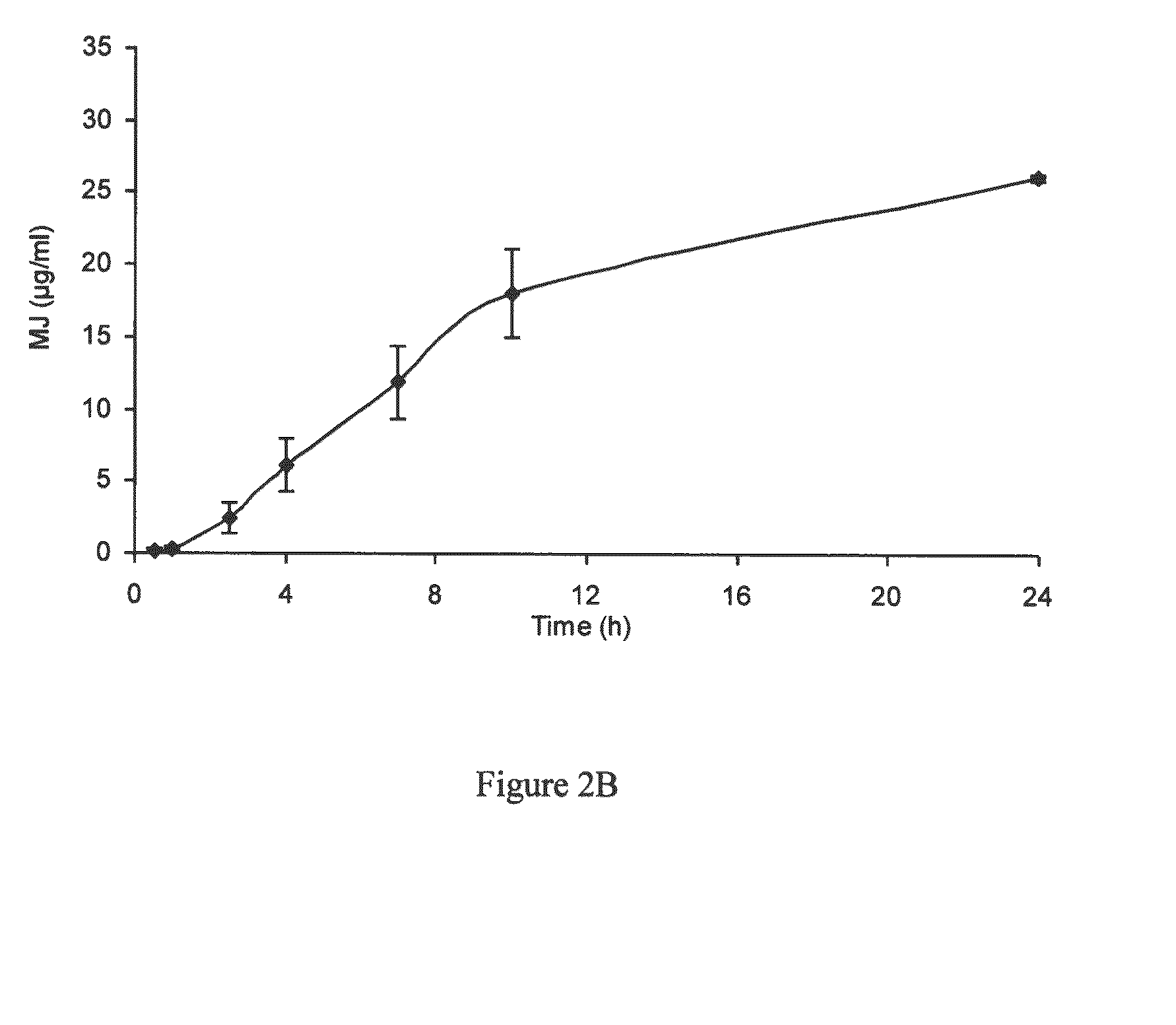
Figure 3
Abstract
Description
CROSS REFERENCE TO RELATED APPLICATIONS
[0001] This application is a Continuation-In-Part of U.S. patent application Ser. No. 13 / 376,917, which is a 35 U.S.C. §371 National Phase Entry Application from PCT / IL2010 / 000438, filed Jun. 3, 2010, and designating the United States, which claims the benefit of U.S. Provisional Application No. 61 / 185,221, filed on Jun. 9, 2009, and U.S. Provisional Application No. 61 / 249,265, filed on Oct. 7, 2009, the contents of each of which are incorporated herein in their entireties for all purposes.FIELD OF THE INVENTION
[0002] The present invention relates to methods of use of jasmonate ester derivatives for treating benign hyperproliferative disorders of the skin, in particular, actinic keratosis.BACKGROUND OF THE INVENTION
[0003] Jasmonates are a family of plant stress hormones, which are released in instances of extreme UV radiation, osmotic shock, heat shock, pathogen attack and the like, to initiate various cascades. The use of jasmonates for the treat...
Examples
example 1
Pharmacokinetics Studies in Human Skin
[0196]In order to test the applicability of jasmonate ester derivatives in treating benign hyperproliferative skin disorders through topical administration, samples of human skin were used to assess dermal drug delivery and percutaneous absorption of MJ. The penetration profile of MJ in human abdominal skin was analyzed using an in vitro flow-through diffusion Frantz cell, according to the OECD guidelines and ECVAM recommendations (OECD Guideline for the testing of chemicals, 428, Skin absorption: in vitro method, adopted Apr. 13, 2004; Hows, The report and recommendation of ECVAM workshop 13, ATLA, 24, 81, 1996). These studies were conducted by BSL-Bioservices (Planegg, Germany) and the samples were analyzed by ATC (Liege, Belgium).
[0197]Two separate studies using cryo-preserved skin and fresh skin were conducted to test the percutaneous penetration of MJ. Upon application of MJ on skin patches, local intra-skin concentrations in the range of 1...
example 2
Toxicity of Jasmonate Ester Derivatives in Human Skin—Skin Irritation Assay
[0199]Acute irritation is a local, reversible inflammatory response of normal living skin to direct injury caused by the application of an irritant substance.
[0200]In order to test the toxicity of jasmonate ester derivatives in human skin, skin irritation assay using a reconstituted three-dimensional human epidermis model (EPISKIN-Standard Model™; conducted at BSL-Bioservices, Planegg, Germany) was performed. This skin model uses normal (non-cancerous), adult human-derived epidermal keratinocytes which have been cultured to form a multilayered, highly differentiated model of human epidermis with a functional stratum corneum.
[0201]In particular, MJ was applied topically to the EPISKIN-SM™ tissue for 15 minutes followed by a 42 hours post-incubation period and immediate determination of cytotoxic effects via MTT reduction assay. Irritant potential of the compound was assessed from the relative mean tissue viabi...
example 3
Toxicity of Jasmonate Ester Derivatives in Human Skin—Skin Corrosion Assay
[0203]Skin corrosion refers to the production of irreversible tissue damage in the skin following the application of a test material.
[0204]In order to test the toxicity of jasmonate ester derivatives in human skin, skin corrosion assay using a reconstituted three-dimensional human epidermis model (EpiDerm™ skin model from MatTek, conducted at BSL-Bioservices, Planegg, Germany) was performed. This skin model uses normal (non-cancerous), human-derived epidermal keratinocytes which have been cultured to form a multilayered, highly differentiated model of human epidermis with functional skin layers (basal, spinous, granular and cornified) analogous to those found in vivo.
[0205]In particular, MJ was applied topically to the EpiDerm™ tissue and incubated for 3 and 60 minutes at each time. After the incubation period, tissue viability was assessed via MTT reduction assay. The corrosive potential of MJ was assessed fr...