
Nutrient yielding bio-renewable controlled release fertilizer coatings
a technology of biorenewable controlled release and fertilizer coating, which is applied in the direction of biocide, application, animal corpse fertiliser, etc., can solve the problems of respiratory distress of people and animals in the local vicinity, the importance of animal waste disposal, and the impact of hydrophilicity
Patent Information
- Authority / Receiving Office
- US · United States
- Patent Type
- Patents(United States)
- Current Assignee / Owner
- Publication Date
- 2014-07-01
- Estimated Expiration
- Not applicable · inactive patent
Smart Images
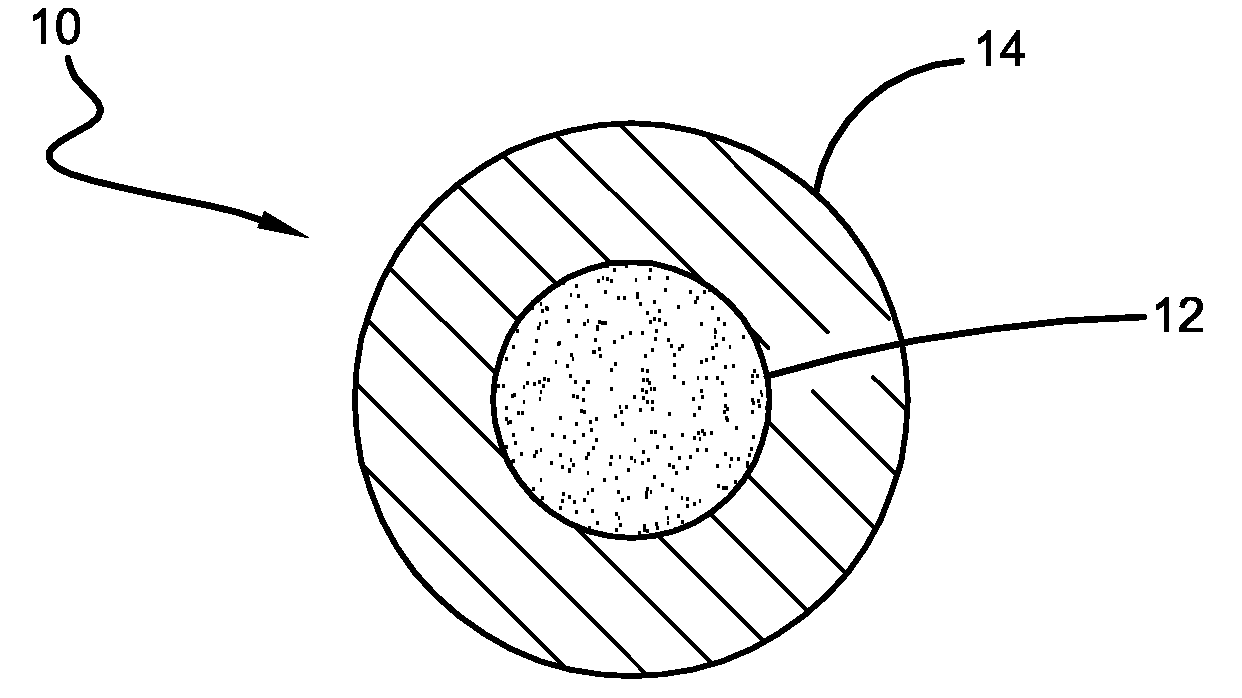
Figure 1 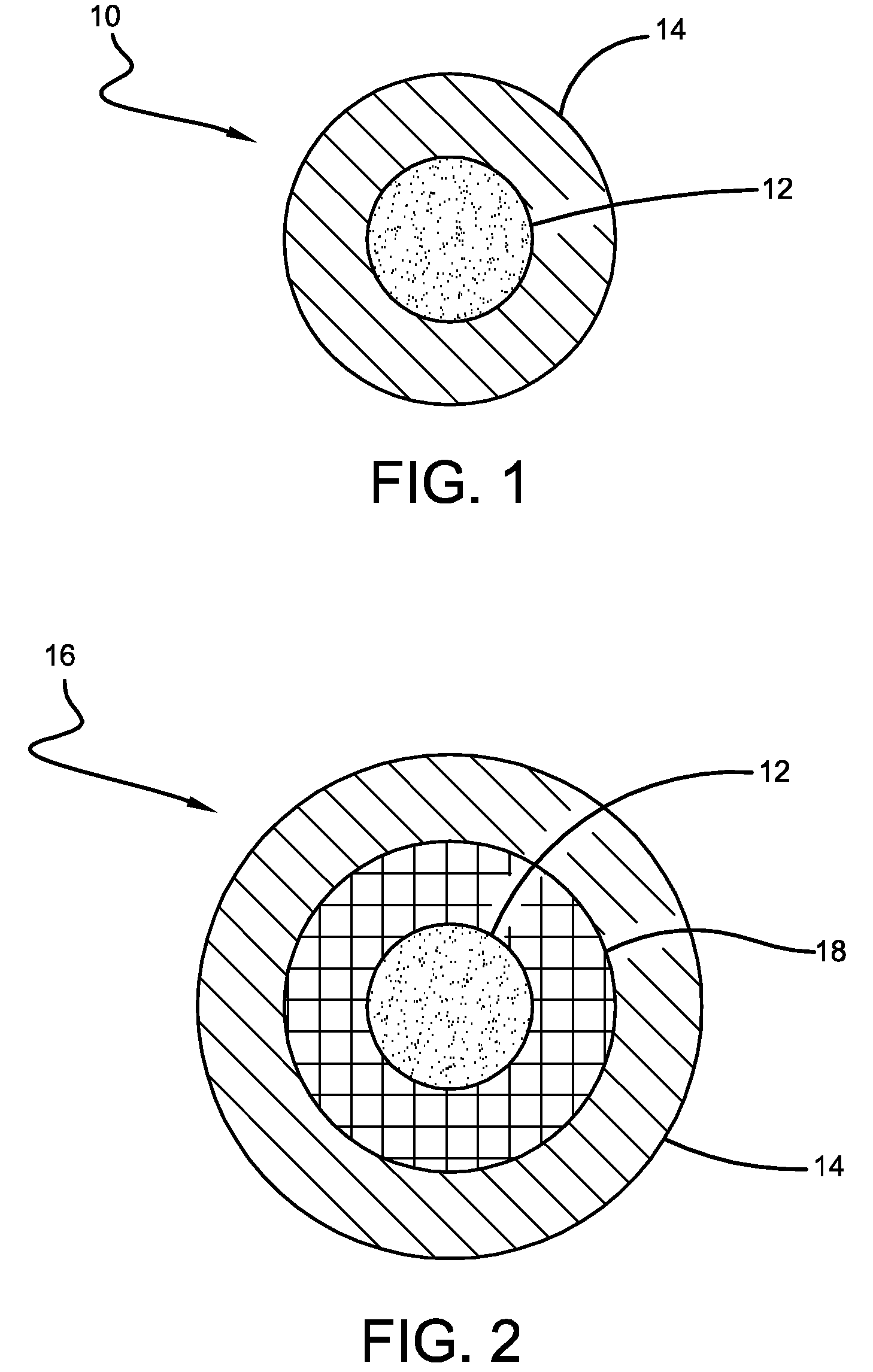
Figure 2
Abstract
Description
CROSS-REFERENCE TO RELATED APPLICATION
[0001] This application is the National Stage of International Application No. PCT / US2010 / 059267 filed on Dec. 7, 2010, which claims the benefit of U.S. Provisional Patent Application 61 / 283,655, filed Dec. 7, 2009.FIELD OF THE INVENTION
[0002] This invention relates to a biologically derived resinous material that is herein termed a “biomaterial.” In particular embodiments, this invention relates to a biomaterial that is derived, in part, from animal waste. In specific embodiments, the biomaterial is employed as a coating applied to fertilizer particles. More particularly, this invention relates to biomaterial coatings that are themselves nutrient yielding and are obtained in whole or in part from biologically renewable resources. In some instances, the coatings serve to control the release of the fertilizer particles into the environment; in other instances, the coating reduces caking during storage and transport and / or reduces the formation of d...
Examples
example 1
[0078]Hog waste including excrements such as swine manure and urine and shedding such as hair are collectively stored in a pit beneath a hog confinement area, such waste further including the rinse water from cleaning the areas of confinement. This waste is subjected to a number of processing steps including screening, particle size reduction, solids content control, purification, pyrolysis, fine filtration and drying to provide a biomaterial as disclosed herein above. Pyrolysis occurs for a period of time 1.5 hours at a pressure maintained around 1600 psi and a temperature range maintained around 300° C. The resulting filtered and dried biomaterial has a final moisture content of less than 5 percent, a particle size via sieve analysis of +200 mesh. Elementally, the biomaterial is comprised principally of carbon and hydrogen along with lesser amounts of sulfur, nitrogen and phosphorous.
example 2
[0079]180 grams of biomaterial from Example 1, is heated to a temperature of 300 degrees Fahrenheit in a 600 mL insulated glass beaker. While vigorously stirring with an overhead paddle mixer at 100 rpm, 25 grams of hydrogenated tallow amine and 75 grams of ethylene vinyl acetate (Elvax 205W) are sequentially added. This composition represents a product that can be used as a sealant coating for polymer or sulfur coated fertilizers.
example 3
[0080]95 grams of biomaterial of Example 1 is heated to a temperature of 250 degrees Fahrenheit in a 250 mL glass beaker. While moderately stirring with an overhead paddle mixer 5 grams of hydrogenated tallow amine is added to the beaker and mixed for 15 minutes. This composition represents a product that can be used as a dust control coating agent for granular fertilizers.