
Geographic cloud data based spatial matching method
A matching method and cloud data technology, applied in the field of spatial matching, can solve problems such as large amount of calculation and failure of iterative process to converge
- Summary
- Abstract
- Description
- Claims
- Application Information
AI Technical Summary
Problems solved by technology
Method used
Image

Examples
Embodiment Construction
[0044] The technical solutions of the embodiments of the present invention will be clearly and completely described below in conjunction with the accompanying drawings of the present invention.
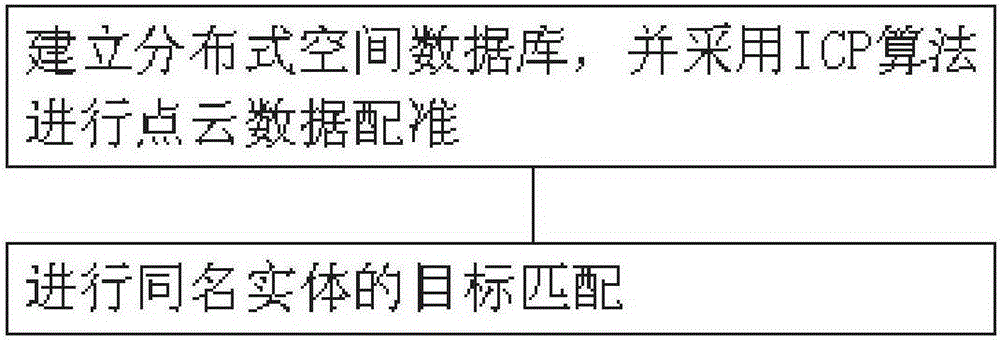
[0045] like figure 1 As shown, a kind of spatial matching method based on geographic cloud data disclosed by the present invention includes:
[0046] Step 1: Establish a distributed spatial database, and use the ICP algorithm for point cloud data registration.
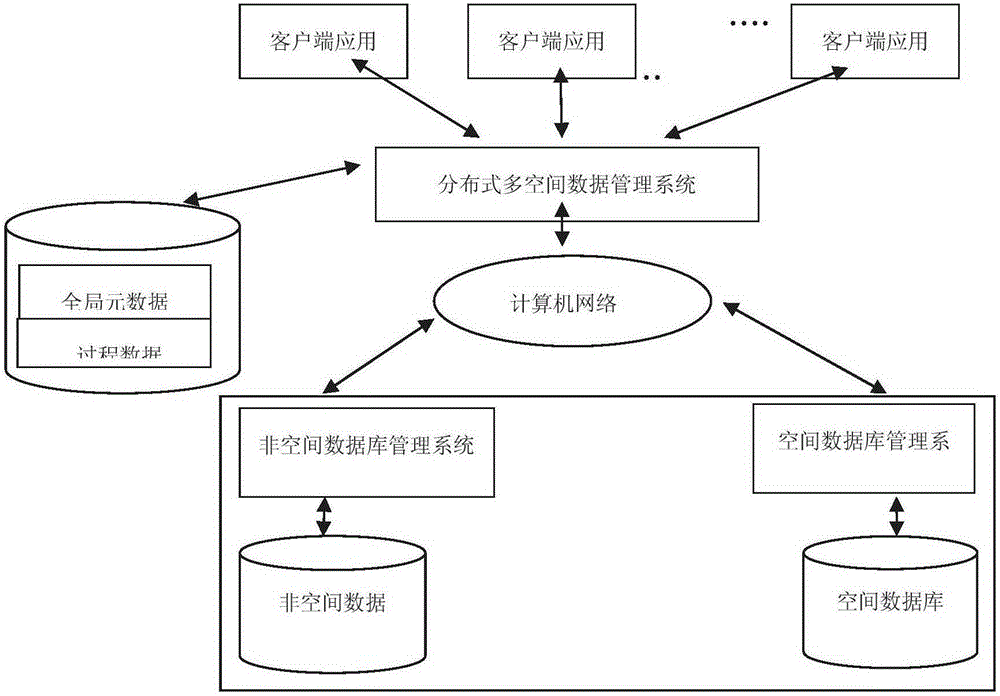
[0047] combine figure 1 and figure 2 As shown, the system structure of the distributed multi-spatial database established by the present invention adopts the Client / Serve structure, which is a completely independent management system participating in the spatial database, each of which manages its own database. The distributed multi-spatial database management system is a layer of software running on top of these independent spatial database management systems and non-spatial database management systems. It is responsible ...
PUM
 Login to View More
 Abstract
Description
Claims
Application Information
 Login to View More