
Cellular heterogeneous network resource allocation method based on game theory
A heterogeneous network and resource allocation technology, applied in electrical components, wireless communication, power management, etc., can solve problems such as not mentioning the use of resource blocks, and not analyzing the relationship between operators and resource suppliers in depth
- Summary
- Abstract
- Description
- Claims
- Application Information
AI Technical Summary
Problems solved by technology
Method used
Image

Examples
Embodiment Construction
[0048] The embodiments of the present invention are described in detail below in conjunction with the accompanying drawings: this embodiment is implemented on the premise of the technical solution of the present invention, and detailed implementation methods and specific operating procedures are provided, but the protection scope of the present invention is not limited to the following the described embodiment.
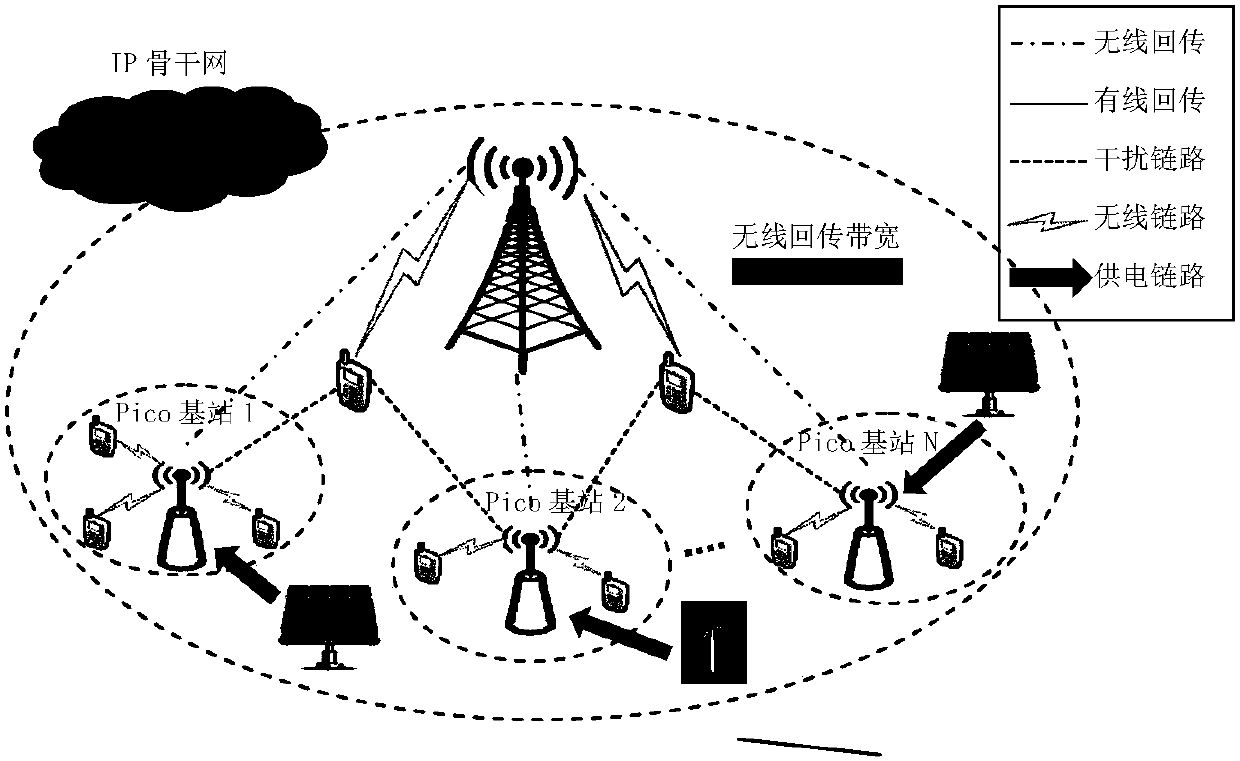
[0049] Such as figure 1 As shown, it is a schematic diagram of the system model. The figure lists the corresponding relationship between the macro base station, the renewable energy supplier, the micro base station, and the user, and clearly shows the implementation of the system.
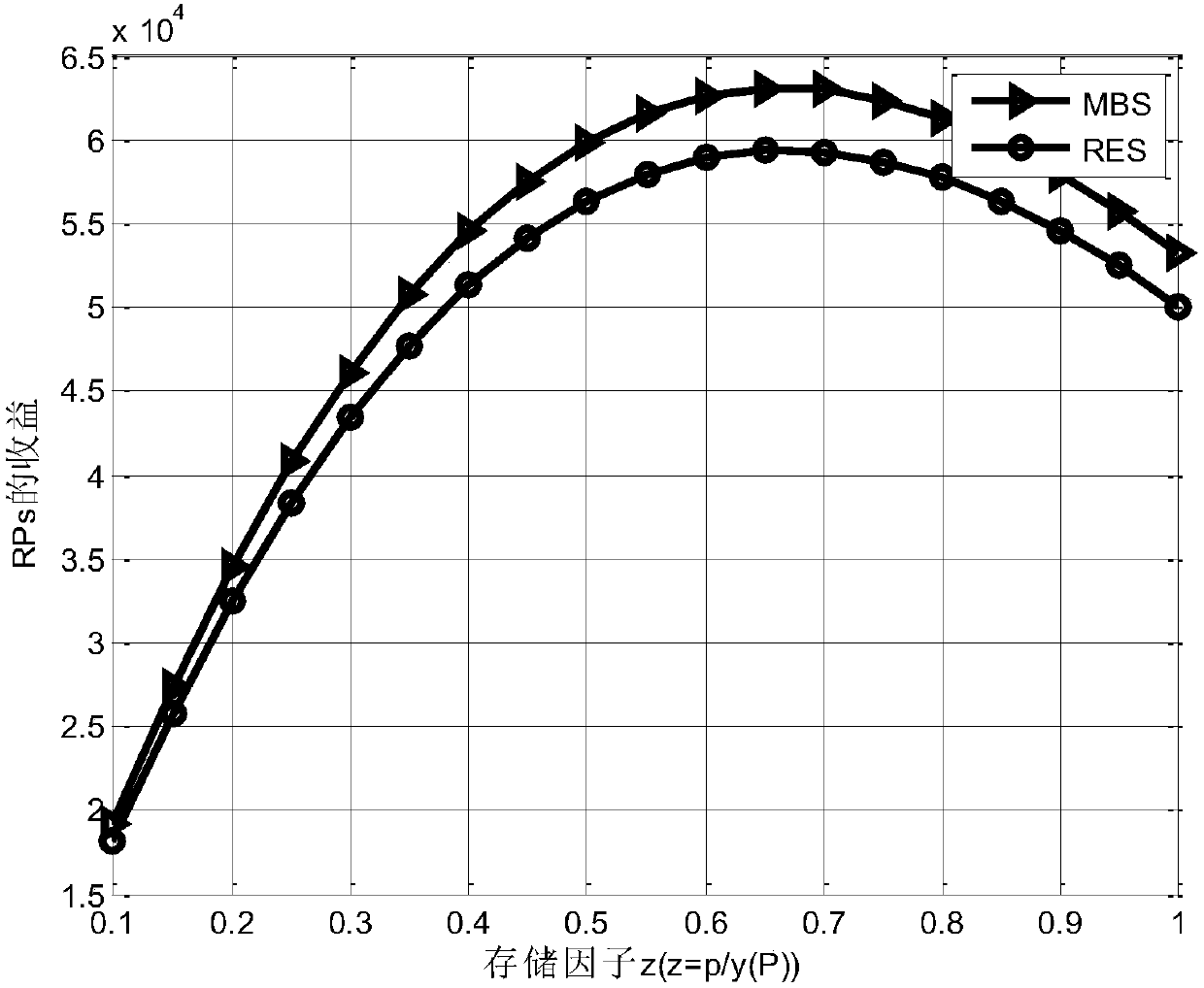
[0050] figure 2 It is the revenue comparison between the macro base station and the energy supplier.
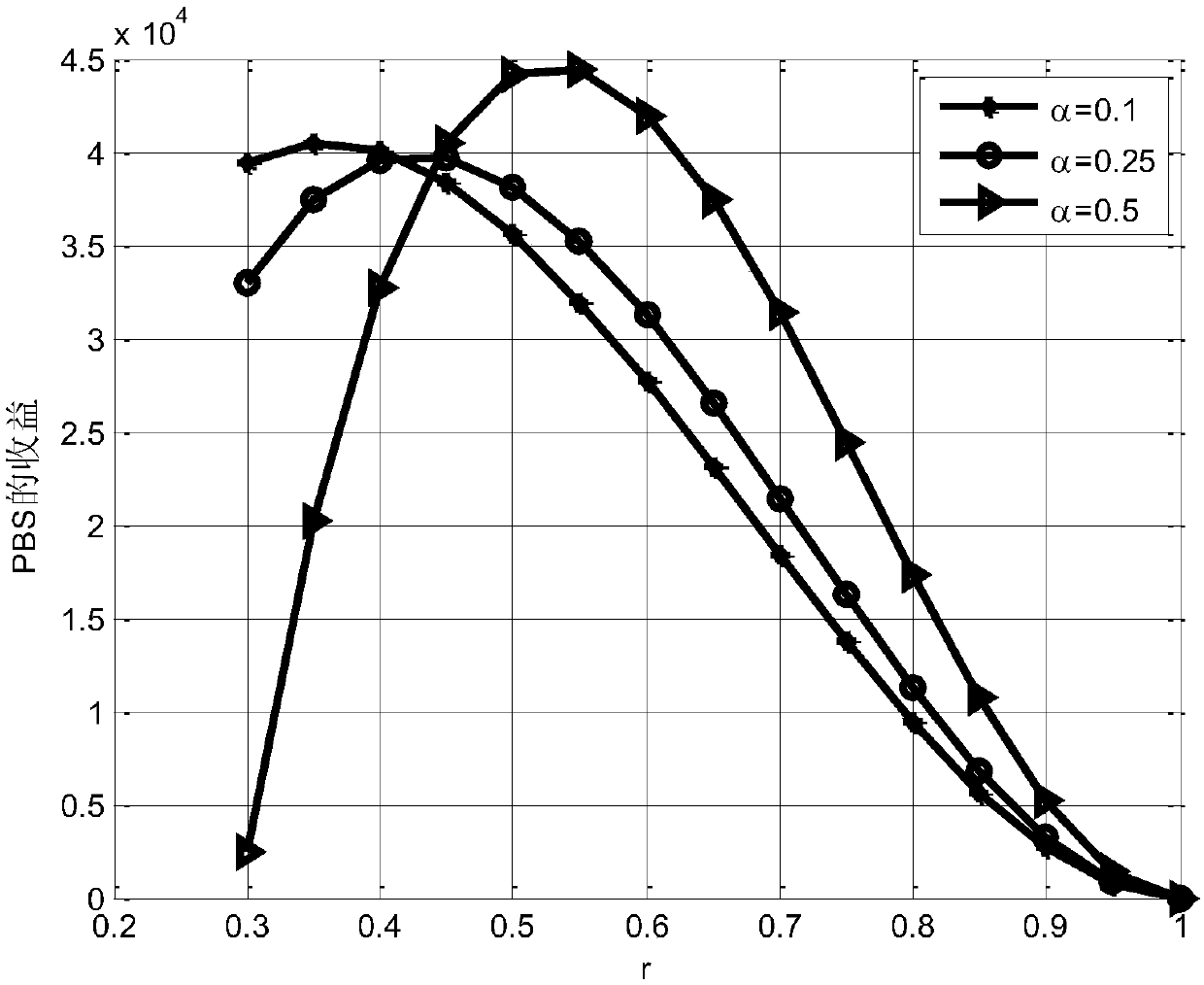
[0051] image 3 It is the utility comparison of the micro base station, showing the influence of the inherent cost of the micro base station on the utility income of the micro base st...
PUM
 Login to View More
 Abstract
Description
Claims
Application Information
 Login to View More