Simple saline-alkali region water resource collection and utilization system

A water resource and saline-alkali technology, applied in the field of water resource collection and utilization in saline-alkali land, can solve problems such as uneconomical, large amount of greening earthwork, increased road drainage pressure and waterlogging risk, etc., and achieves the effect of reducing runoff pollution and reducing earthwork volume.

CN110230302AInactive Publication Date: 2019-09-13天津生态城市政景观有限公司
0 Cites 0 Cited by

Patent Information

Authority / Receiving Office
CN · China
Patent Type
Applications(China)
Current Assignee / Owner
Publication Date
2019-09-13
Estimated Expiration
Not applicable · inactive patent

Smart Images

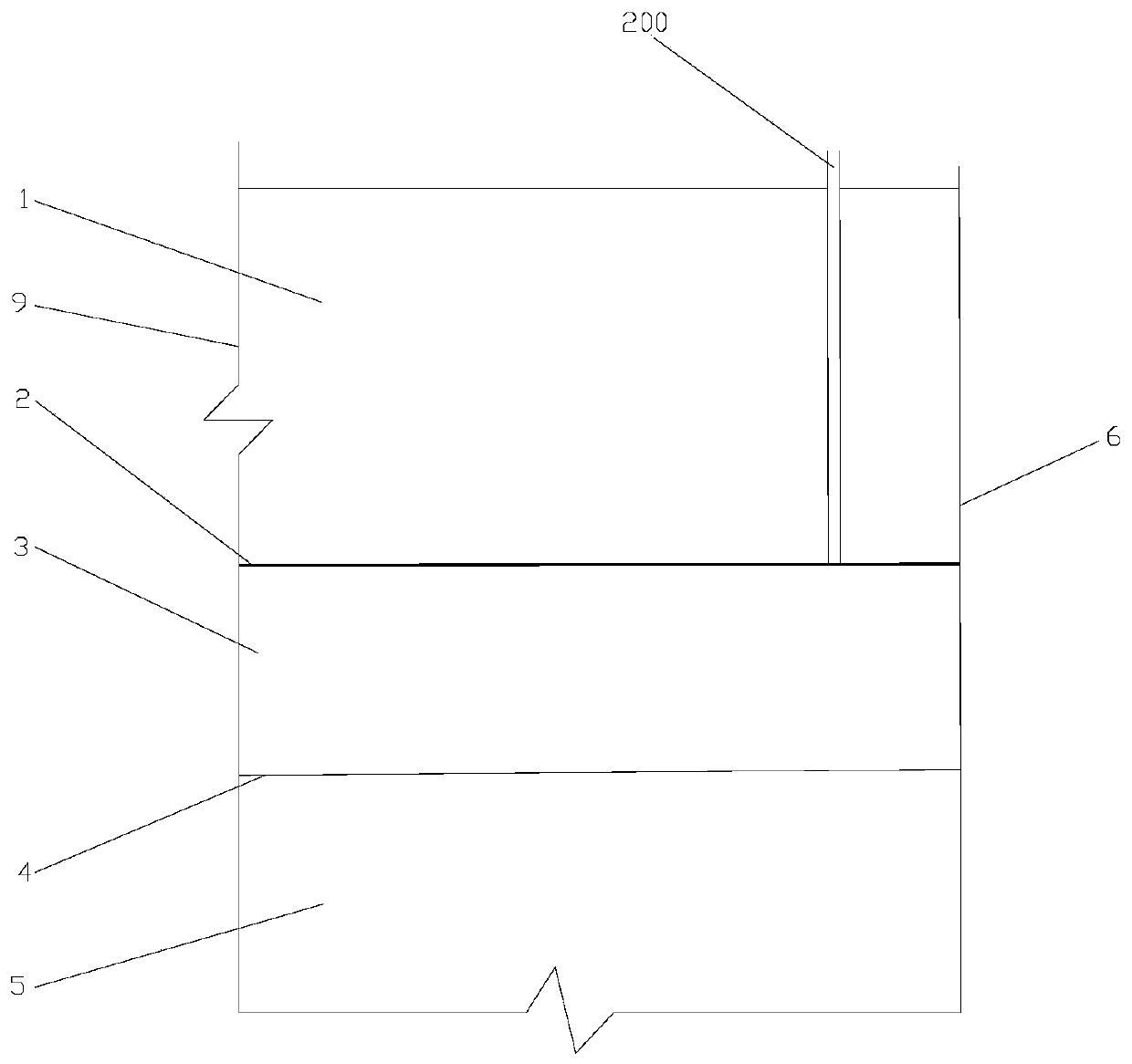
  • Figure 1
    Figure 1
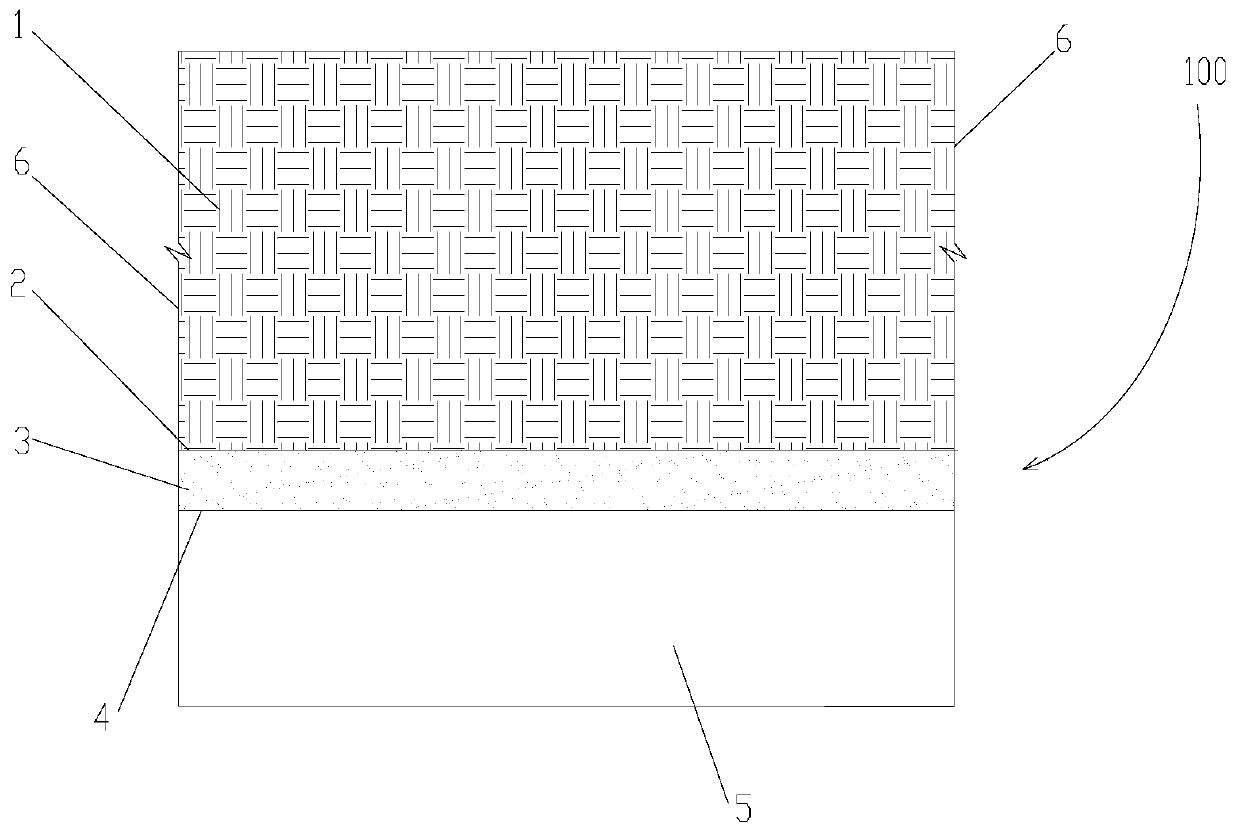
  • Figure 2
    Figure 2
Patent Text Reader

Abstract

The invention discloses a simple saline-alkali region water resource collection and utilization system. The simple saline-alkali region water resource collection and utilization system comprises a soil body and an air vent hole; the soil body comprises a planting soil layer, a water-permeable membrane layer, an aquifer layer, a waterproof layer and a saline-alkali soil layer which are arranged from top to bottom in sequence; the planting soil layer and the aquifer layer are separated by the water-permeable membrane layer; the aquifer layer and the saline-alkali soil layer are separated by thewaterproof layer; the junction of the outer side of the soil body and surrounding buildings or structures is reversely wrapped with a lateral waterproof layer; and the air vent hole extends downward from the planting soil layer of the soil body to the water-permeable membrane layer. The simple saline-alkali region water resource collection and utilization system can effectively collect rainwater which infiltrates into the planting soil layer after rainfall, and does not cause salt in the saline-alkali soil layer to be returned to the planting soil layer; in addition, the simple saline-alkali region water resource collection and utilization system can further reduce the greening elevation of saline-alkali land, reduce the amount of earthwork and reduce runoff pollution to roads and other surrounding facilities; and in a saline-alkali water shortage zone, each drop of water infiltrated into soil cannot be drained.
Need to check novelty before this filing date? Find Prior Art

Description

technical field

[0001] The invention belongs to the field of collection and utilization of water resources in saline-alkali areas, and in particular relates to a simple system for collecting and utilizing water resources in saline-alkali areas. Background technique

[0002] my country's per capita water resource consumption is only 30% of the world level, and most areas are short of water or severely short of water. In recent years, with the further deepening of urbanization, the demand for water resources is increasing. How to develop efficiently Utilization of water resources has become a challenge that the whole society needs to face together.

[0003] In order to explore the path of sponge city construction under different natural environments and urban forms, the country has carried out two batches of 30 sponge city pilot projects. At present, the construction of sponge cities has been carried out in full swing across the country, and different rainwater is used for diff...

Examples

Embodiment Construction

[0020] In order to illustrate the present invention more clearly, the present invention will be further described below in conjunction with preferred embodiments. Those skilled in the art should understand that the content specifically described below is illustrative rather than restrictive, and should not limit the protection scope of the present invention.

[0021] It should be noted that when an element is referred to as being “fixed” or “disposed on” another element, it may be directly on the other element or be indirectly on the other element. When an element is referred to as being "connected to" another element, it can be directly connected to the other element or indirectly connected to the other element.

[0022] It is to be understood that the terms "length", "width", "top", "bottom", "front", "rear", "left", "right", "vertical", "horizontal", "top" , "bottom", "inner", "outer" and other indicated orientations or positional relationships are based on the orientation...