
Shooting method and device for multiple moving objects
A technology for moving objects and moving information, applied in color TV parts, TV system parts, TV and other directions, can solve problems such as low picture stability, solve the problem of smear, reduce overexposure or overdark, Reduce the effect of brightness oscillation
- Summary
- Abstract
- Description
- Claims
- Application Information
AI Technical Summary
Problems solved by technology
Method used
Image

Examples
Embodiment Construction
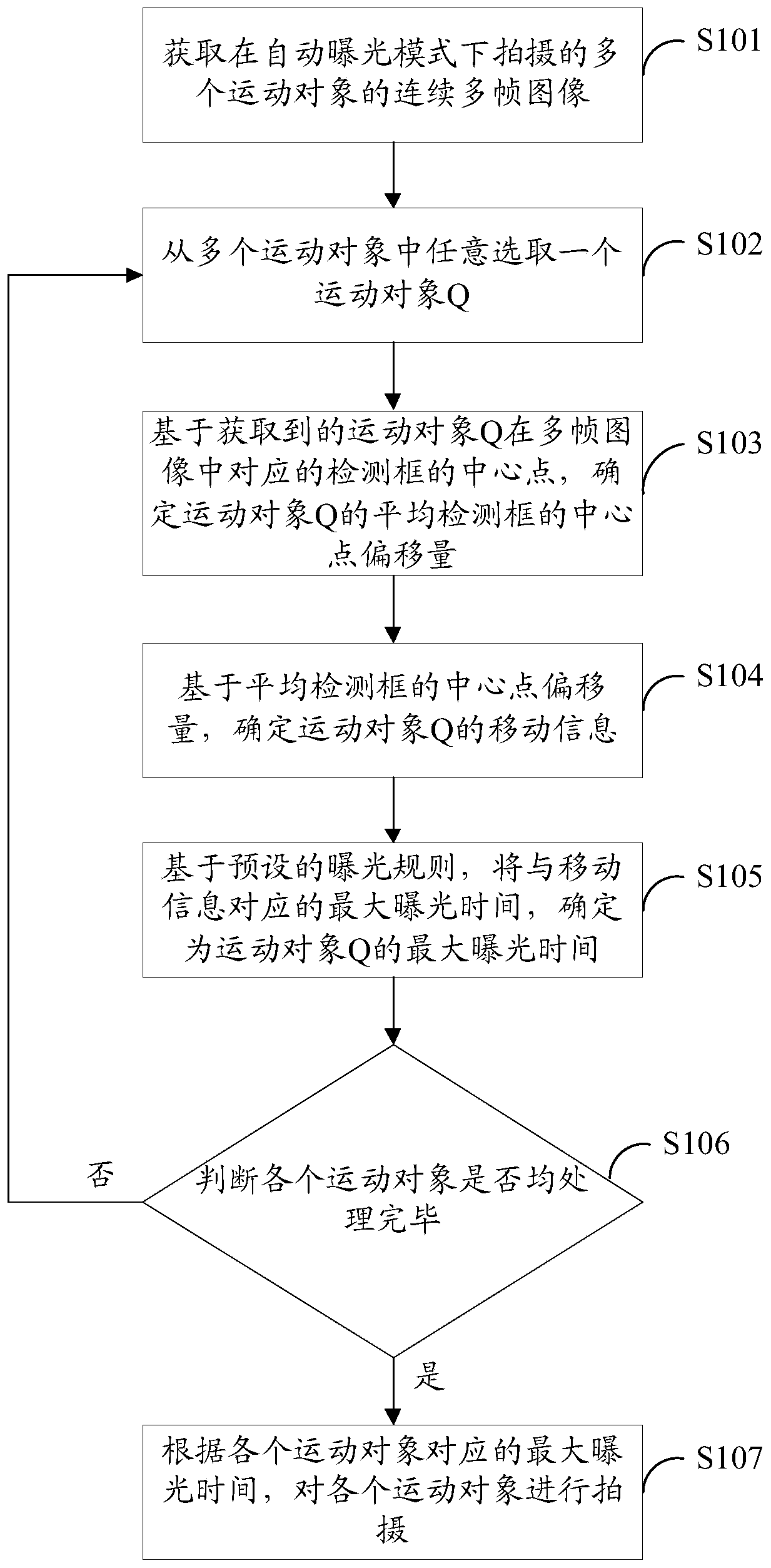
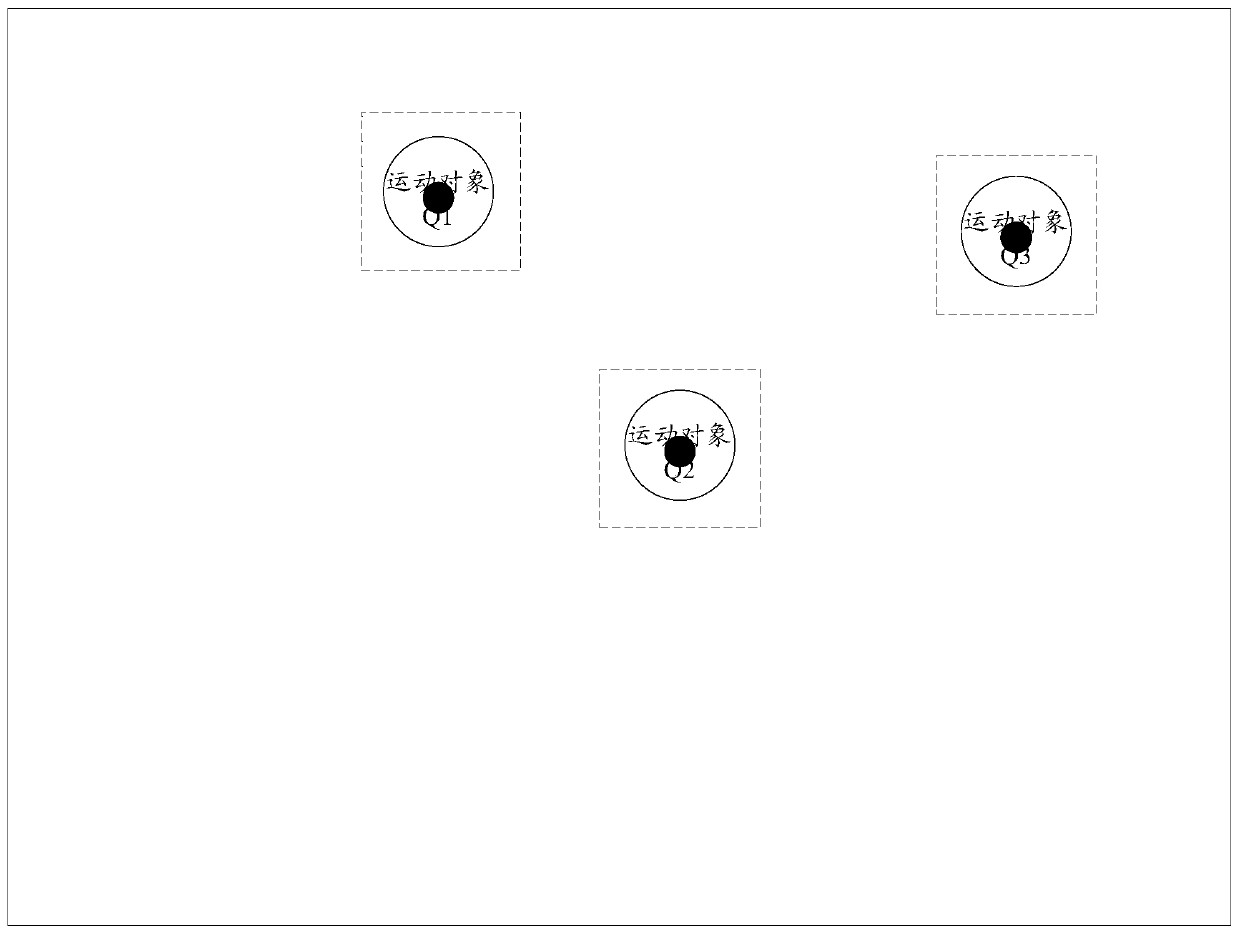
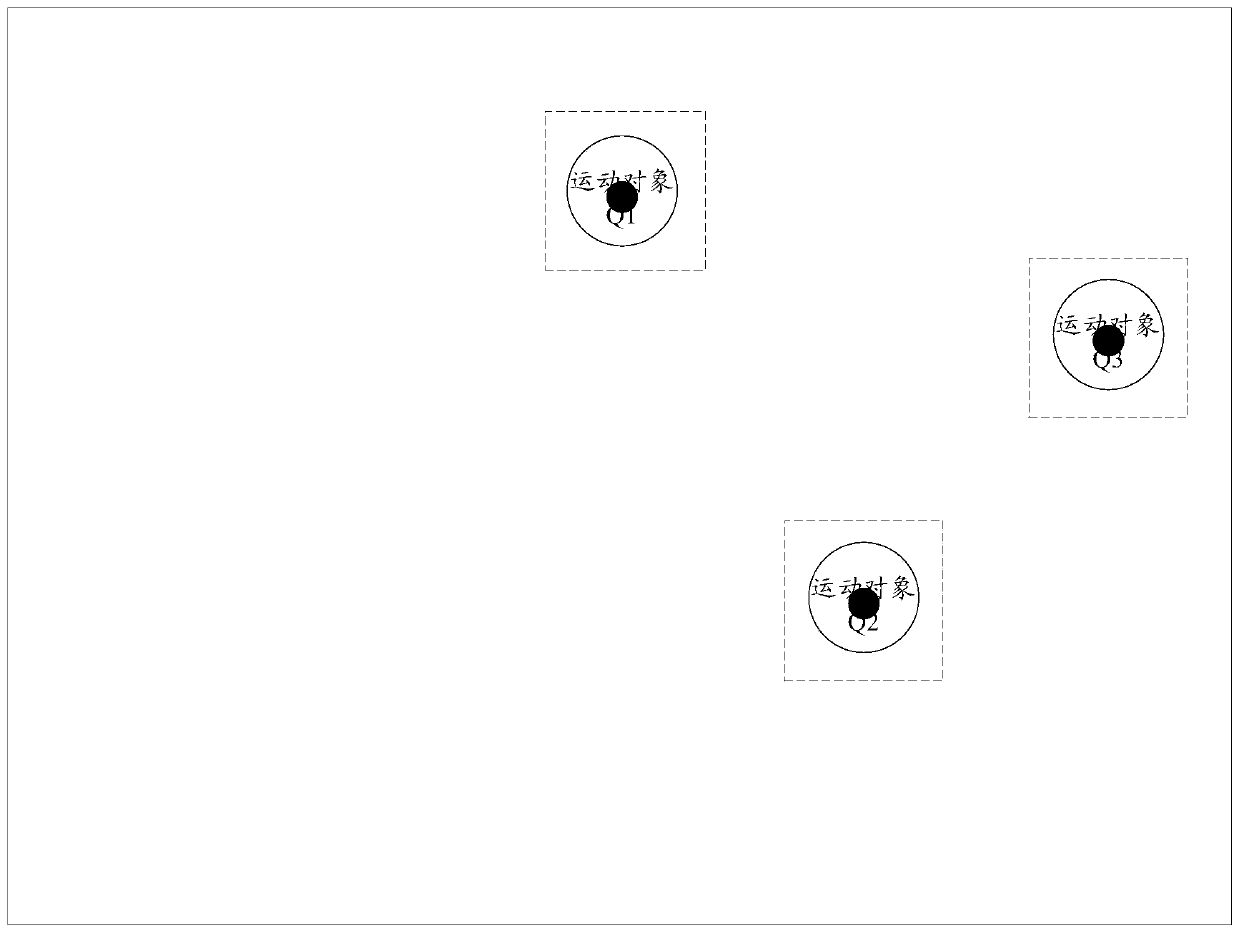
[0066] In the embodiment of the present invention, a new solution is provided to solve the problems of smear and low image stability in shooting multiple moving objects. The solution is: based on the obtained center points of the detection frames corresponding to each moving object in multiple frames of images, determine the center point offset of the average detection frame corresponding to each moving object; based on the center point offset of each average detection frame to determine the movement information of each moving object; based on the preset exposure rules, the maximum exposure time corresponding to each movement information is determined as the maximum exposure time corresponding to each moving object, and according to the corresponding maximum exposure time for each moving object to shoot.
[0067] Preferred embodiments of the present invention will be described in detail below in conjunction with the accompanying drawings.
[0068] refer to figure 1 As shown,...
PUM
 Login to View More
 Abstract
Description
Claims
Application Information
 Login to View More