
Application of schisandra chinensis polysaccharide in preparation of medicines or health products for treating inflammatory bowel diseases
A technology of inflammatory bowel disease and schisandra, applied in the field of biopharmaceuticals and molecular biology, can solve the problems of insignificant and multiple side effects, and achieve the effect of improving colitis and inflammatory bowel disease
Patent Information
- Authority / Receiving Office
- CN · China
- Patent Type
- Applications(China)
- Current Assignee / Owner
- Publication Date
- 2020-08-11
Smart Images
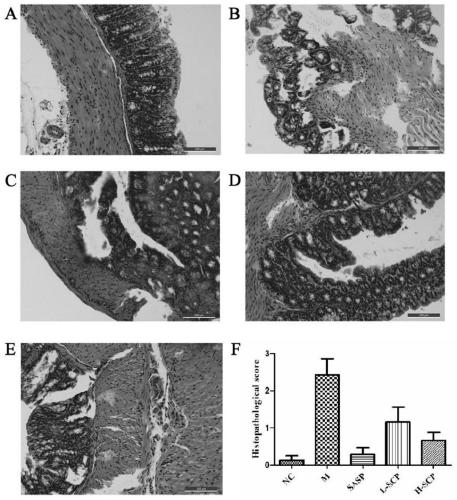
Figure 1 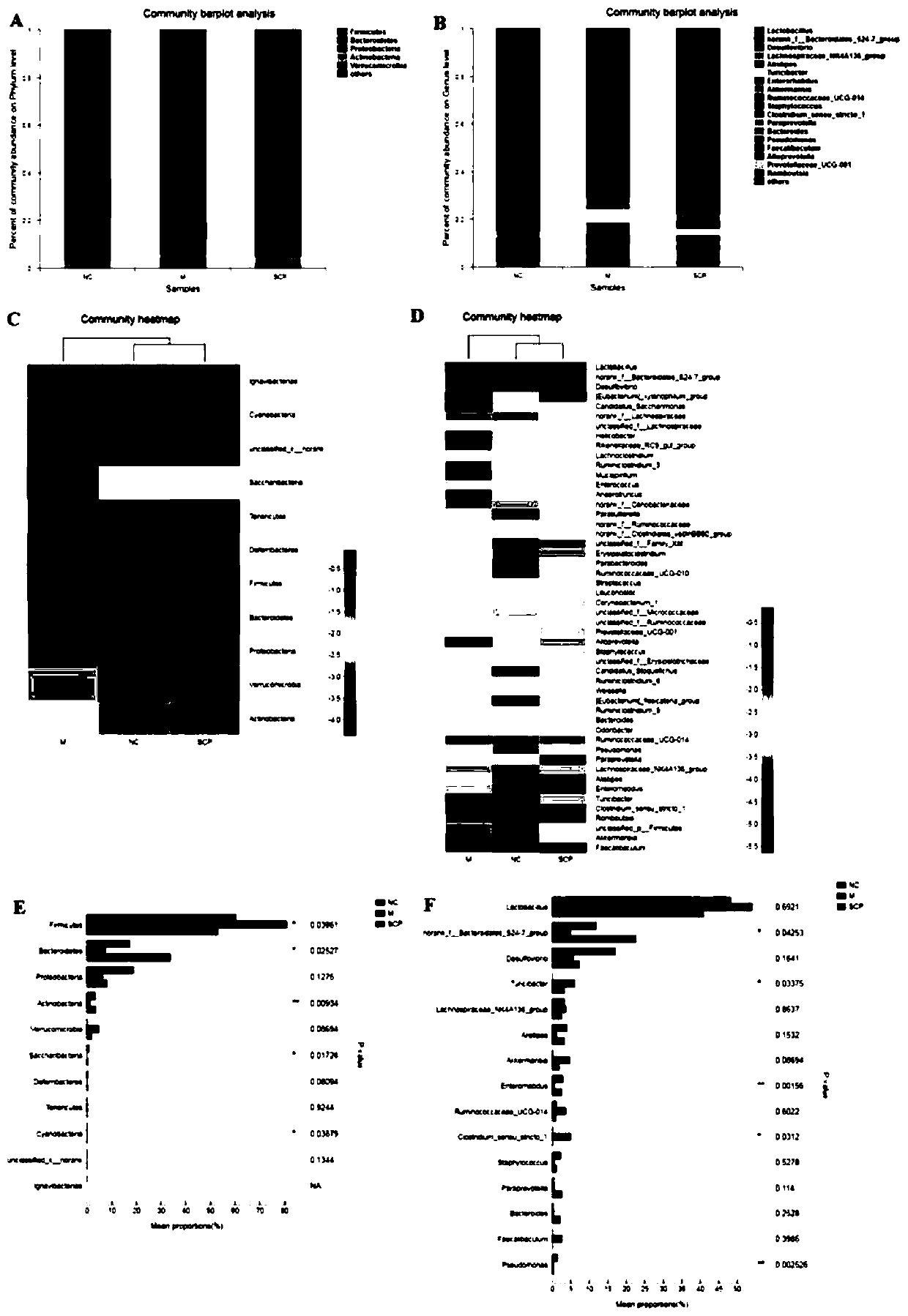
Figure 2 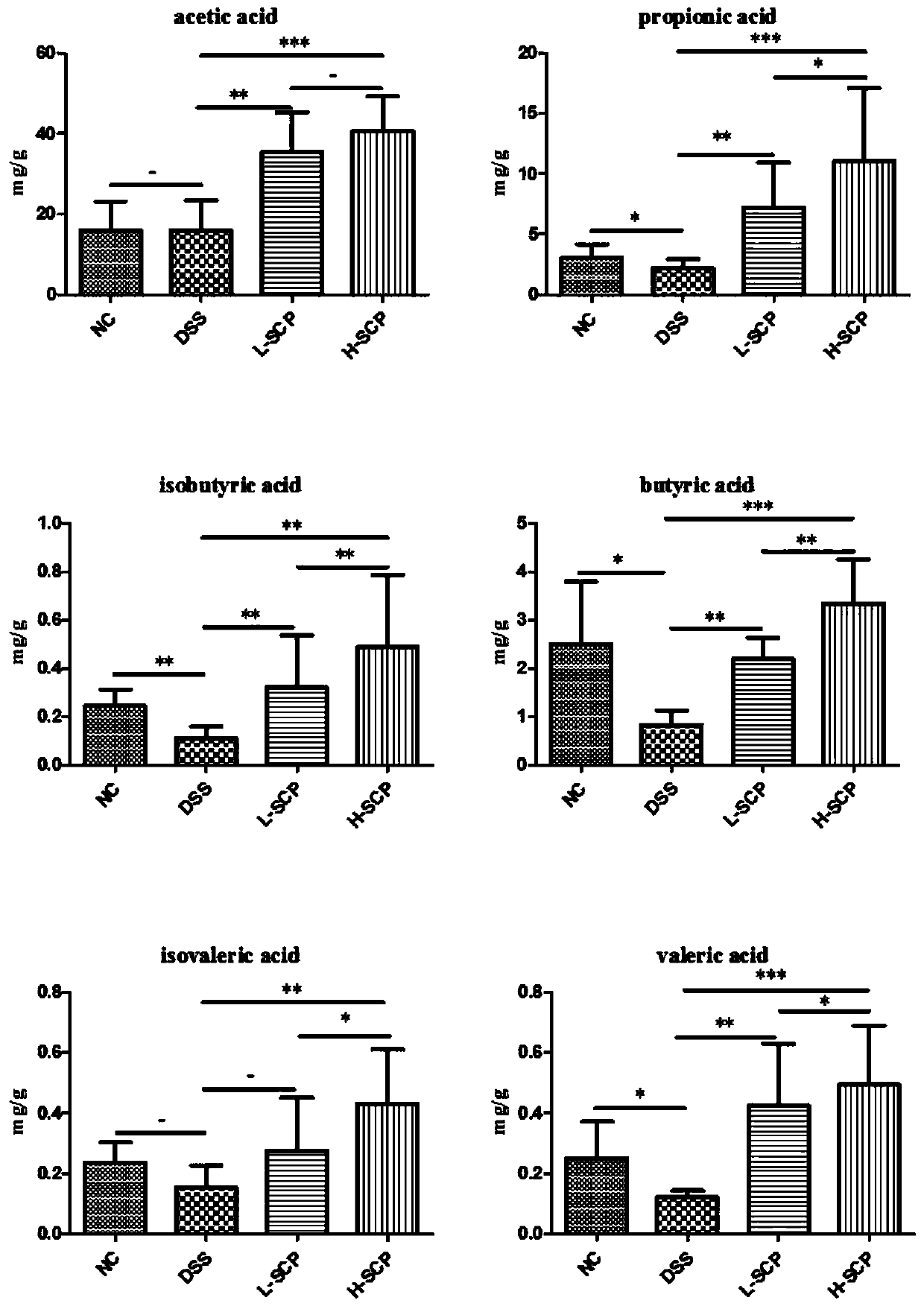
Figure 3
Abstract
Description
technical field
[0001] The invention belongs to the technical field of biopharmaceuticals and molecular biology, and in particular relates to an extract of Schisandra chinensis total polysaccharide and its application in improving inflammatory bowel disease. Background technique
[0002] Inflammatory bowel disease (IBD) mainly includes inflammatory bowel disease (UC) and Crohn's disease (CD), which are chronic diseases characterized by intestinal inflammation and epithelial damage. Recurrent disease is difficult to cure and poses a serious threat to human health. In recent years, the incidence of IBD has been increasing year by year, gradually evolving into a global disease. In addition, epidemiological data show that the duration and severity of chronic colitis are important risk factors for the induction of colitis-associated colorectal cancer. The main pathological mechanism of inflammatory bowel disease is still not very clear, and its pathogenesis is multifaceted, suc...
Examples
Embodiment 1
[0035] Example 1 A preparation method of an extract capable of improving inflammatory bowel disease
[0036] Weigh 400 g of each dried sample of Schisandra chinensis in raw vinegar, reflux three times the amount (1200 mL) of petroleum ether for 4 hours to degrease, and remove the petroleum ether after degreasing. Then add pure water (3200mL) in an amount 8 times the weight of the decoction pieces, heat to reflux at 100°C, extract twice for 3 hours each time, and combine the extracts. Concentrate the water extract to 200mL, add absolute ethanol to make the alcohol content reach 80%, let stand overnight, and centrifuge to obtain the supernatant filtrate and precipitate, which is Schisandra crude polysaccharide.
[0037] Deproteinization by Savage method: dissolve the crude polysaccharide of Schisandra chinensis with pure water to 400mL, because the protein in chloroform can be deformed and precipitated, add chloroform and n-butanol in the ratio of polysaccharide solution:chlorof...
Embodiment 2 5
[0039] Determination of total polysaccharide content in embodiment 2 Schisandra polysaccharide extract
[0040] Take 1 mg of schisandra polysaccharide freeze-dried powder refined in Example 1, add distilled water to make the volume to 10 mL, that is, the concentration of the sample solution is 0.1 mg / mL. Using glucose as a control, the total polysaccharide content was determined at 490nm by phenol-sulfuric acid method and ultraviolet spectrophotometer. According to calculation, the total polysaccharide content in the refined Schisandra polysaccharide extract is 85-95%, as shown in Table 1.
[0041] The polysaccharide content (X±SD, n=3) in each batch of Schisandra chinensis polysaccharide extract sample of table 1
[0042]
[0043]
Embodiment 3 5
[0044] Example 3 Study on the Effect of Schisandra Polysaccharide Extract on Colitis Mice
[0045] The Schisandra polysaccharide extract was obtained by the extraction method in Example 1, and two extract solutions of different concentrations (ie high and low doses) were prepared, the low dose: 0.2 g / mL, and the high dose: 0.4 g / mL.
[0046] C57BL6 mice, body weight 20.0+2.0g. All animals were fed under (SPF) grade and adaptively fed for one week. DSS was made into 2% DSS and 3.5% DSS aqueous solution with sterilized distilled water, instead of drinking water, and the experimental C57BL6 mice were allowed to drink freely to induce colitis. 2% DSS aqueous solution was administered on the 1st-3rd day, and 3.5% DSS aqueous solution was replaced on the 4th-7th day.
[0047] Experimental mice were adaptively fed for one week and randomly divided into 8 groups. Normal group (Normal): drinking water without DSS for 21 days. Model group (DSS): Mice acquired acute colitis by drinkin...