
Content manager
A manager and content server technology, applied in the direction of instruments, data processing applications, electrical digital data processing, etc., can solve the problems of data quality loss, bandwidth limitation, and Internet cannot flow data, etc.
- Summary
- Abstract
- Description
- Claims
- Application Information
AI Technical Summary
Problems solved by technology
Method used
Image

Examples
other Embodiment approach
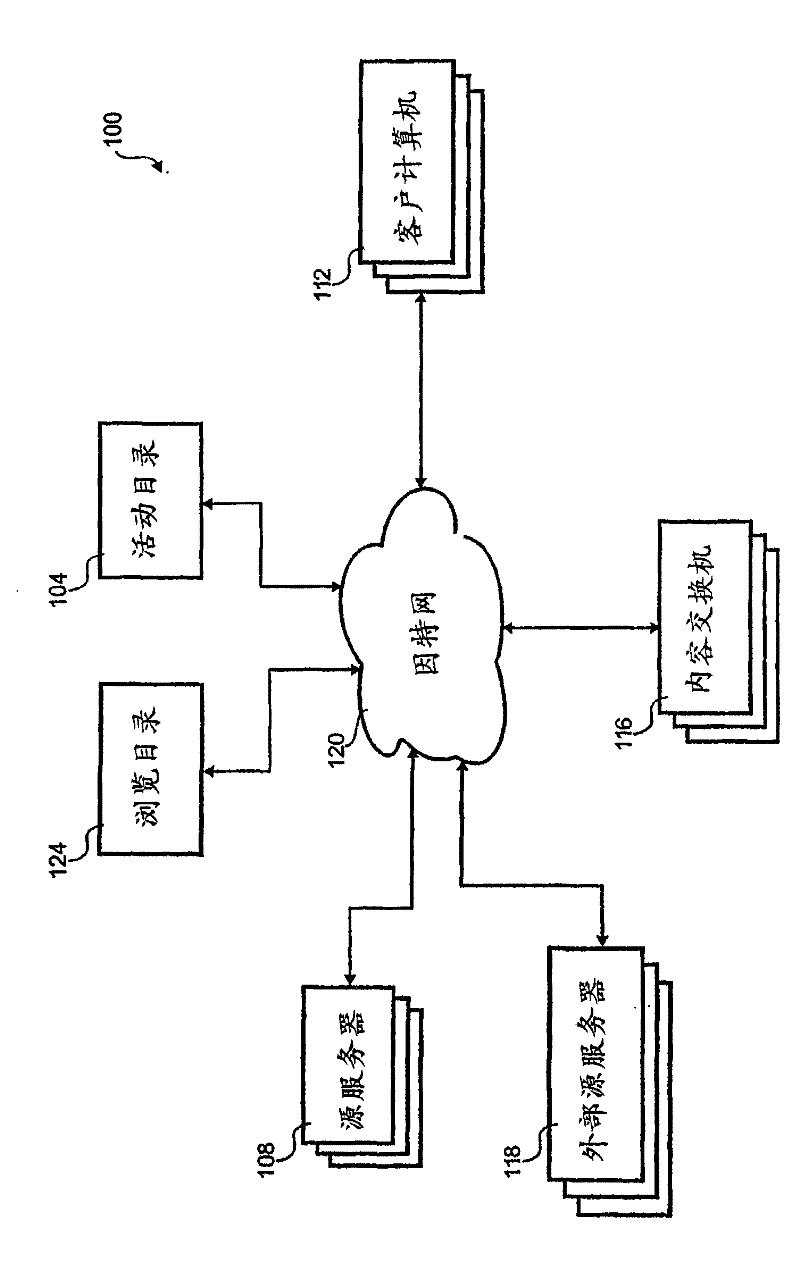
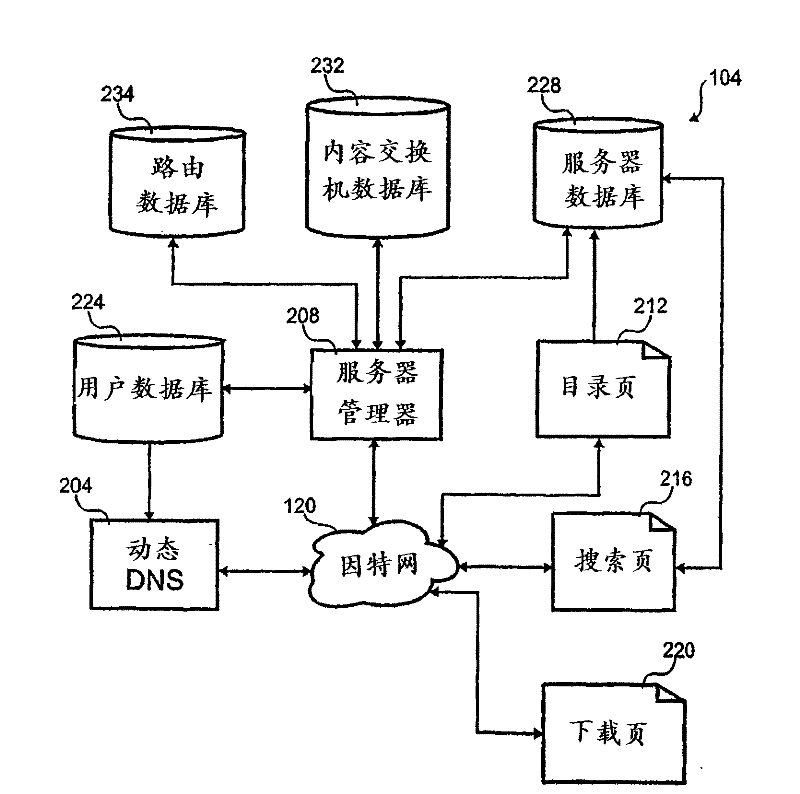
[0032] Other implementations may have multiple Active Directories. Users of the system can be divided among multiple active directories in order to distribute the load. Additionally, other Active Directories can be used redundantly so that if one Active Directory goes offline, the other Active Directory can absorb the load.
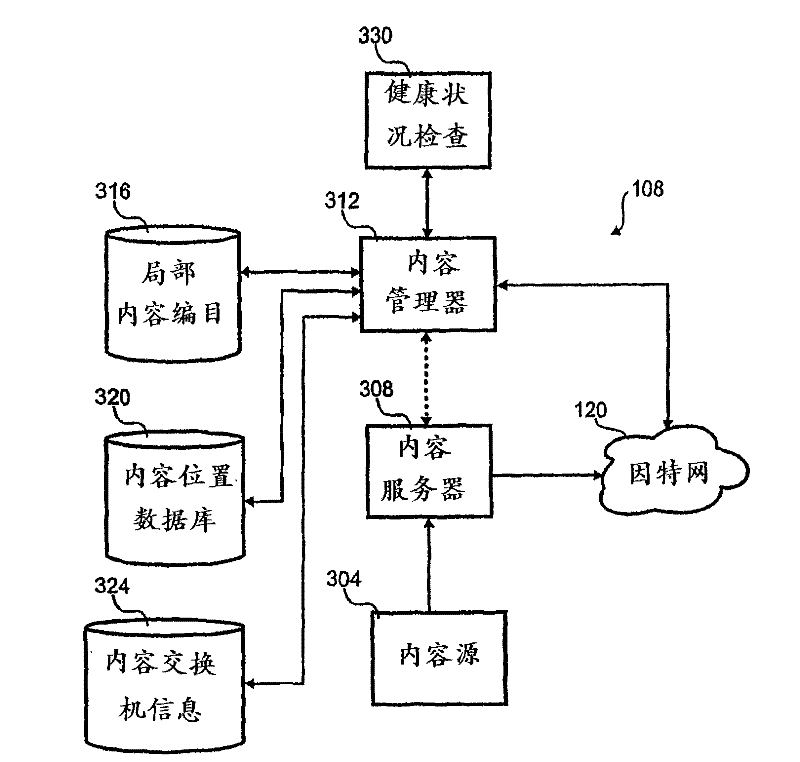
[0033] In some implementations, the origin server 108 provides sources of content objects, directs users to preferred sources of content objects, and provides directory information to the active directory 104 . The origin server 108 introduces content objects to the system 100 . Introduction involves selection by an origin server administrator of content objects to be made available to Active Directory 104 . A manager may be a person or system that manages origin server 108 . A content object may include previously stored information or a streaming feed of information. On a predetermined basis, origin server 108 provides a catalog of selected informat...
other Embodiment approach
[0092] Other embodiments may transmit metadata in any type of data channel, not just through HTTP headers. For example, metadata can travel through dedicated ports, IP addresses, URLs, headers, or other logical channels.
[0093] Preference information 512 is the result of network analysis performed from the perspective of client computer 112 . When a content object is requested, preference information 512 is passed to content object manager 312, which in turn selects an appropriate content exchange 116 for client computer 112. The preference information 512 may be updated periodically (eg, every hour) by automatic testing or manually by the user. Subsequent tests take into account previous results in order to efficiently consider preferred content exchanges. For example, a first analysis may examine 100 content exchanges, while subsequent analyzes may exclude poorer performing content exchanges so that only 50 are analyzed.
[0094] Preference information 512 includes a li...
PUM
 Login to View More
 Abstract
Description
Claims
Application Information
 Login to View More