
Method for detecting multi-service transmission platform device service loopback
A transmission platform and multi-service technology, applied in the field of communication transmission, can solve problems such as the inability to discover data loopbacks, and achieve the effect of reducing the discovery time
- Summary
- Abstract
- Description
- Claims
- Application Information
AI Technical Summary
Problems solved by technology
Method used
Image

Examples
Embodiment Construction
[0017] The present invention will be further described in detail below in conjunction with the accompanying drawings and embodiments.
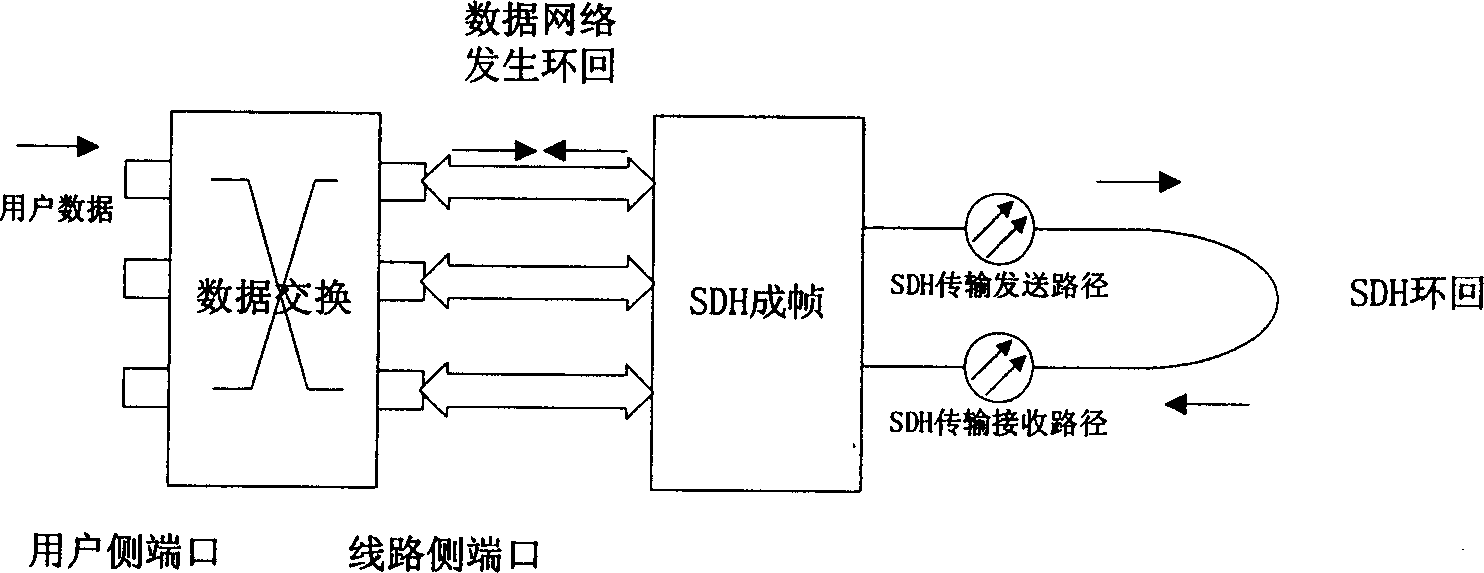
[0018] figure 1 It has already been explained in the background art.
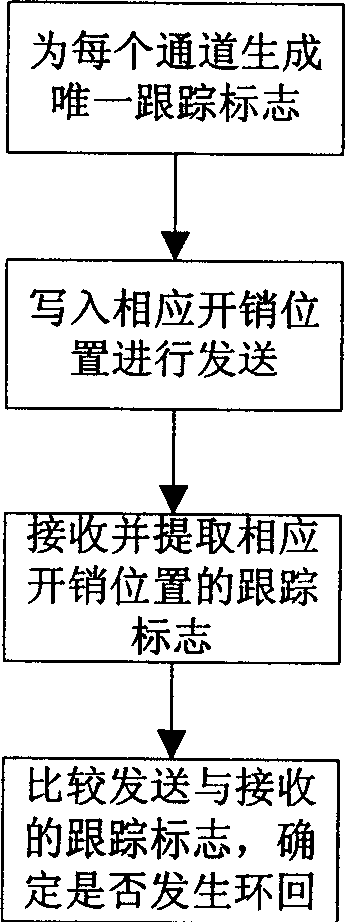
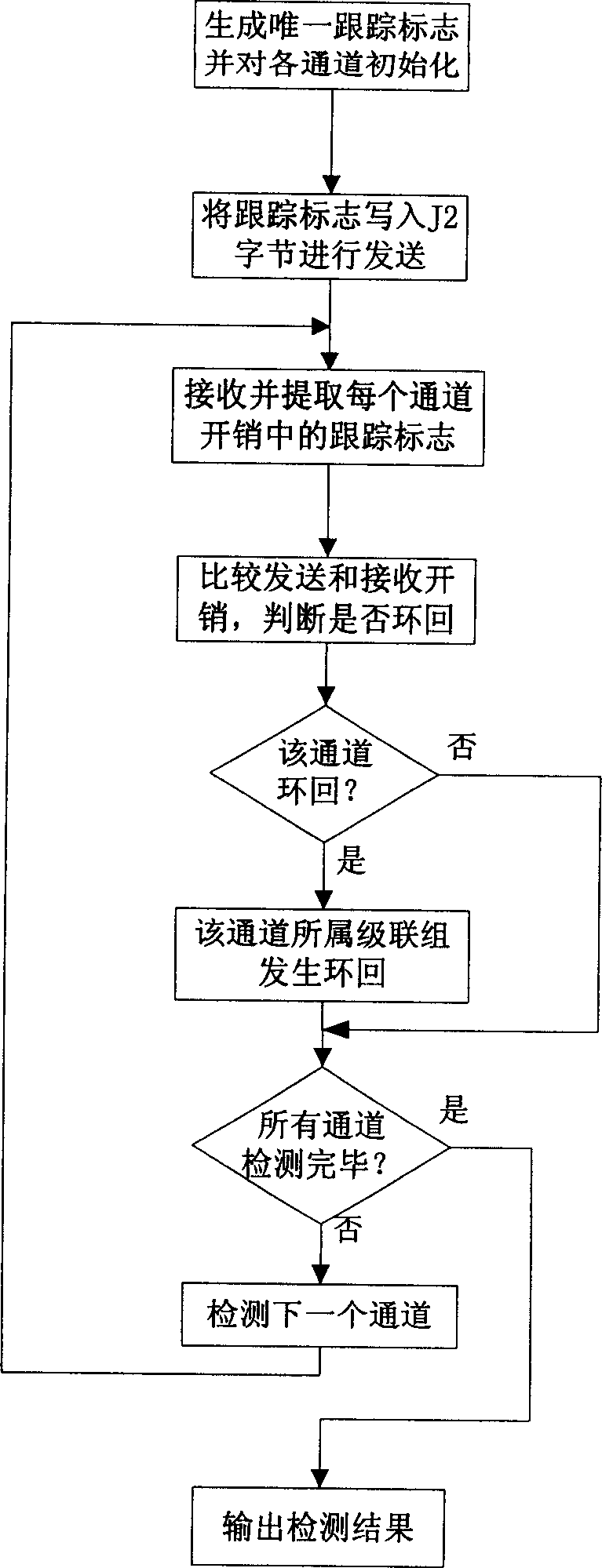
[0019] figure 2 is a flowchart of the method proposed by the present invention. Such as figure 2 As shown, the method for detecting the service loopback of the multi-service transmission platform equipment proposed by the present invention includes the following steps: 1. For each channel, generate a unique tracking flag that complies with the provisions of the ITUT for the tracking flag byte. If the generated flag is not unique, false positives will occur when receiving comparisons. The generated trace flag information must comply with the ITUT regulations on the trace flag byte, for example, only the highest bit of the CRC check byte can be 1. A relatively reliable tracking mark generation method is: CRC check code + network element ID + subrack number + slot numbe...
PUM
 Login to View More
 Abstract
Description
Claims
Application Information
 Login to View More