
Reward system and method for a user vehicle equipped with monitoring sensors
a technology for monitoring sensors and user vehicles, applied in data processing applications, marketing, finance, etc., can solve the problems of high insurance rates and burden on consumers, and achieve the effect of reducing the premium in manual operated vehicles and reducing the cost of the premium
- Summary
- Abstract
- Description
- Claims
- Application Information
AI Technical Summary
Benefits of technology
Problems solved by technology
Method used
Image

Examples
Embodiment Construction
)
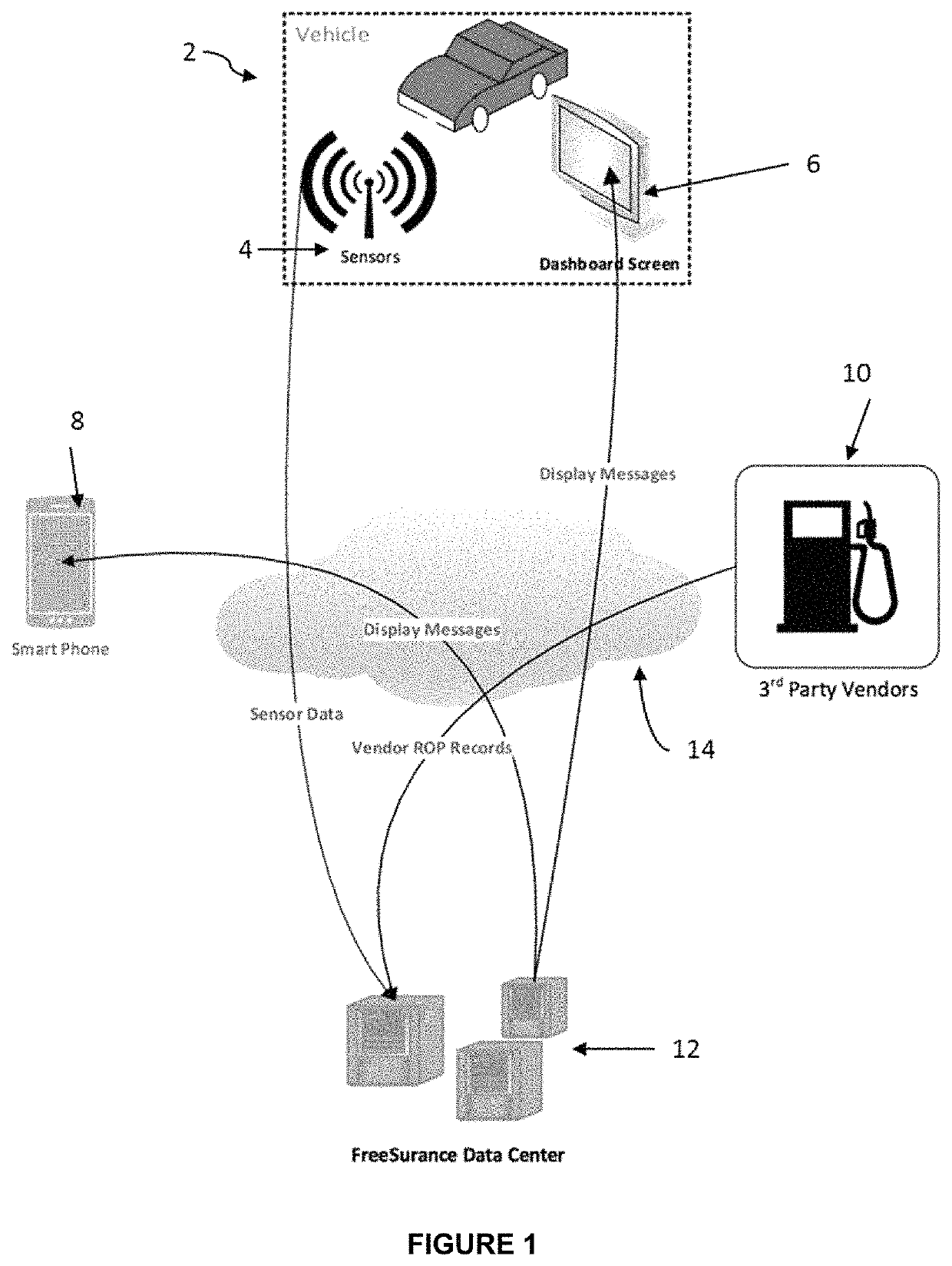
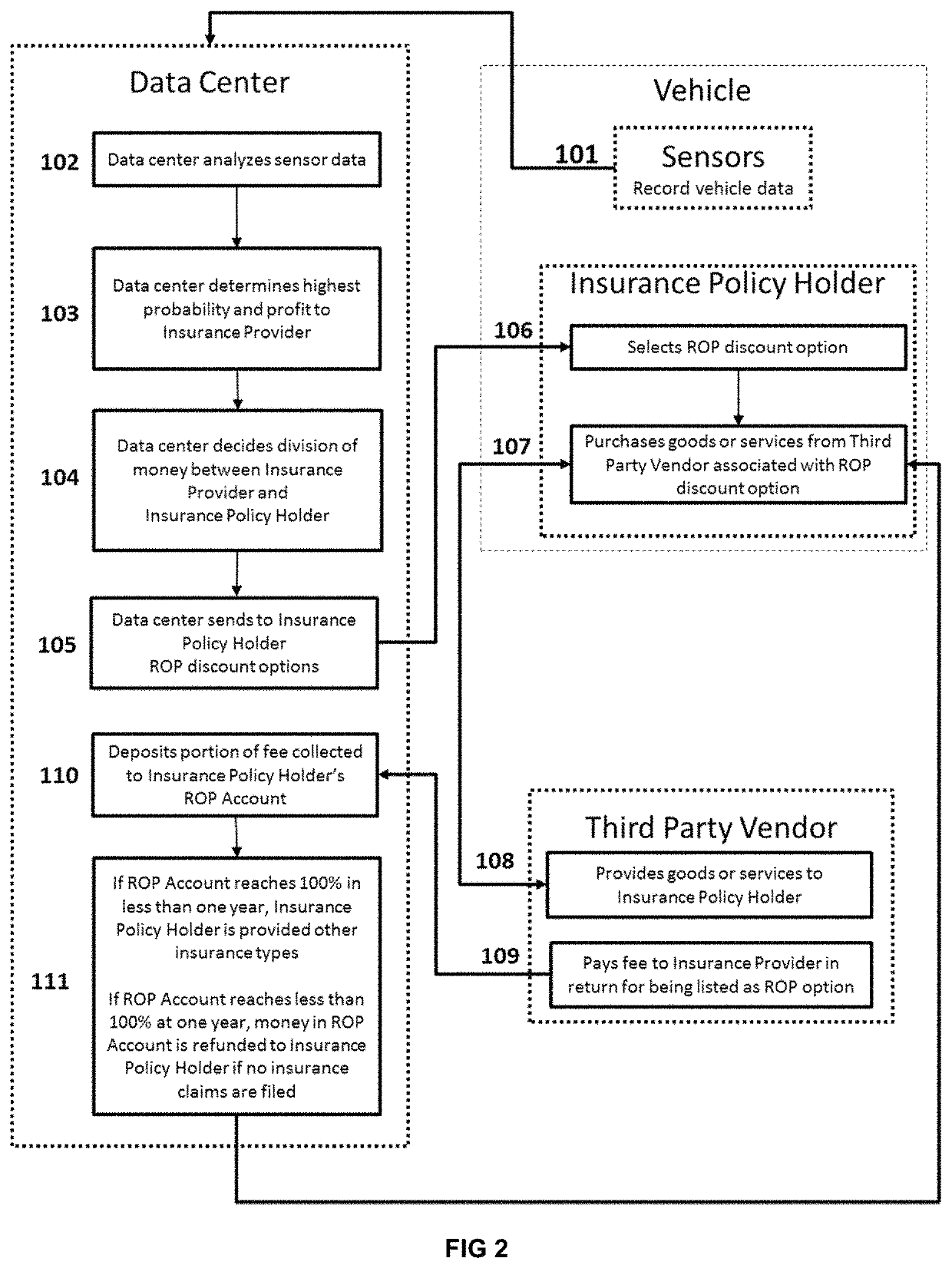
[0010]The present invention is directed toward a system and method for implementing a payment or reward scheme in a user vehicle fitted with a series of sensors that monitor, record, and translate user vehicle characteristics into available premium payment reimbursements or available awards of credits towards the future payment of premiums that may be viewed and selected by the user via a mobile application. Generally, the system consists of a user vehicle 2, a number of sensors 4 incorporated into the user vehicle 2 responsible for recording vehicle information, a system database 12 responsible for interpreting recorded information and generating a list of available third-party participants based on the recorded information, and a mobile application incorporated into a user display 8 that communicates the available information to the system user. The mobile application allows the user to select a third-party participant 10 from whom the user will purchase goods or services and in ...
PUM
 Login to View More
 Abstract
Description
Claims
Application Information
 Login to View More