
Pet Water Dish
- Summary
- Abstract
- Description
- Claims
- Application Information
AI Technical Summary
Benefits of technology
Problems solved by technology
Method used
Image

Examples
Embodiment Construction
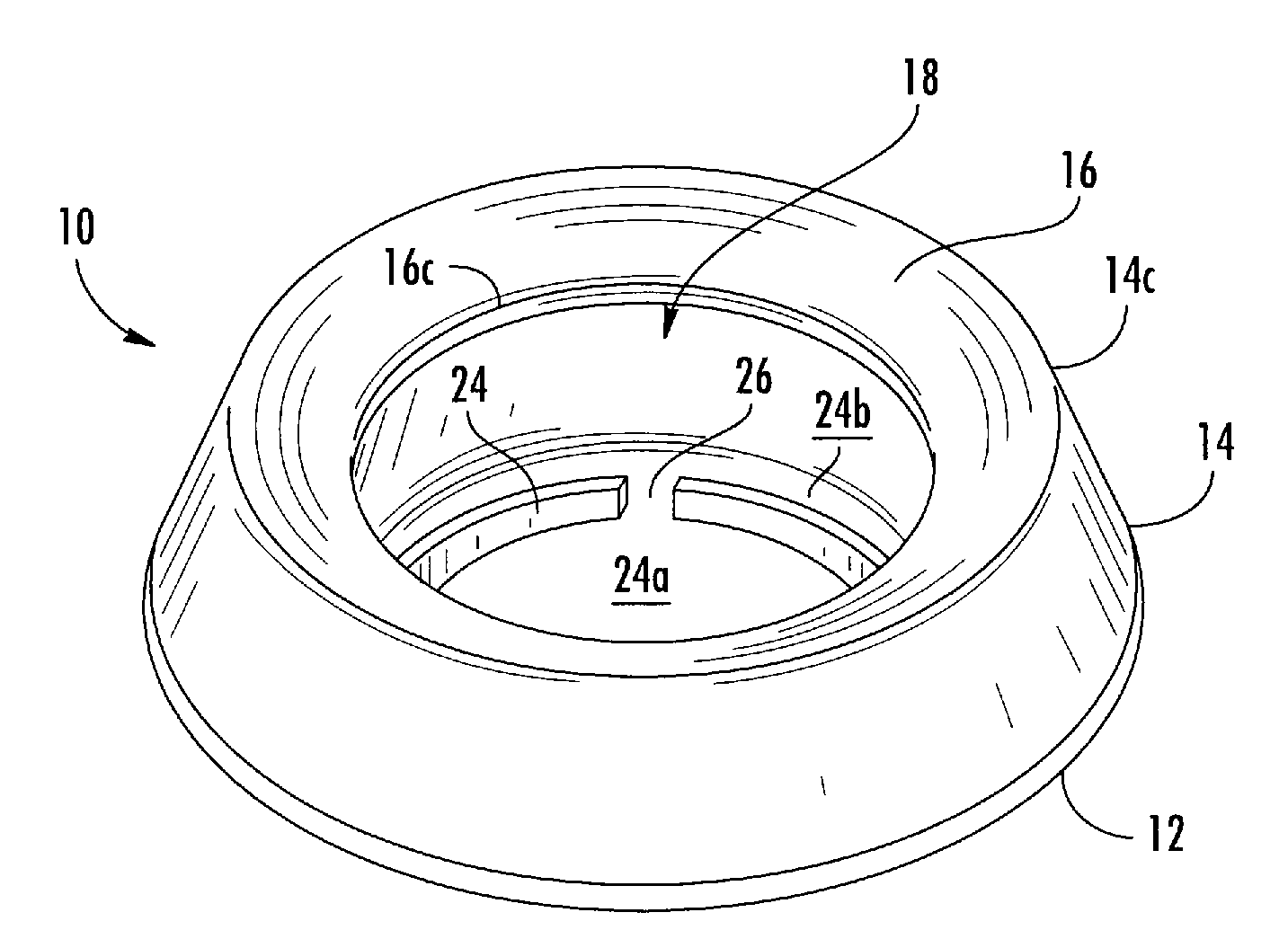
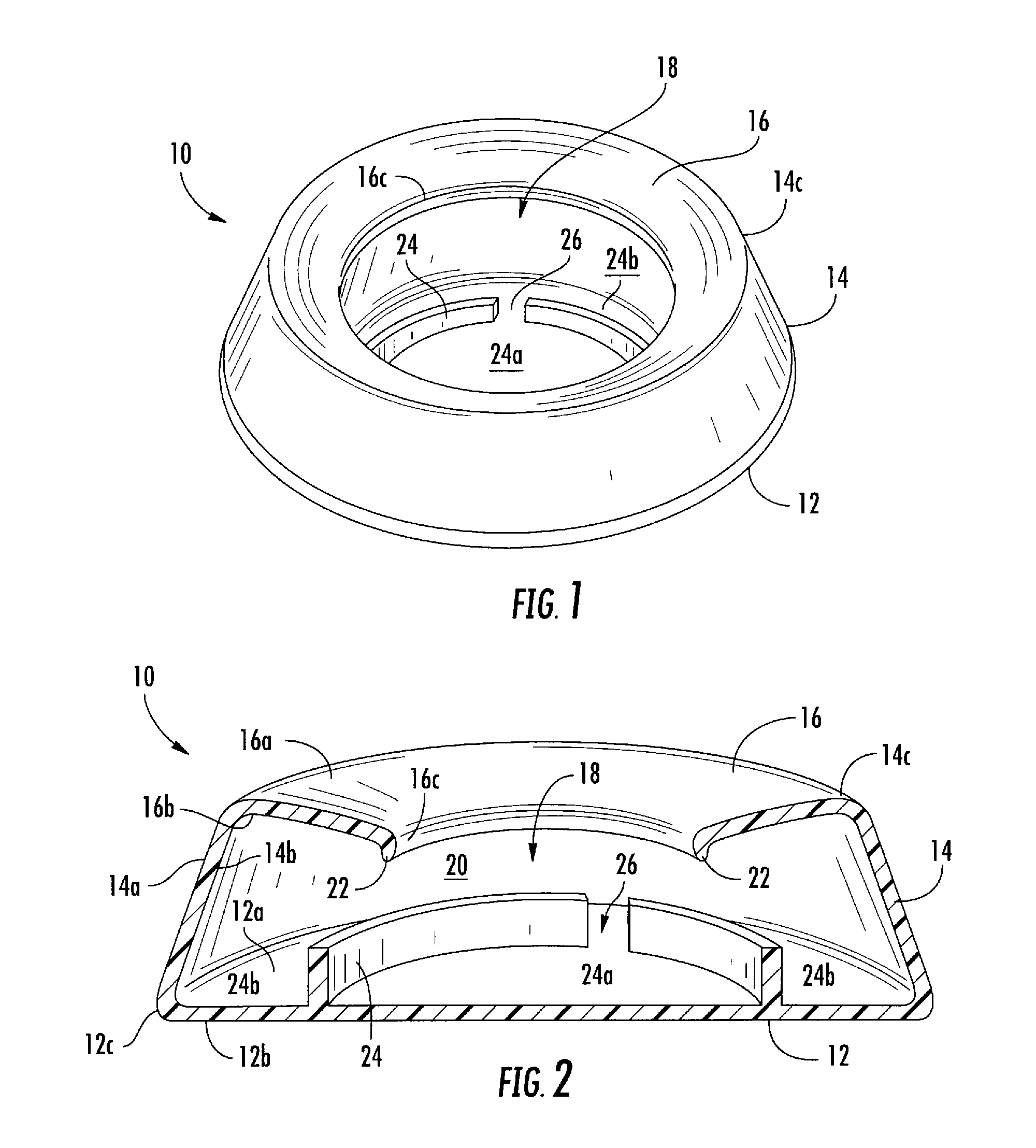
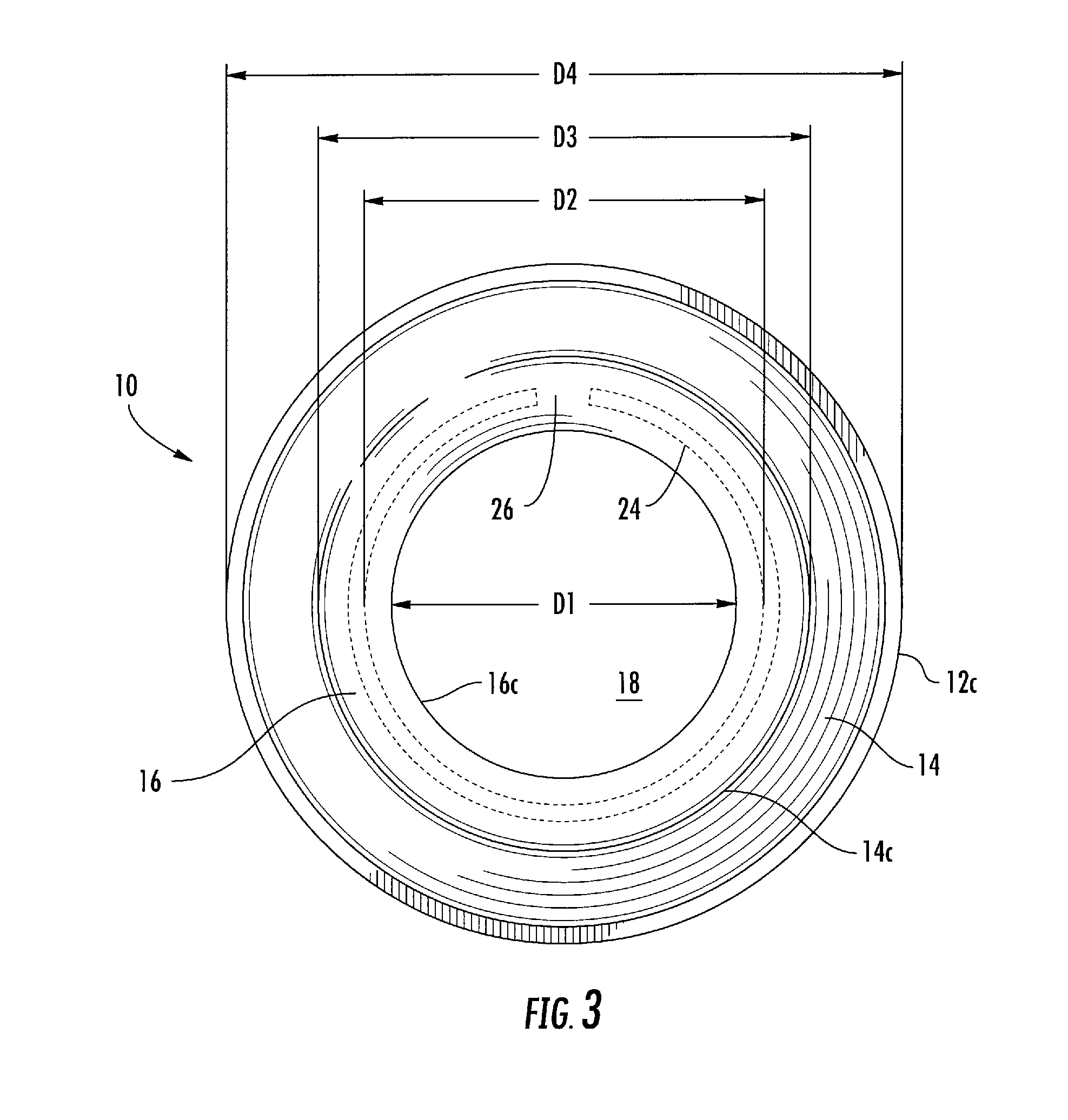
[0017]Referring to FIGS. 1-4, there is shown an improved spill-resistant container 10 for providing water to pets according to one embodiment of the present invention. The container 10 generally comprises a base member 12, annular sidewall 14 integral with a periphery of the base member, and an annular lip 16 extending partially inward from the sidewall 14 forming an aperture 18 through which the pet access the fluid (e.g., water). The base member 12, annular sidewall 14, and lip 16 together form an inner cavity 20 adapted to hold fluid for a pet.
[0018]More particularly, the support base 12 is formed from a substantially flat horizontal circular member defined by a top surface 12a, a bottom surface 12b, and a peripheral edge 12c. The peripheral edge 12c mates with corresponding annular side wall 14. The bottom surface 12b of the base 12 may employ a frictional engagement means to prevent sliding when placed upon a smooth surface. For example, frictional engagement may include groove...
PUM
 Login to View More
 Abstract
Description
Claims
Application Information
 Login to View More