
Tool with multi-state ratcheted end effector
a multi-state, ratcheted technology, applied in the field of tools with end effectors, can solve the problems of limited control and range of motion, physical strain, increased risk of trauma to surrounding tissues, patient discomfort,
- Summary
- Abstract
- Description
- Claims
- Application Information
AI Technical Summary
Benefits of technology
Problems solved by technology
Method used
Image

Examples
Embodiment Construction
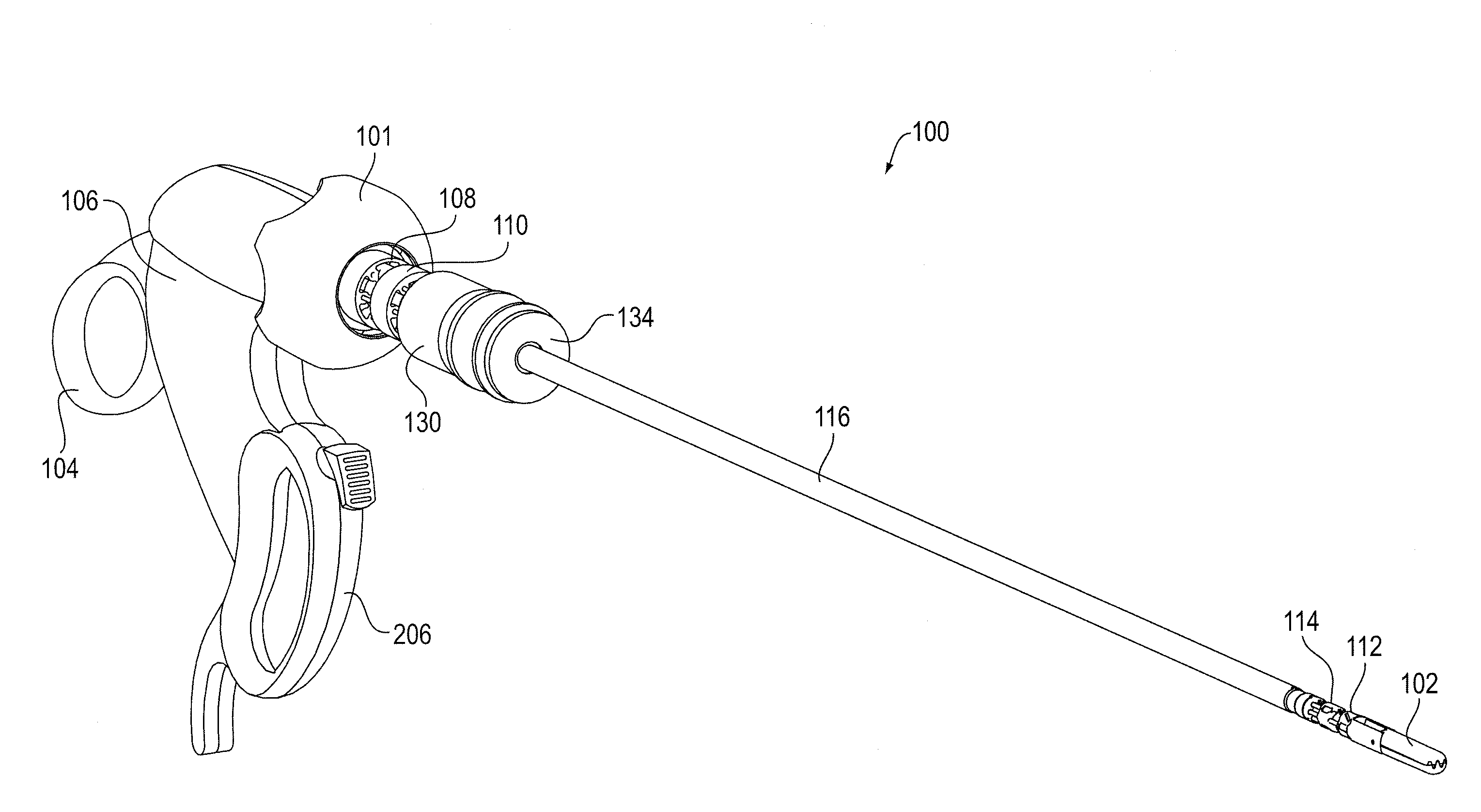
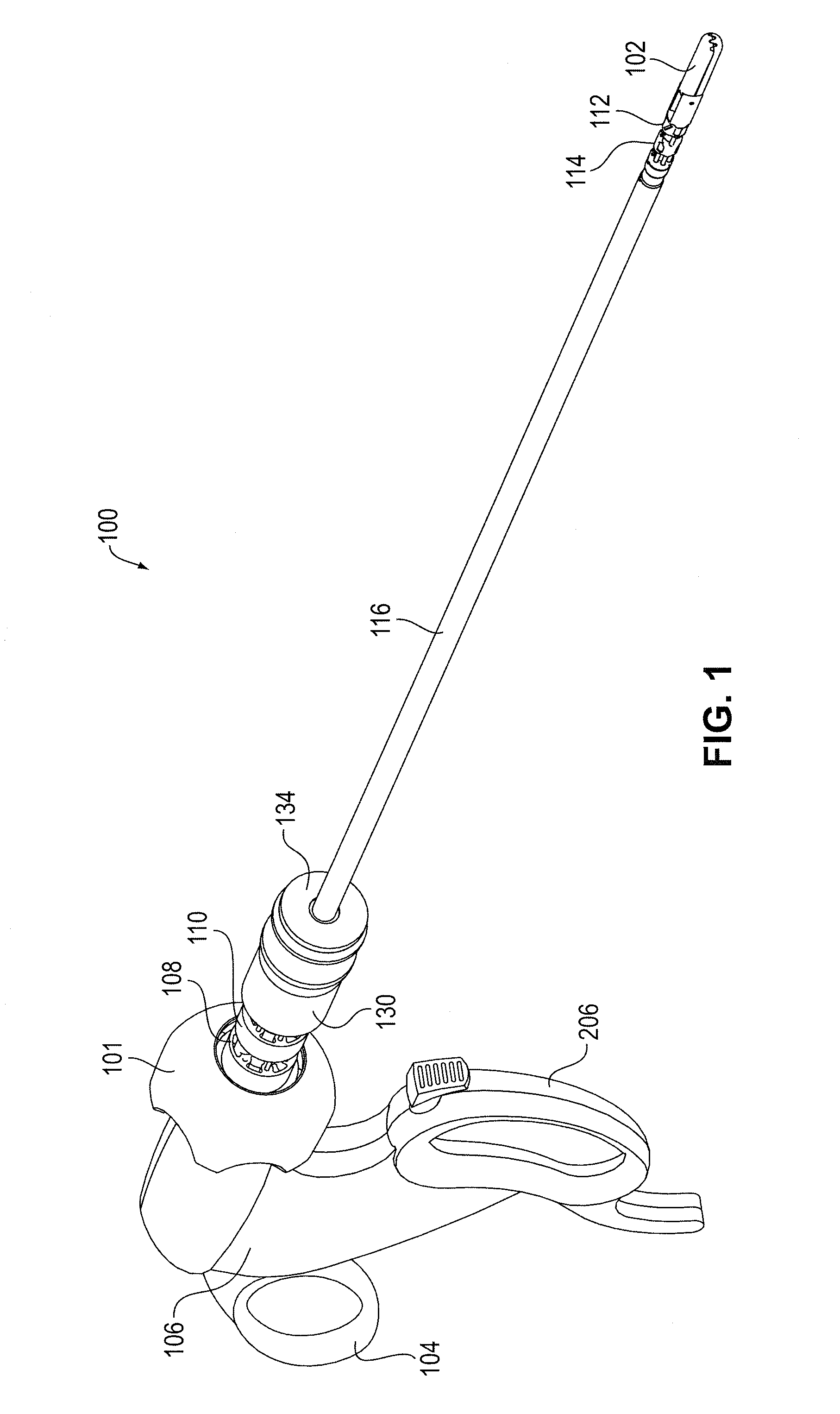
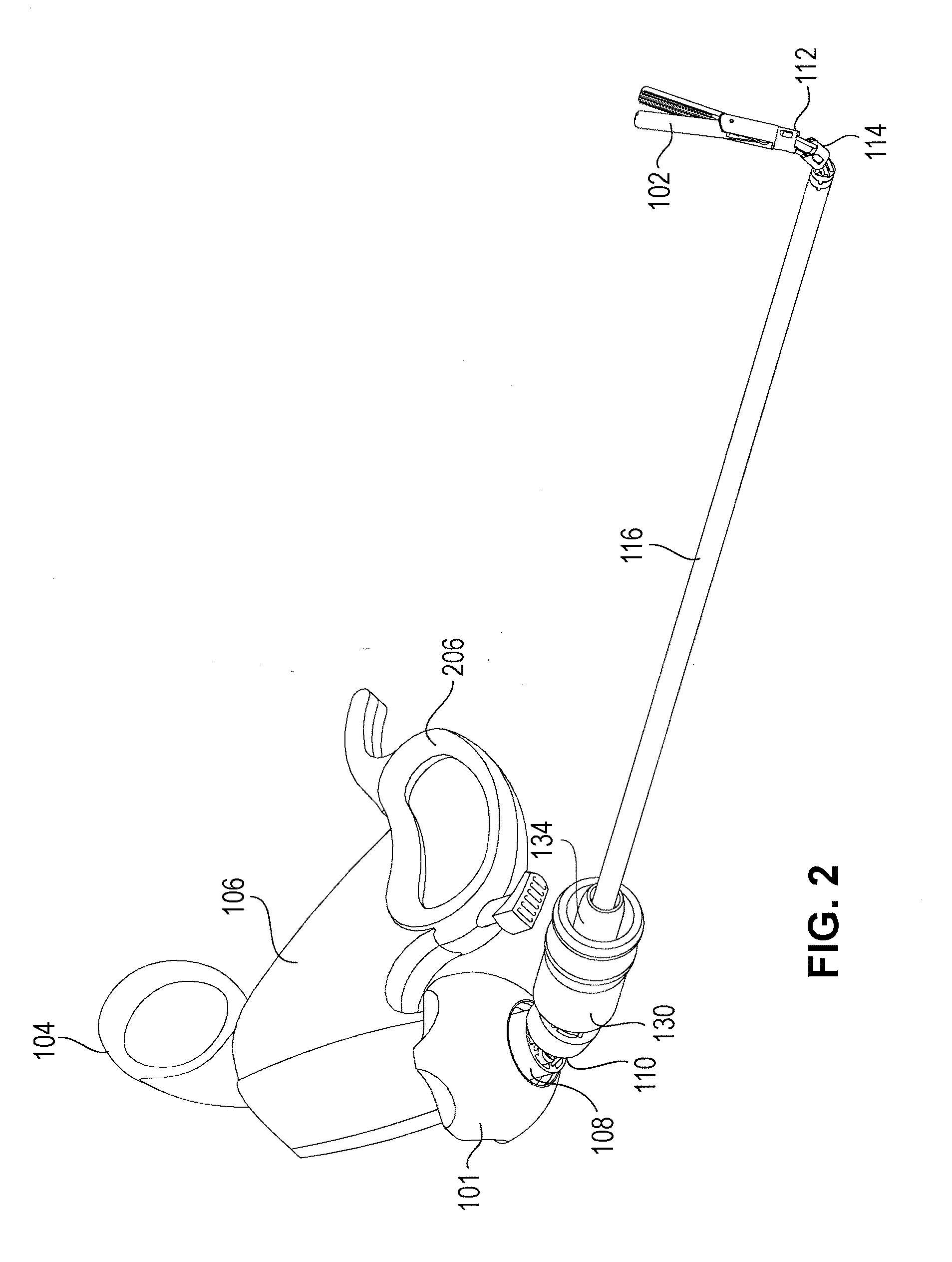
[0049]Steerable articulating instruments are described in U.S. Pat. No. 7,090,637; US 2005 / 0107667; US 2005 / 0273084; US 2005 / 0273085; and US 2006 / 0111209, US 2006 / 0111210. The articulating mechanisms of the tools described in those publications use multiple pairs of segments or links controlled, e.g., by multiple sets of cables. Depending upon the specific design of the device, the links can be discrete segments (as described, e.g., in U.S. Pat. No. 7,090,637) or discrete portions of a flexible segment (as described, e.g., in US 2005 / 0173085). The instrument may also include steerable or controllable links separated by bushings, e.g., as described in US 2005 / 0273084 US 2006 / 0111209 and US 2006 / 0111210, or any by any other type of link.
[0050]When using such articulating instruments, a user may manipulate the proximal end of the instrument, thereby moving one or more proximal links of the articulation mechanism. This movement results in relative movement of the distal link(s) correspo...
PUM
 Login to View More
 Abstract
Description
Claims
Application Information
 Login to View More