

Method and apparatus for synchronizing ported number data
a ported number and data technology, applied in electrical apparatus, time-division multiplex, selection arrangements, etc., can solve the problems of insufficient availability of one realm, insufficient routing, and inability to receive consistent or appropriate routing, so as to increase network efficiency
- Summary
- Abstract
- Description
- Claims
- Application Information
AI Technical Summary
Benefits of technology
Problems solved by technology
Method used
Image

Examples
Embodiment Construction
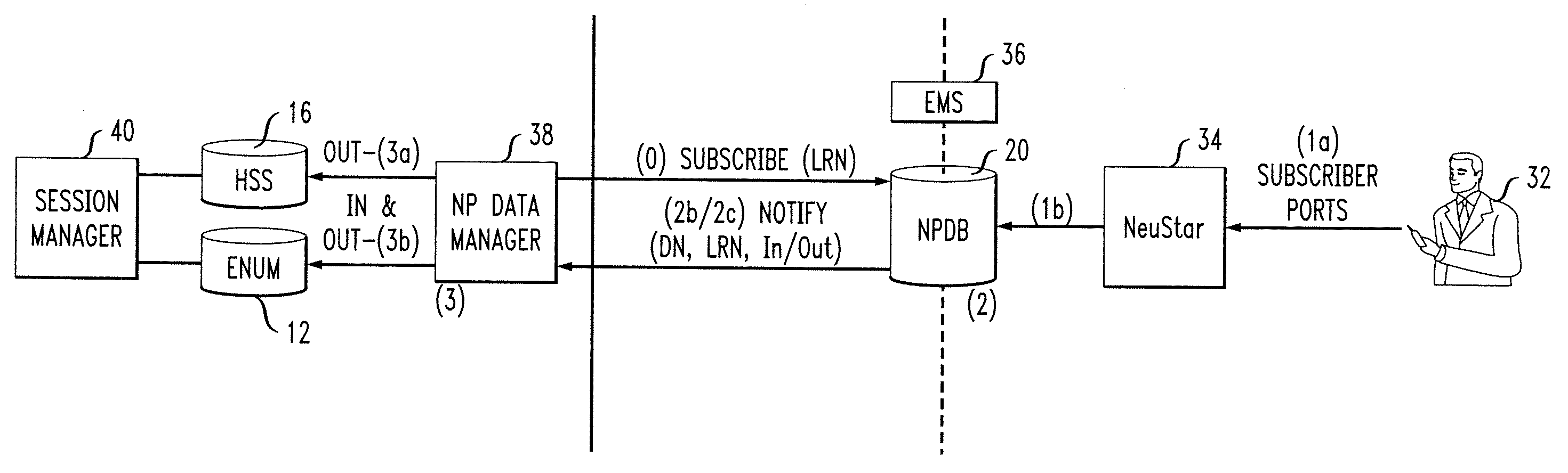
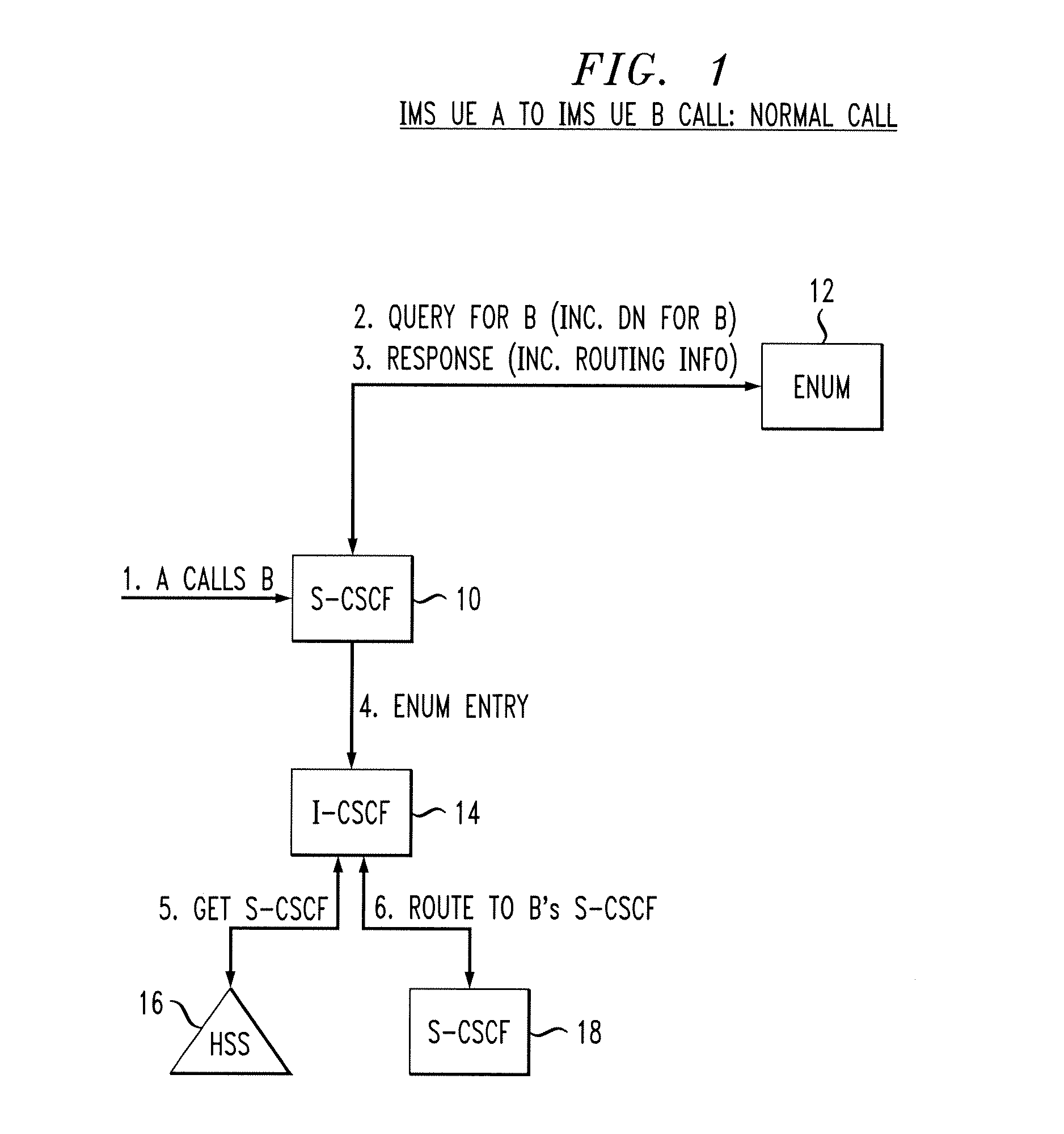
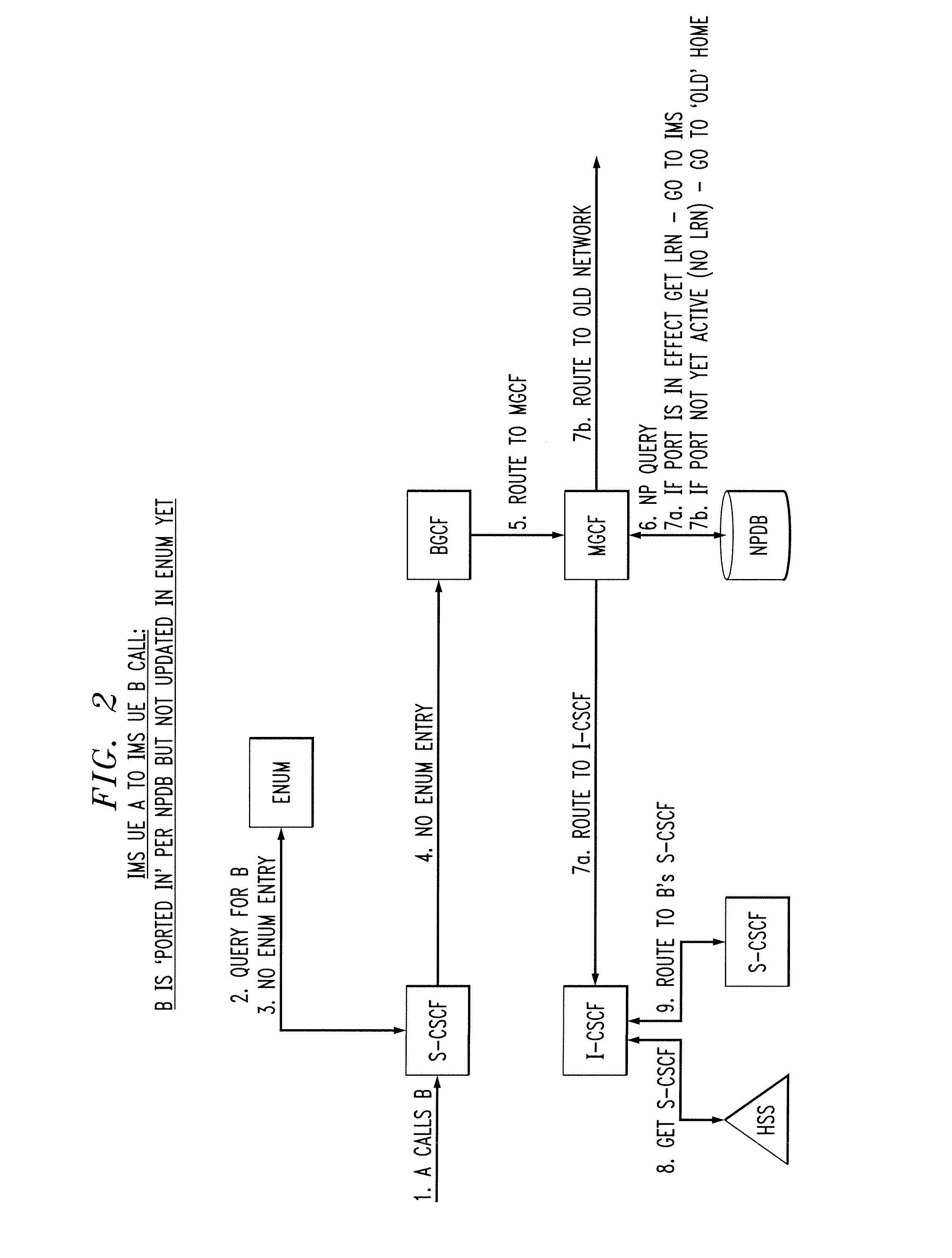
[0026]Referring now to the drawings wherein the showings are for purposes of illustrating the exemplary embodiments only and not for purposes of limiting the claimed subject matter, FIG. 3 provides a view of a telecommunications network 30 suitable for implementing aspects of the present invention. The telecommunications network 30 may provide users with a variety of options for communication. Users are generally able to transmit and receive multimedia communications, including audio, voice, video, and all types of data. The telecommunications network 30 provides access to data networks, such as the Internet, and public telephone networks, including wireless networks. It is to be understood, however, that other such networks may be suitable for implementing aspects of the present invention. Thus, while this discussion features elements present in certain telecommunication systems, such as an IMS, the invention is not intended to be limited to the examples discussed. That is, the exe...
PUM
 Login to View More
 Abstract
Description
Claims
Application Information
 Login to View More