
Systems and methods for conditioning the distribution of data in a hierarchical database
a hierarchical database and distribution system technology, applied in hierarchical databases, semi-structured data querying, instruments, etc., can solve the problems of inability to perform spreading operations, inability to incorporate dependency rules or other logic to ensure data accuracy or integrity, and existing database platforms that do not permit the incorporation of dependency rules or other logi
- Summary
- Abstract
- Description
- Claims
- Application Information
AI Technical Summary
Benefits of technology
Problems solved by technology
Method used
Image

Examples
Embodiment Construction
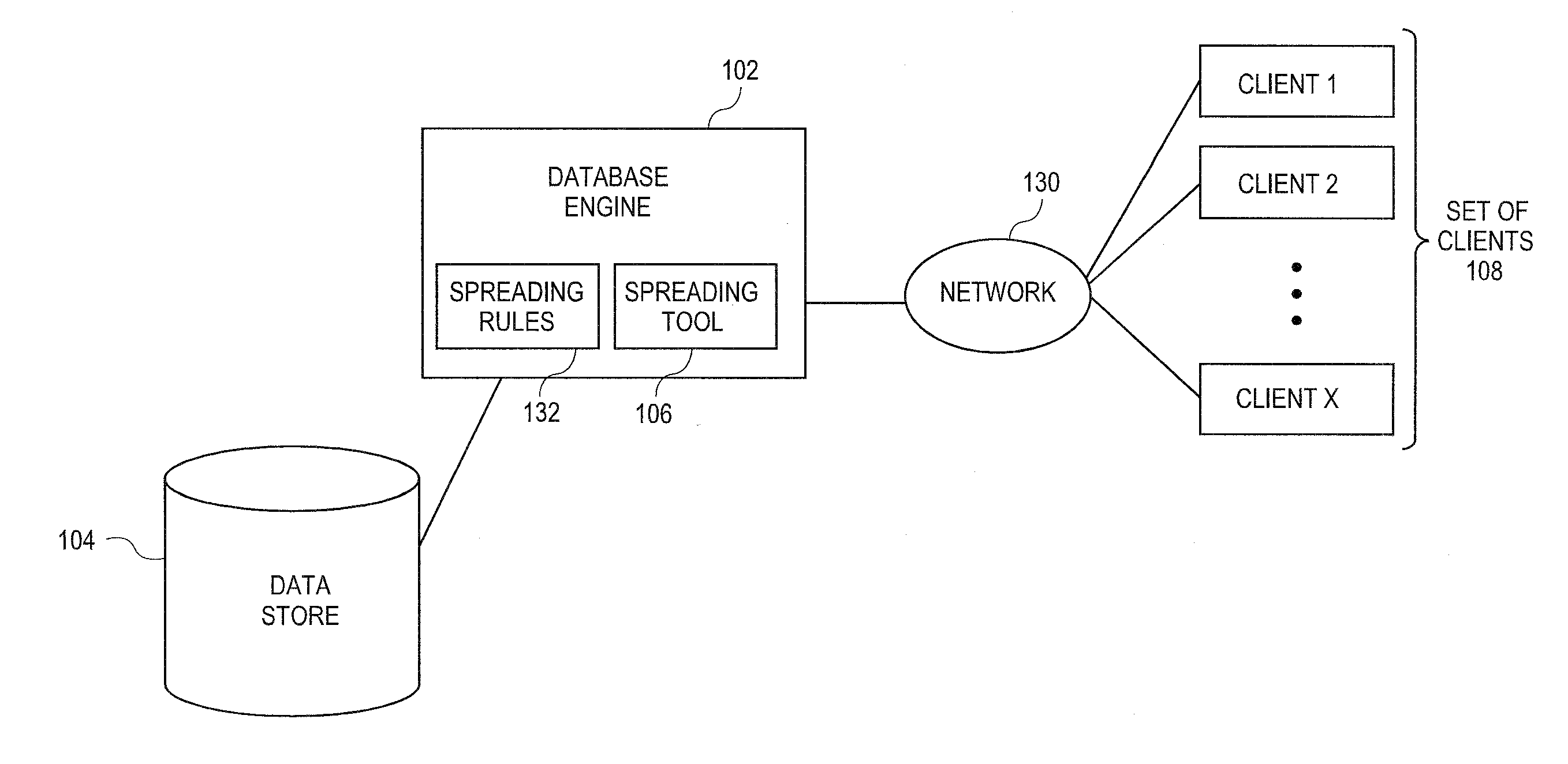
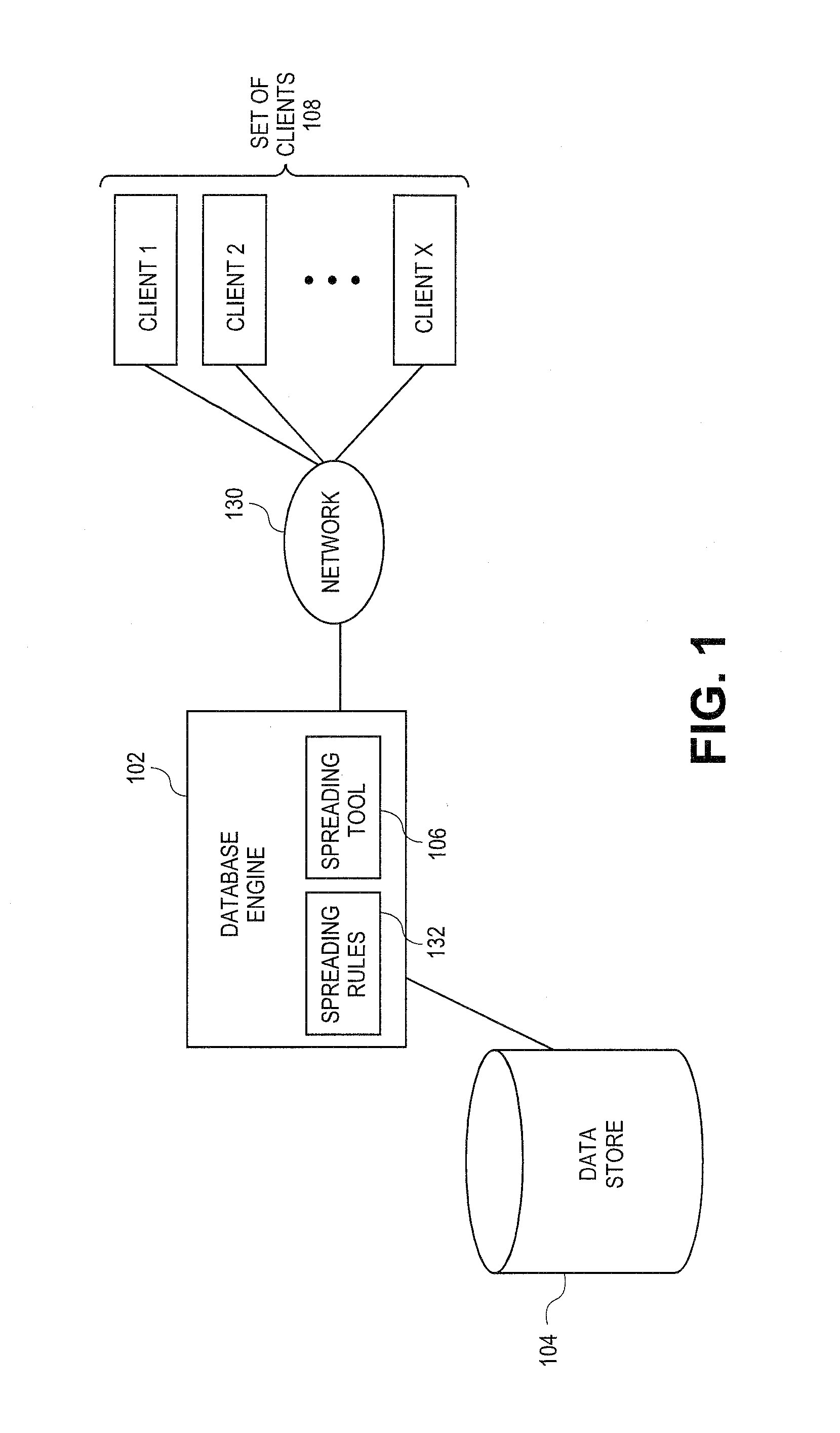
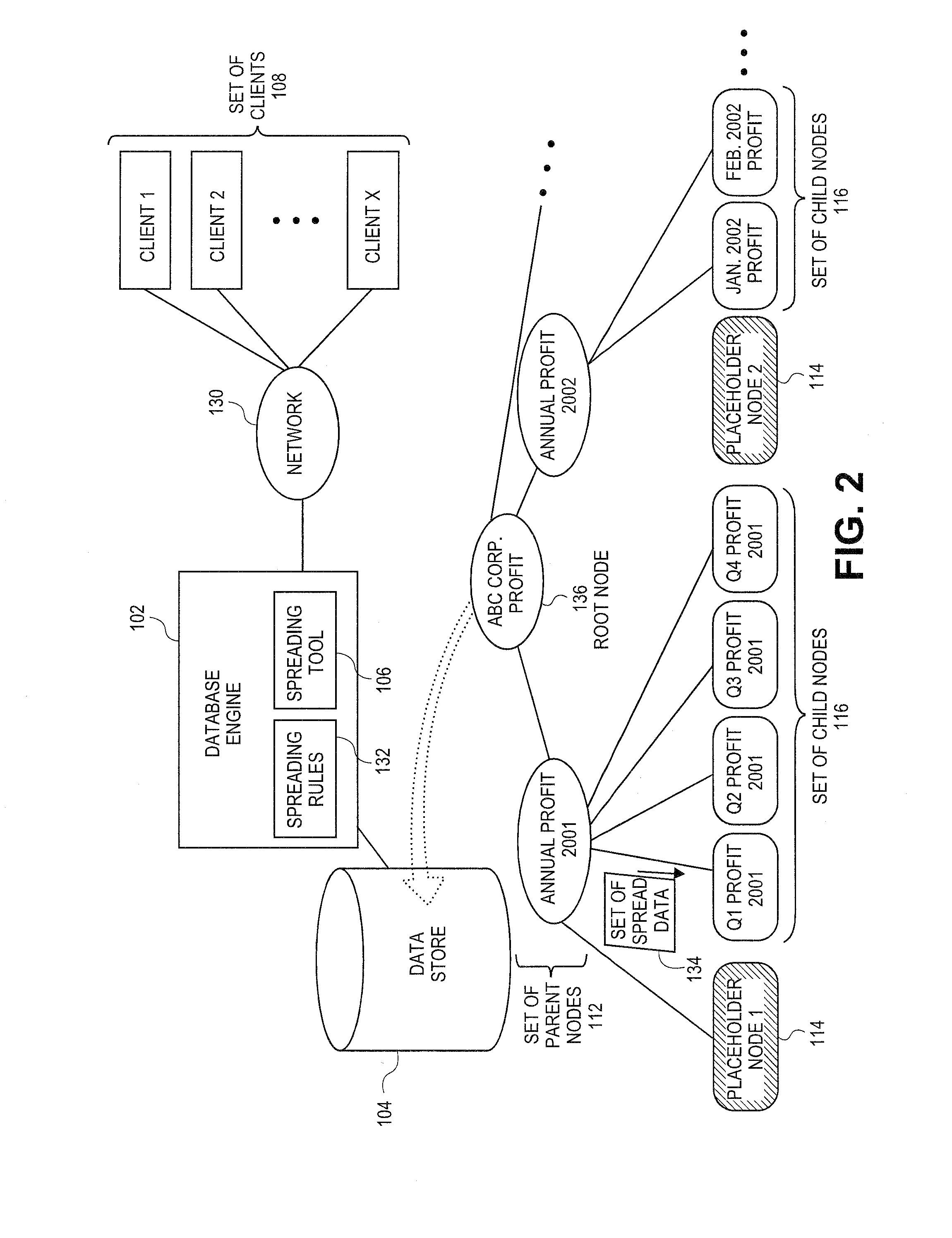
[0010]Embodiments of the present teachings relate to systems and methods for conditioning the distribution of data in a hierarchical database. More particularly, embodiments relate to platforms and techniques for accessing a set of hierarchical data, such as data stored in OLAP, XML, or other data sources, and manipulating that data for distribution or spreading to lower hierarchical levels. In embodiments, a set of placeholder nodes can be associated with a set of parent nodes, to act as points for insertion for child nodes or other lower level structures, at a current or later time. In embodiments, the placeholder nodes can store linkages to one or more parent nodes, and in embodiments can be invisible to users of the associated database engine until viewing or spreading operations are desired. In embodiments, the set of placeholder nodes can also further represent programmatically manipulable objects, which, for instance, encode inheritance rules, output pipes, or other linkages,...
PUM
 Login to View More
 Abstract
Description
Claims
Application Information
 Login to View More