
Fish trap
a technology for fishing traps and fish, applied in fishing, other angling devices, animal husbandry, etc., can solve the problems of obstructing view, false indication of caught fish, and difficult setting, and achieve the effect of easy setting
- Summary
- Abstract
- Description
- Claims
- Application Information
AI Technical Summary
Benefits of technology
Problems solved by technology
Method used
Image

Examples
Embodiment Construction
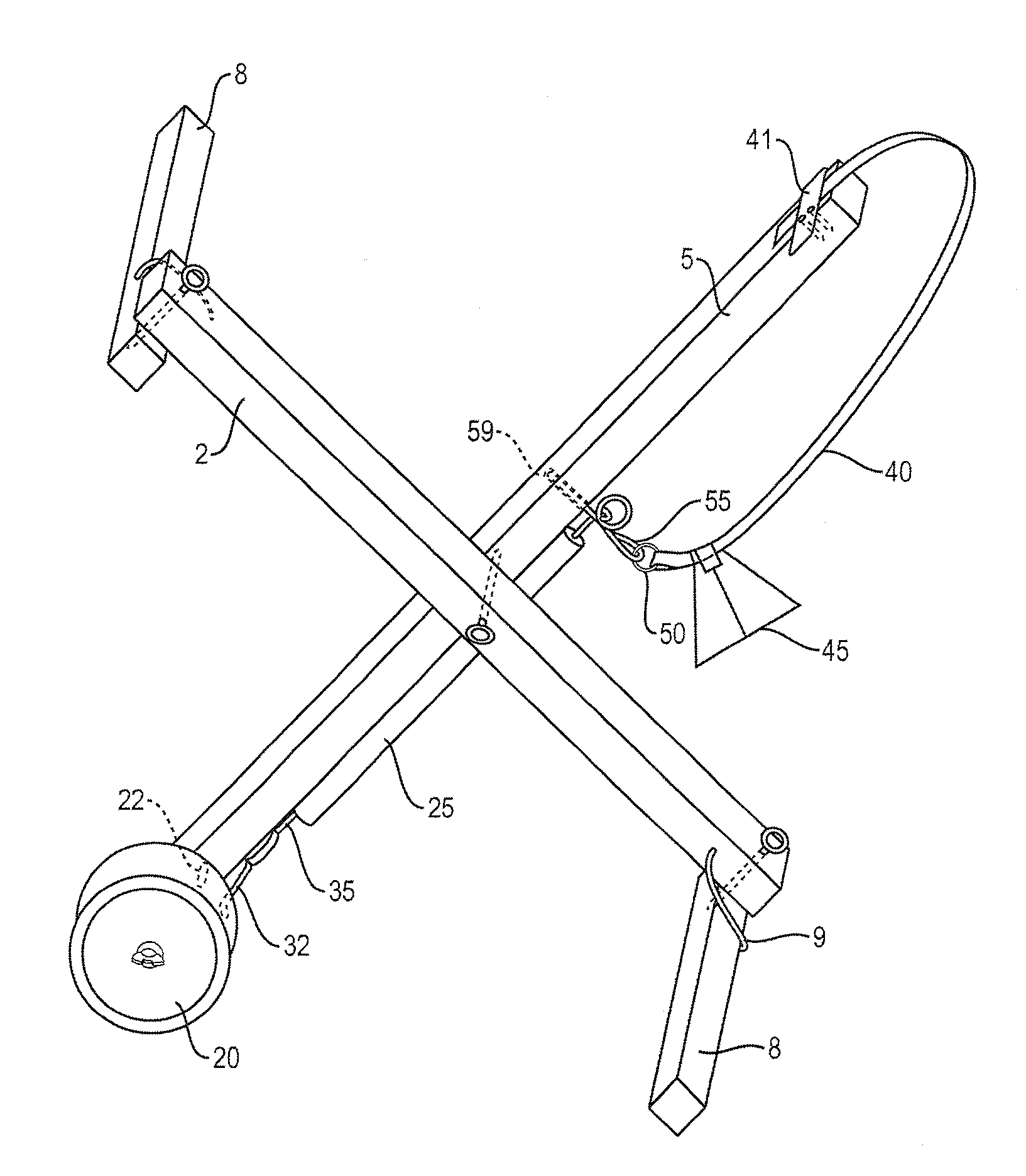
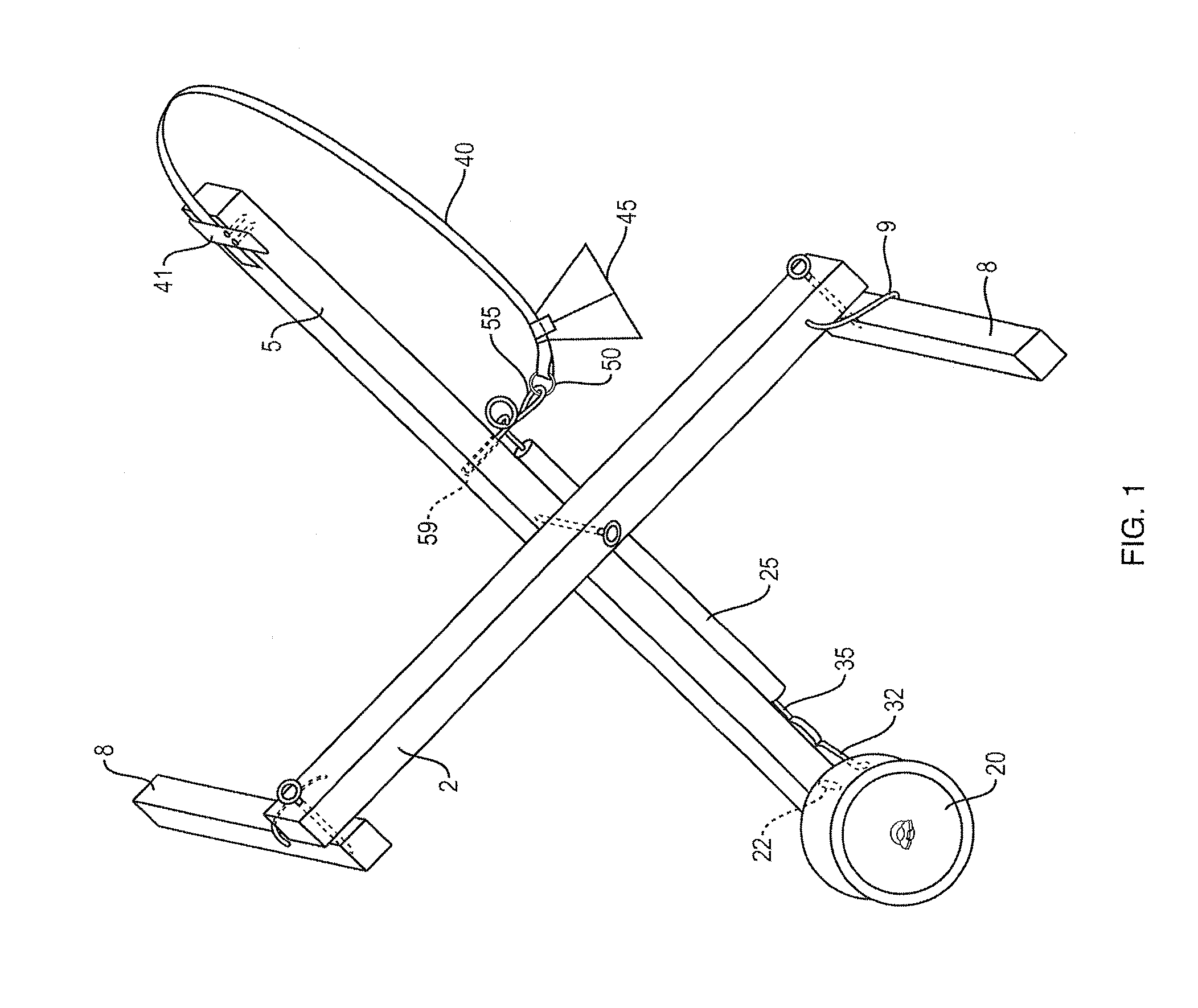
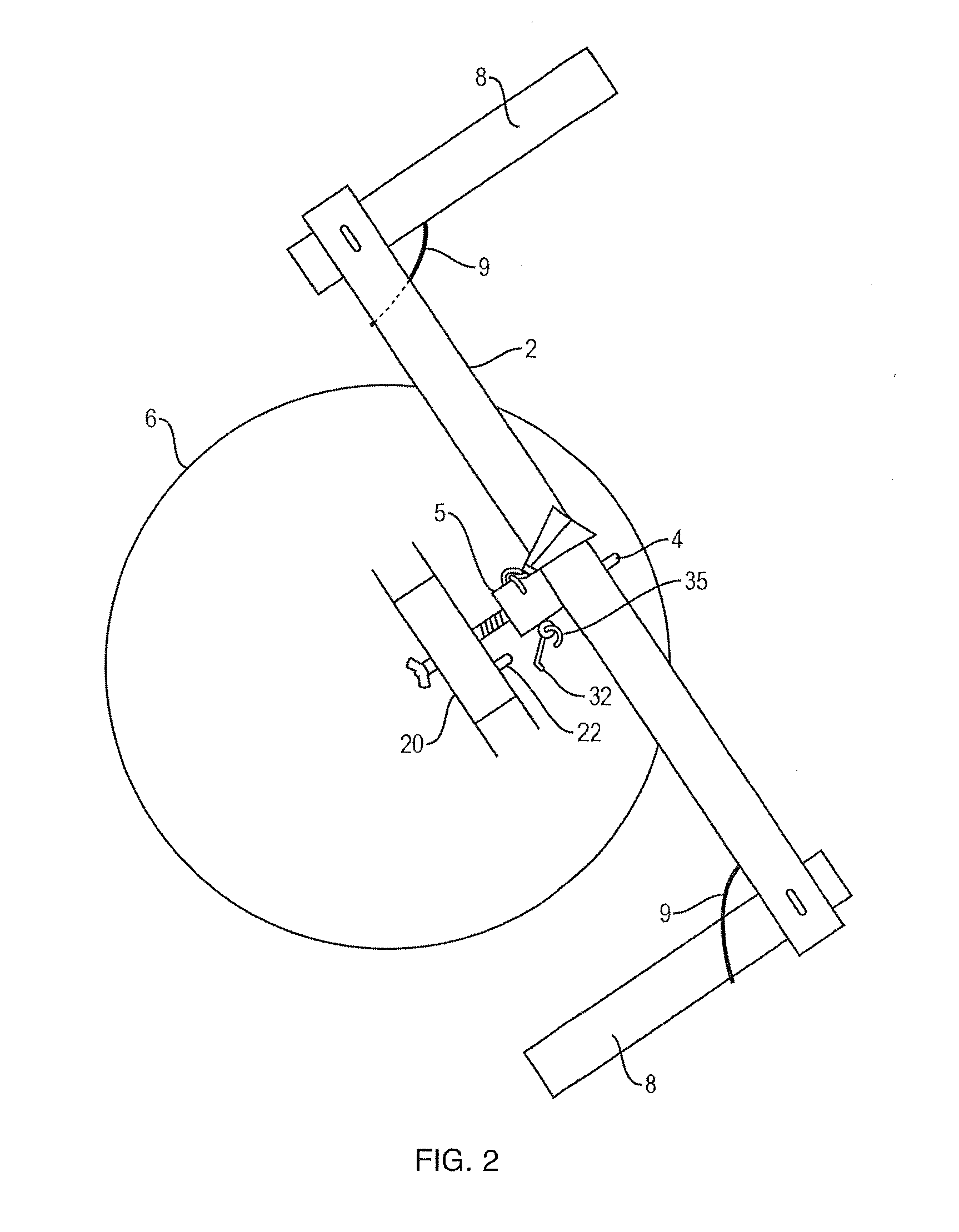
[0028]The preferred embodiment of a fish trap according to the invention comprises a foldable frame, having an elongated crossbeam 2 hingedly coupled to an elongated mast 5. Preferably, the crossbeam and mast are hinged at a hinge point 4 about their mid-length. A stabilizer bar 8 is hingedly coupled at, or adjacent to, each end of the crossbeam 2. Preferably the trap may be folded to reduce its size when not deployed as shown in FIG. 9. Other portions of the trap, and the manner by which they cooperate in various embodiments, will be explained below with reference to various drawings.
[0029]FIG. 1 depicts a schematic perspective view of the fish trap according to the preferred embodiment of the invention, FIG. 2 depicts a top view thereof, and FIG. 3 depicts a frontal elevation of the trap in operational state indicated a caught fish. In FIGS. 2 and 3 the trap is shown in a deployed disposition over an ice hole 6.
[0030]Crossbeam 2 extends horizontally over the ice hole 6, and stabil...
PUM
 Login to View More
 Abstract
Description
Claims
Application Information
 Login to View More