
Pet Housetraining Crate System
a cage system and cage technology, applied in the direction of snap fasteners, buckles, mechanical devices, etc., can solve the problems of puppies being confined to cages, and many families are not able to keep dogs in constant supervision
- Summary
- Abstract
- Description
- Claims
- Application Information
AI Technical Summary
Benefits of technology
Problems solved by technology
Method used
Image

Examples
Embodiment Construction
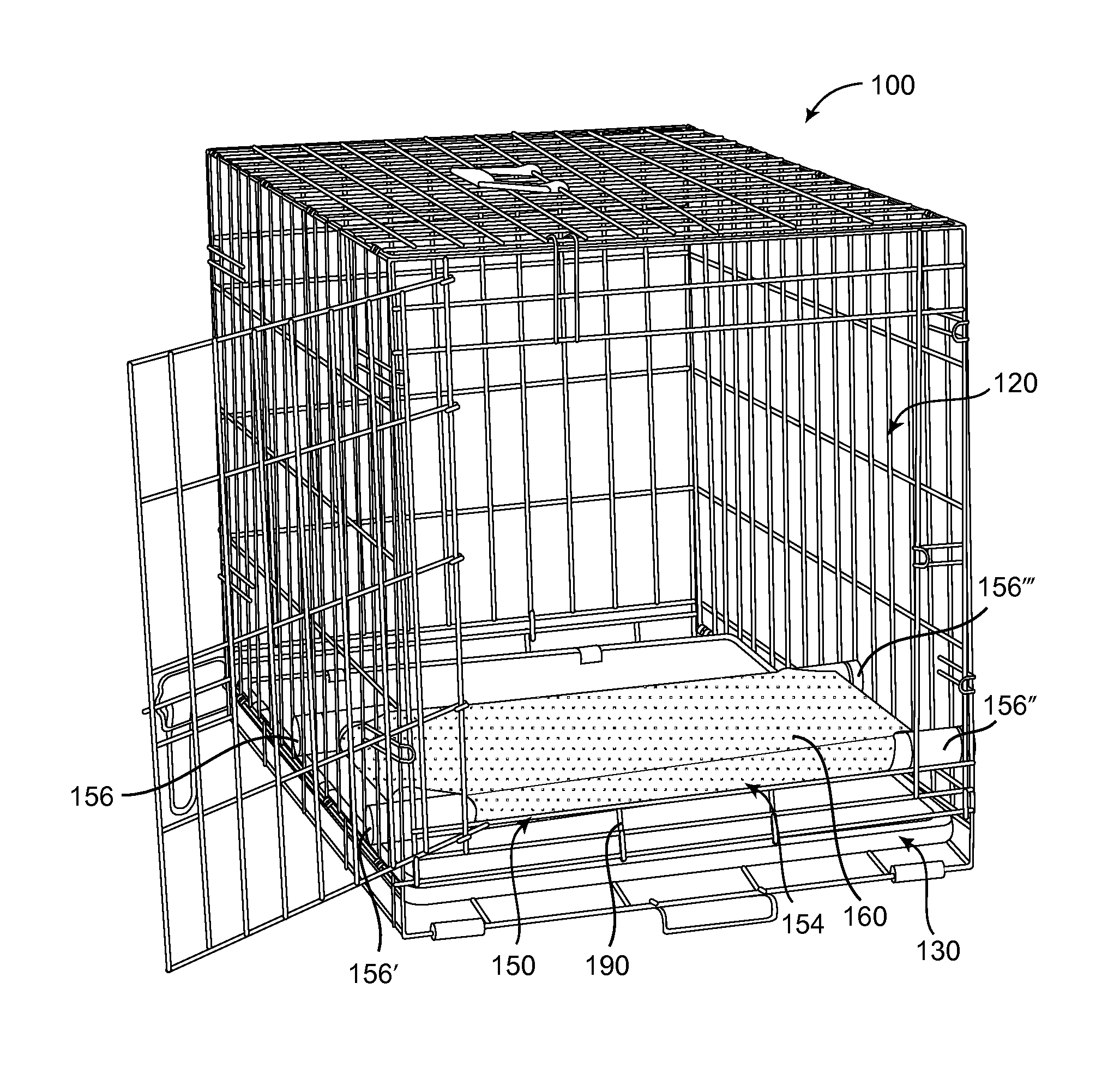
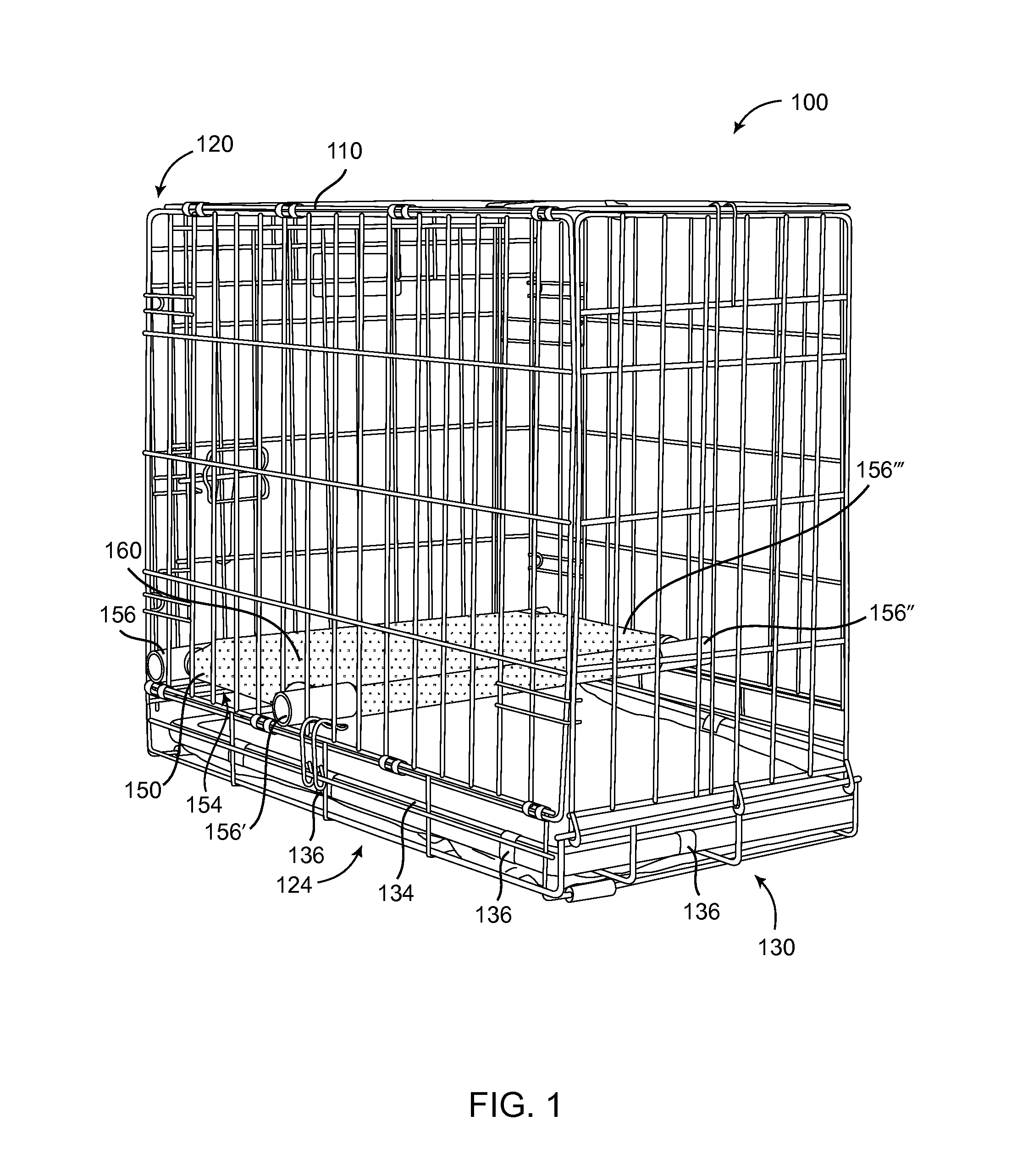
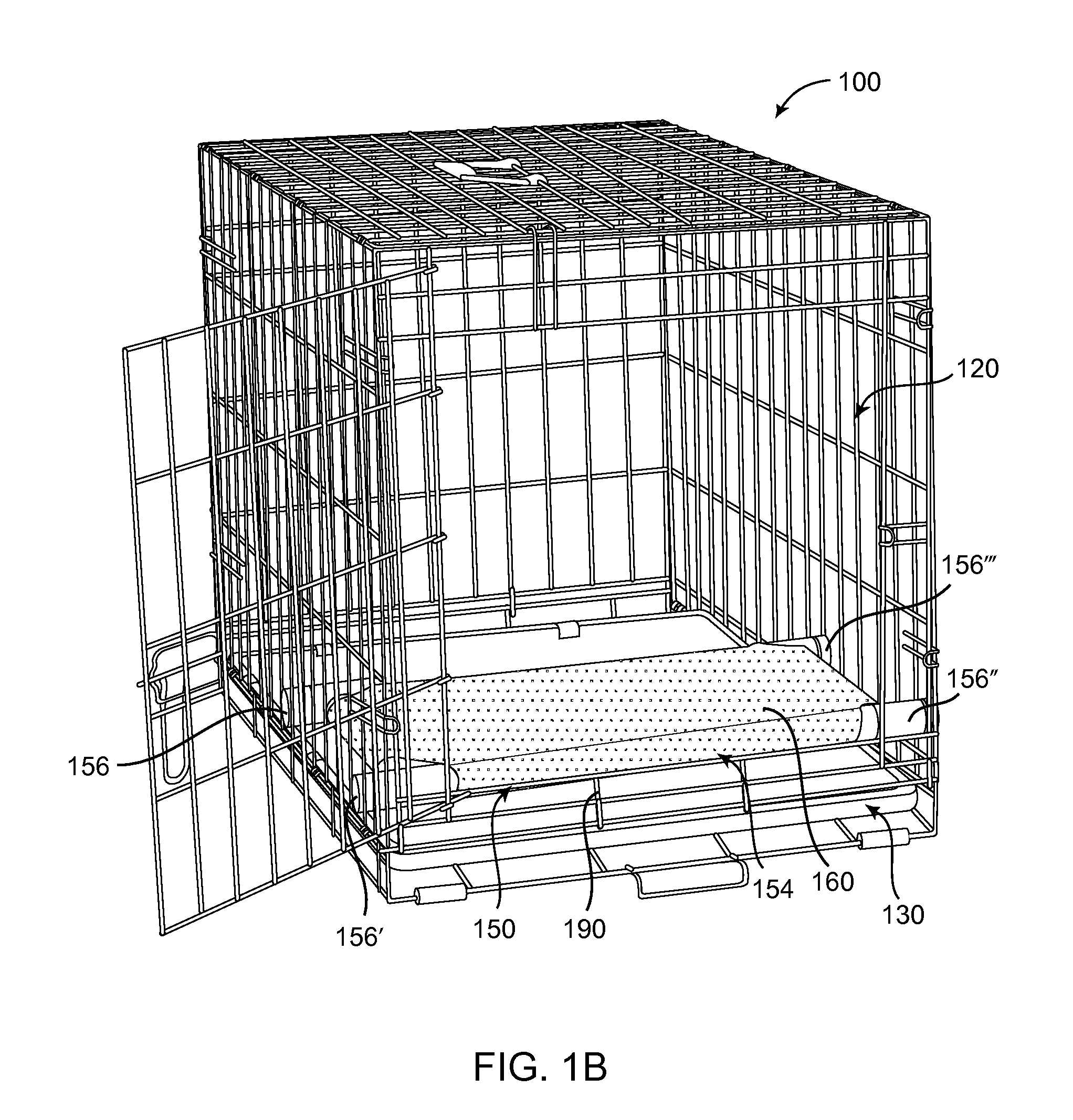
[0028]FIG. 1 shows a full view of the system 100, as seen from the rear of the cage. The system is made up of the waste tray section of the system and the bedding section of the system. Both sections of the system are enclosed within the frame of the cage 110. The cage as depicted is a metal wire-frame cage, with a door 120 present on the opposite end from the view depicted. Alternatively, the cage could be made of other materials, such as plastic or wood. The side panels of the cage must provide for perforations to support the bedding platform contained within the system. In the preferred embodiment, the rungs of the wire cage serve as appropriate perforations.
[0029]The waste tray section is comprised of a base plastic tray 130, an absorbent pad 134, and a plurality of metal clips used to secure the pad to the tray 136. The tray 130 is made of a hard plastic, with a raised edge around the entirety of the tray to assist in securing the absorbent pad. The absorbent pad 134 sits on to...
PUM
 Login to View More
 Abstract
Description
Claims
Application Information
 Login to View More