
Double conical ivc filter
a filter and conical technology, applied in the field of medical devices, can solve the problems that current filters may not provide the desired flexibility to maintain the natural physiology of the vena cava, and achieve the effect of increasing the filtering capacity
- Summary
- Abstract
- Description
- Claims
- Application Information
AI Technical Summary
Benefits of technology
Problems solved by technology
Method used
Image

Examples
first embodiment
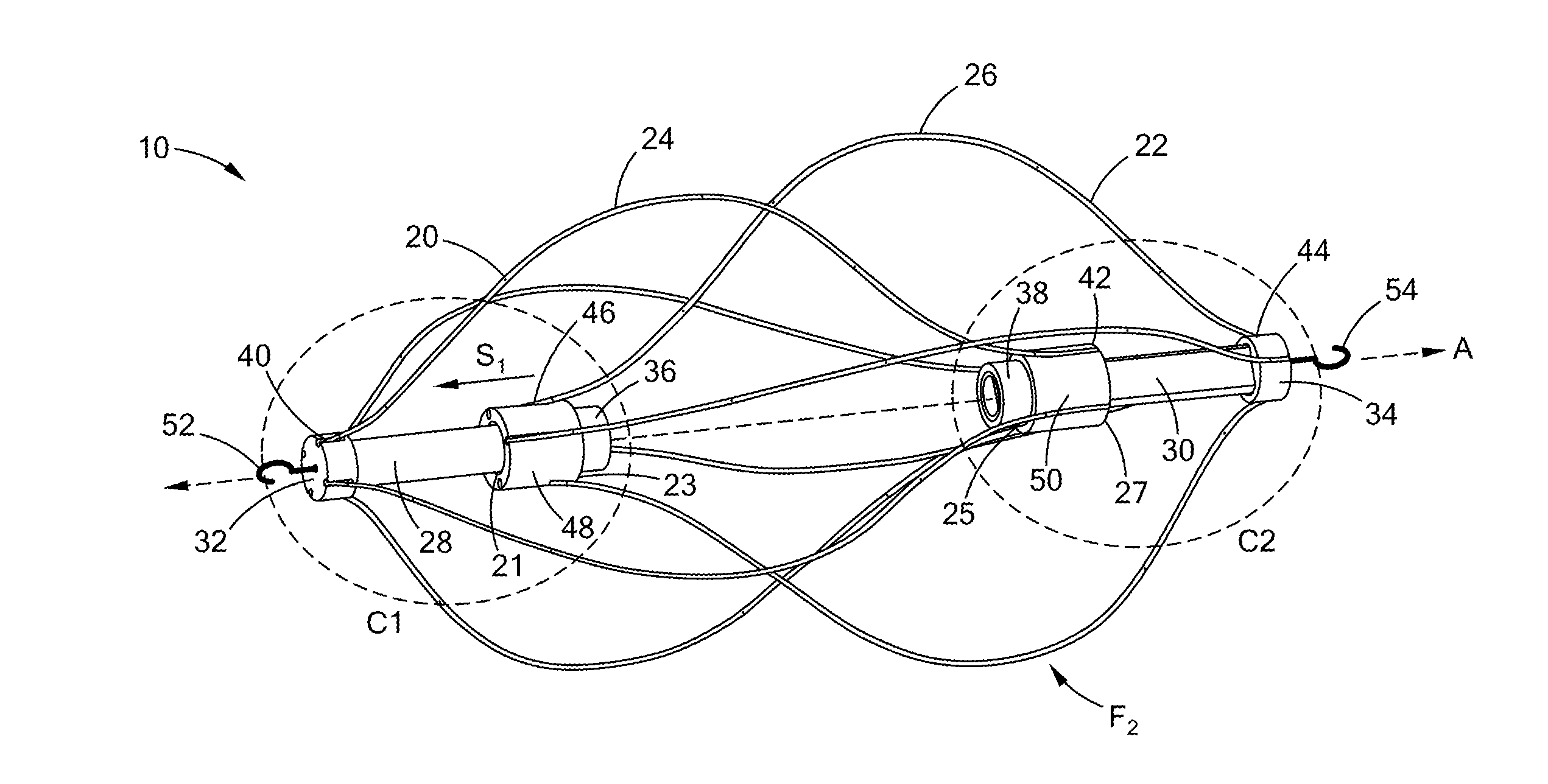
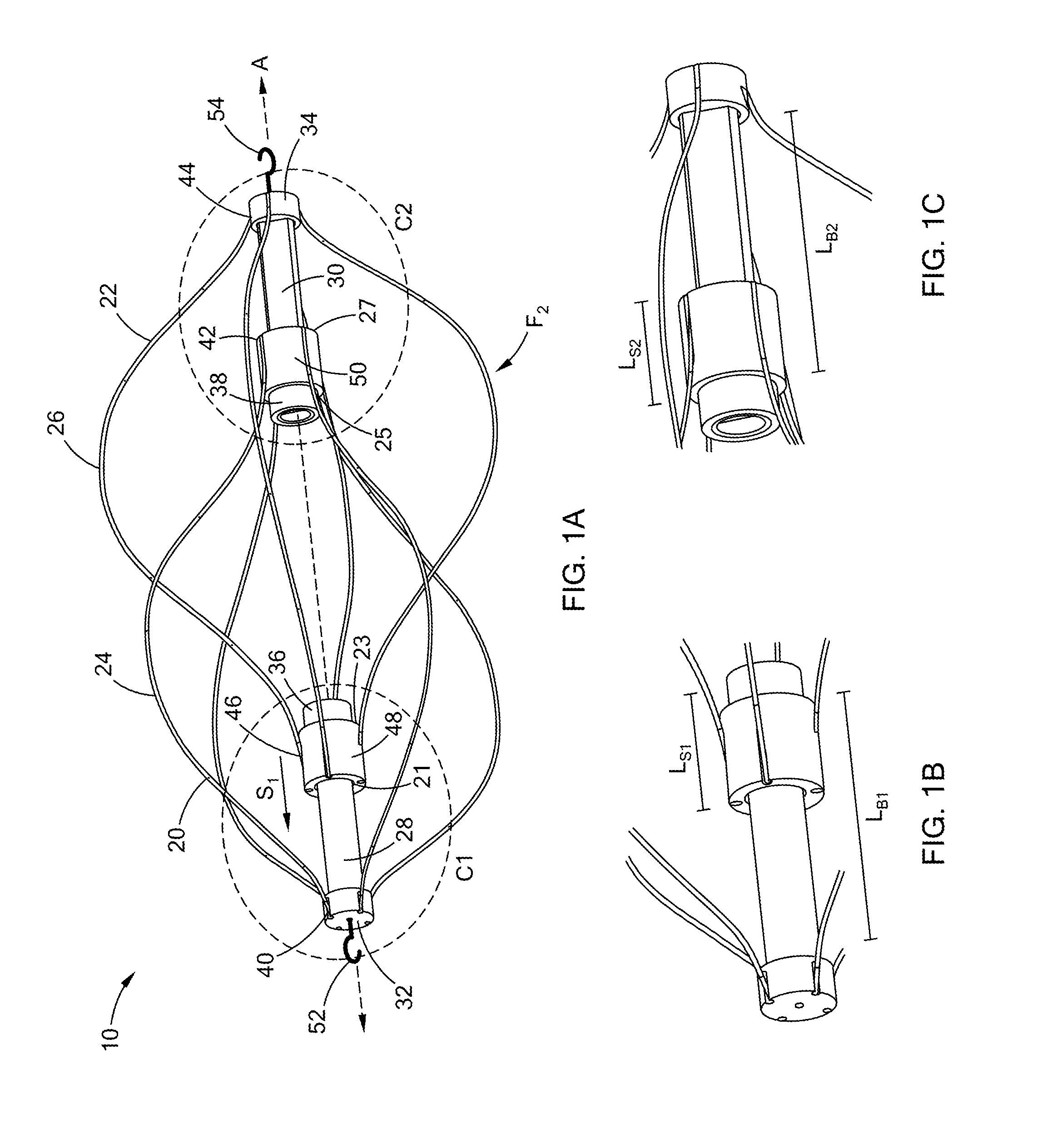
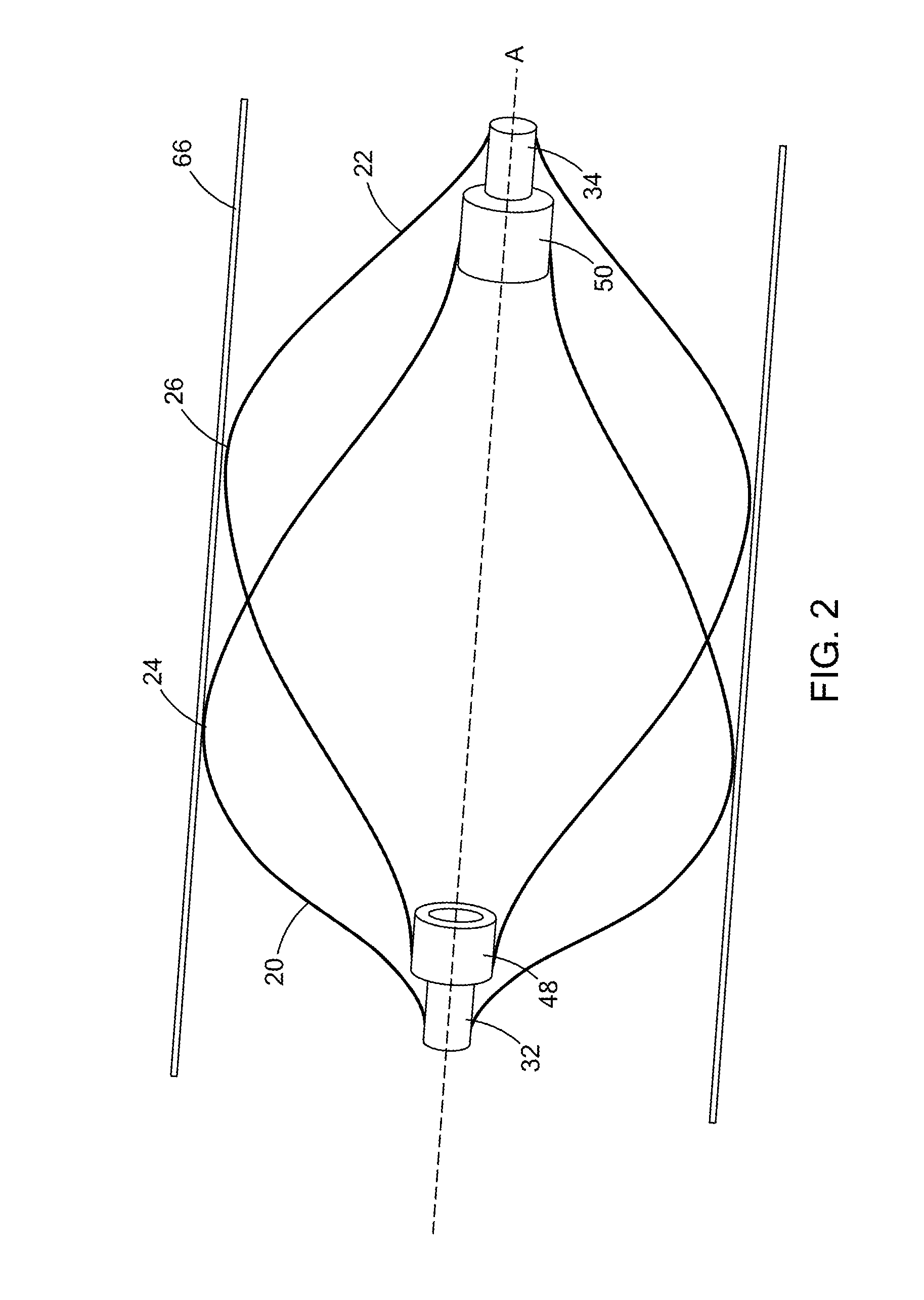
[0029]FIGS. 1A-1C illustrate the device 10. In this embodiment, the device has a first bar 28 having a first end comprising a first end cap 32 and extending distally along a first longitudinal length to a second end comprising a first center cap 36. The device further comprises a second bar having a third end comprising a second end cap 34 and extending proximally along a second longitudinal length to a fourth end comprising a second center cap 38. The first end cap 32 may be disposed proximal to the second end cap 34.
[0030]In this embodiment, the device further comprises a first slider 48 having a first slider body with a first bore formed therethrough along the longitudinal axis A of the device. The first bore defines a first opening 21 and a second 23 opening. The first bar 28 may be slidably disposed through the first and second openings (21 and 23, respectively) to allow play between the first bar 28 and the first slider 48. The second slider 50 may have a second slider body wi...
second embodiment
[0043]FIGS. 4A-4B depict the device. In this embodiment, the first and second bars further comprise first and second tracks, respectively. For example, the first bar comprises a first track 56 formed between a proximal track end 60 and the first center cap. The second bar may comprise a second track 58 formed between the second center cap and a distal track end 62. The first slider may be slidably disposed in the first track 56 and the second slider may be slidably disposed in the second track 58.
[0044]In this embodiment, the first bore is formed complementary to the first track 56 to maintain the first slider in the first track 56. In addition, the second bore may be formed complementary to the second track 58 to maintain the second slider in the second track 58. FIG. 4B shows a blown-up view of circle C3 in FIG. 4A. Here, the second track 58 is depicted with a second track length LT2 extending from the second center cap to the distal track end 62.
[0045]In addition, this embodiment...
PUM
 Login to View More
 Abstract
Description
Claims
Application Information
 Login to View More