Techniques for ultrahigh density writing with a probe on erasable magnetic media

a micromachined memory and probe technology, applied in the field of micromachined memory devices, can solve the problems of preventing researchers from bringing the tip closer, and affecting the accuracy of the writing

US6011664AInactive Publication Date: 2000-01-04CARNEGIE MELLON UNIV
13 Cites 141 Cited by

Patent Information

Authority / Receiving Office
US · United States
Patent Type
Patents(United States)
Current Assignee / Owner
Publication Date
2000-01-04
Estimated Expiration
Not applicable · inactive patent

Smart Images

  • Figure 1
    Figure 1
  • Figure 2
    Figure 2
  • Figure 3
    Figure 3
Patent Text Reader

Abstract

Techniques for ultrahigh density writing on an erasable magnetic medium include using a micromachined mechanism having two probes for writing to the medium. Use of the two probe embodiment eliminates the need to change the magnetic orientation of the probe. In another embodiment, a single probe is provided which is heated to the vicinity of its Curie temperature to enable the magnetic orientation of the probe to be switched. The probe may be heated to its Curie temperature through the use of a heating element or a focused laser. In another embodiment of the present invention, either the magnetic orientation of the probe or the magnetic orientation of the medium may be switched through the combination of a static magnetic field, a radio frequency magnetic field and, under certain circumstances, the magnetic field of the probe. In all cases, the writing techniques enable information to be written to a magnetic medium in a manner which enables the information to be erased and the medium rewritten.
Need to check novelty before this filing date? Find Prior Art

Description

1. Field of the InventionThe present invention is directed broadly to micromachined memory devices and more particularly to techniques for ultrahigh density writing with a micromachined probe on an erasable magnetic medium.2. Description of the BackgroundThe invention of various scanning probe microscopy technologies has made possible the development of ultrahigh density data storage technologies based upon them. The use of an atomic force microscope for recording and playing back topographical features in a plastic substrate has been demonstrated. Such scanning probe storage technologies make possible exceedingly high storage densities in the 10.sup.10 to 10.sup.12 bits / in.sup.2 range. Most of the proposed methods of storage which have been investigated using those techniques utilize write-once technologies in which it is possible to write-once on the storage medium and read it back repeatedly. Whereas such write-once technology does have applications, it is desirable to have stora...

Examples

Embodiment Construction

hereinbelow.

For the present invention to be clearly understood and readily practiced, the present invention will be described in conjunction with the following figures wherein:

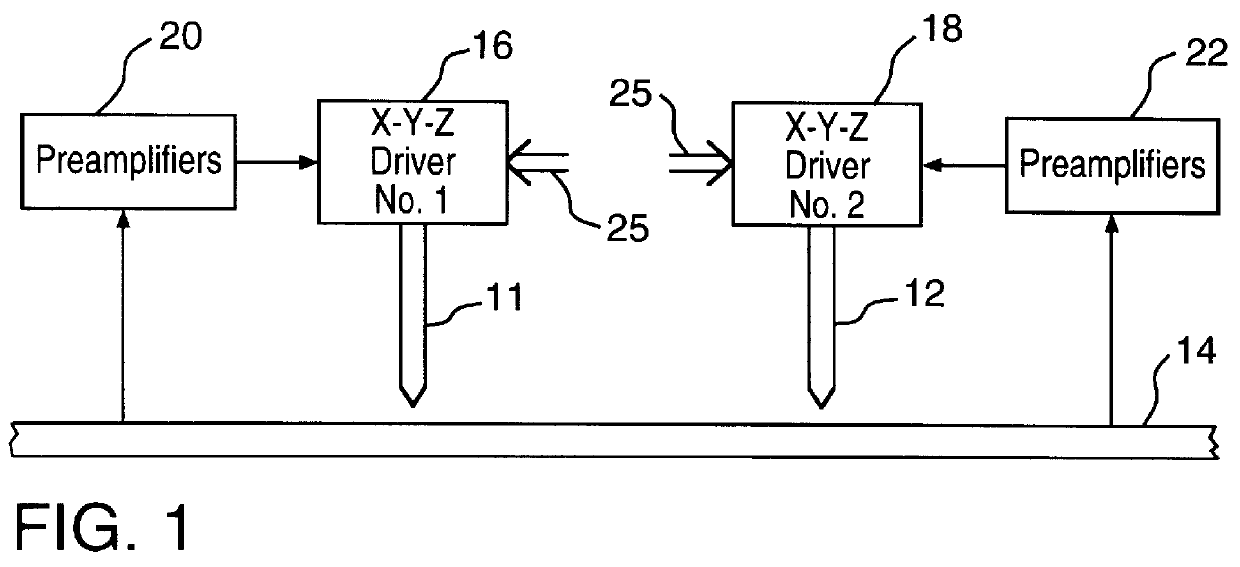
FIG. 1 illustrates a two probe writing embodiment constructed according to the teachings of the present invention;

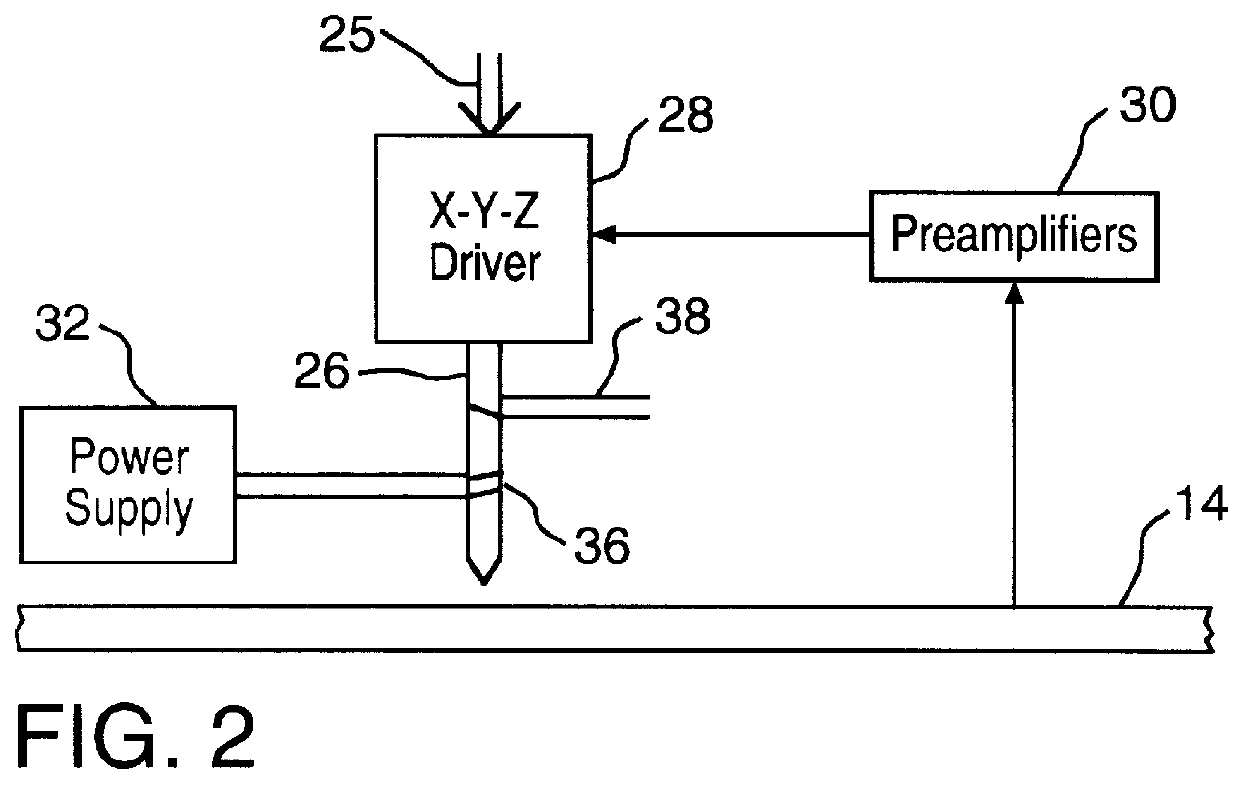
FIG. 2 illustrates a single probe writing embodiment constructed according to the teachings of the present invention in which thermal energy is used to help switch the magnetic orientation of the probe;

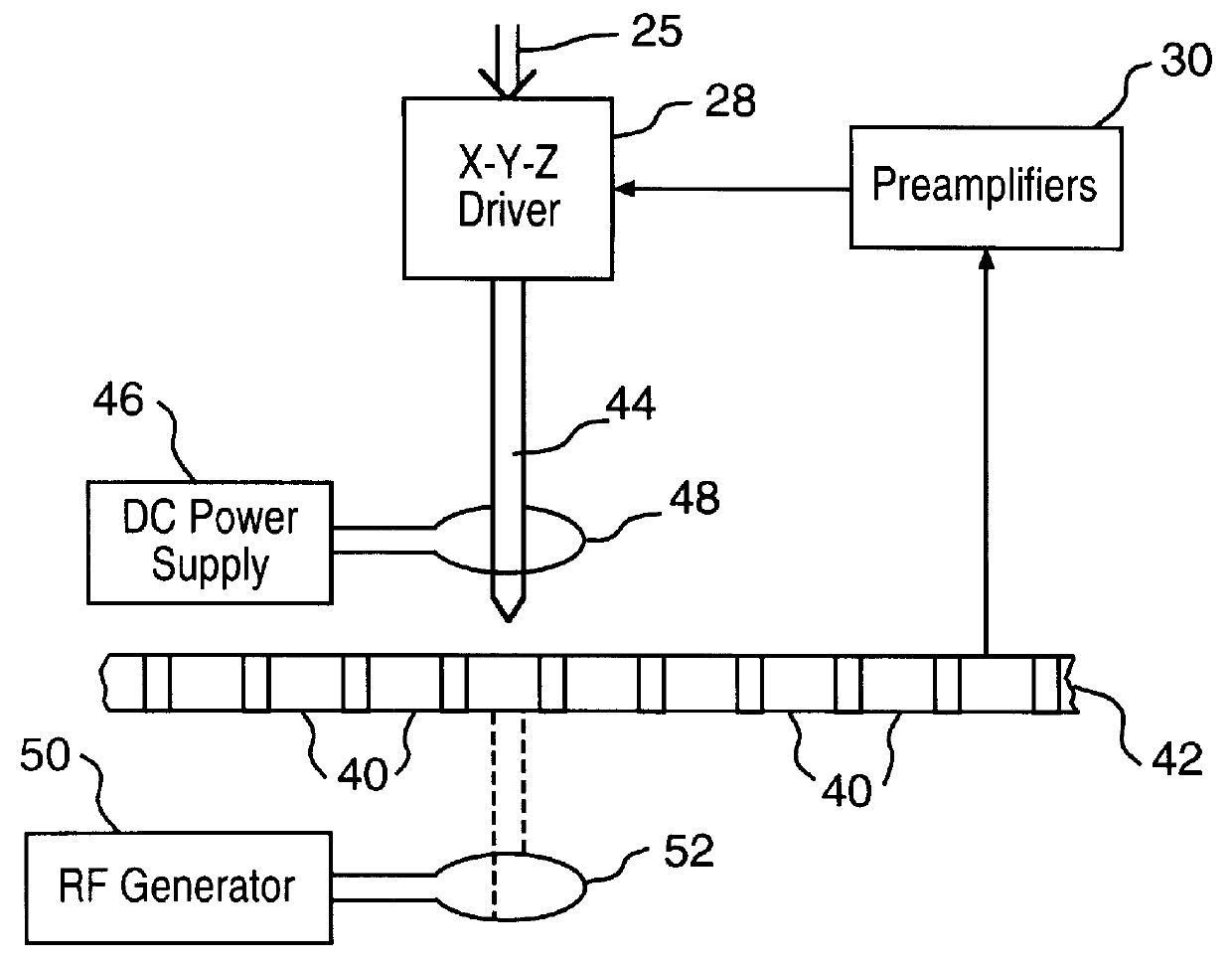
FIG. 3 illustrates another single probe writing embodiment constructed according to the teachings of the present invention in which a radio frequency magnetic field is used to help switch the magnetic orientation of a bit cell;

FIGS. 4a through 4d illustrate the addition of the vectors representative of the fields generated in the embodiment shown in FIG. 3; and

FIG. 5 illustrates another single probe writing embodiment constructed according to the teachings of the present invention in which a radio fr...