
Portal/portlet application data synchronization
a data synchronization and portlet technology, applied in the field of portlets, can solve the problems of data synchronization, large amount of internet host content not easily accessible by most end-users, and difficulty in distributing content about large computer communication networks
- Summary
- Abstract
- Description
- Claims
- Application Information
AI Technical Summary
Benefits of technology
Problems solved by technology
Method used
Image

Examples
Embodiment Construction
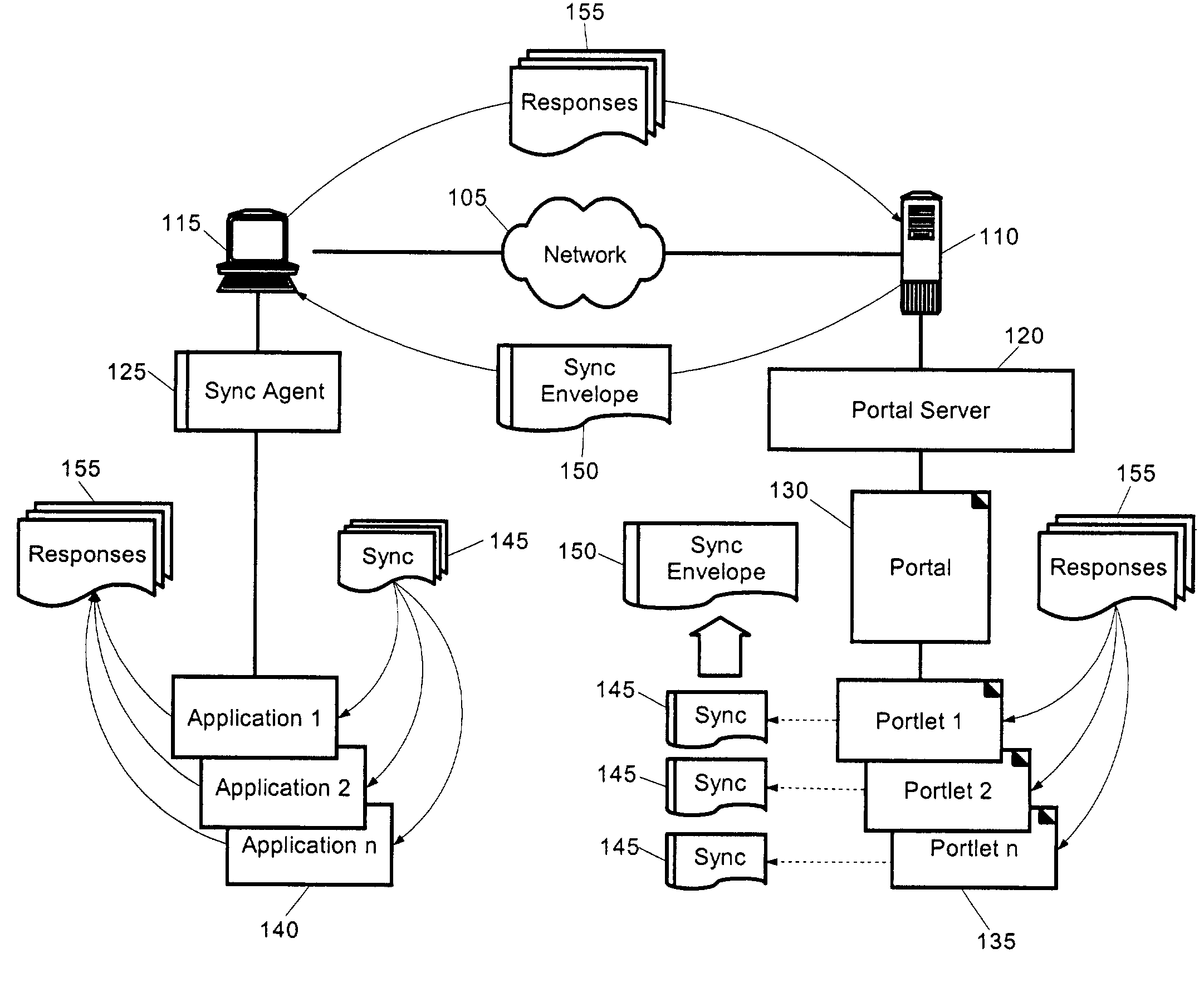
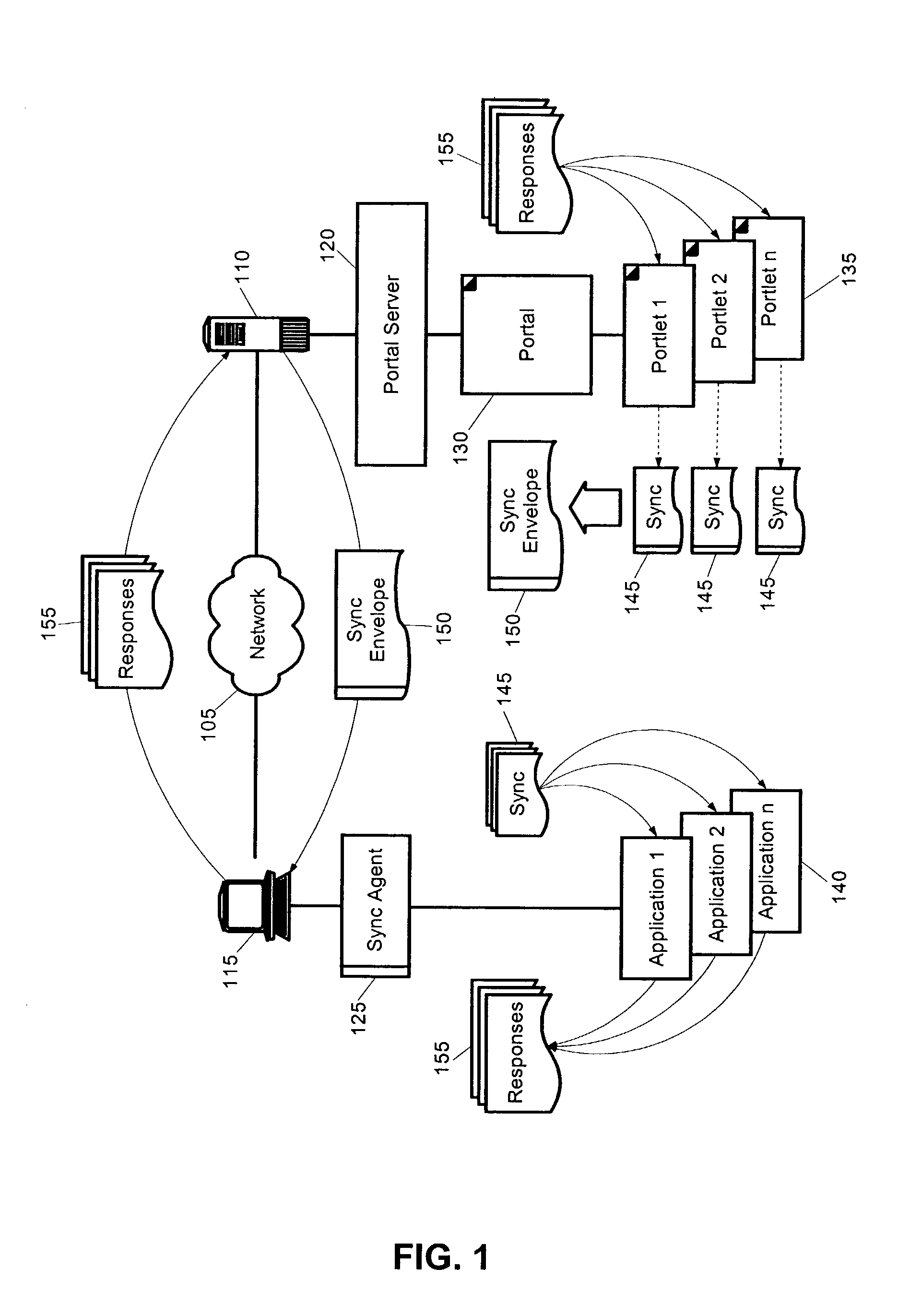
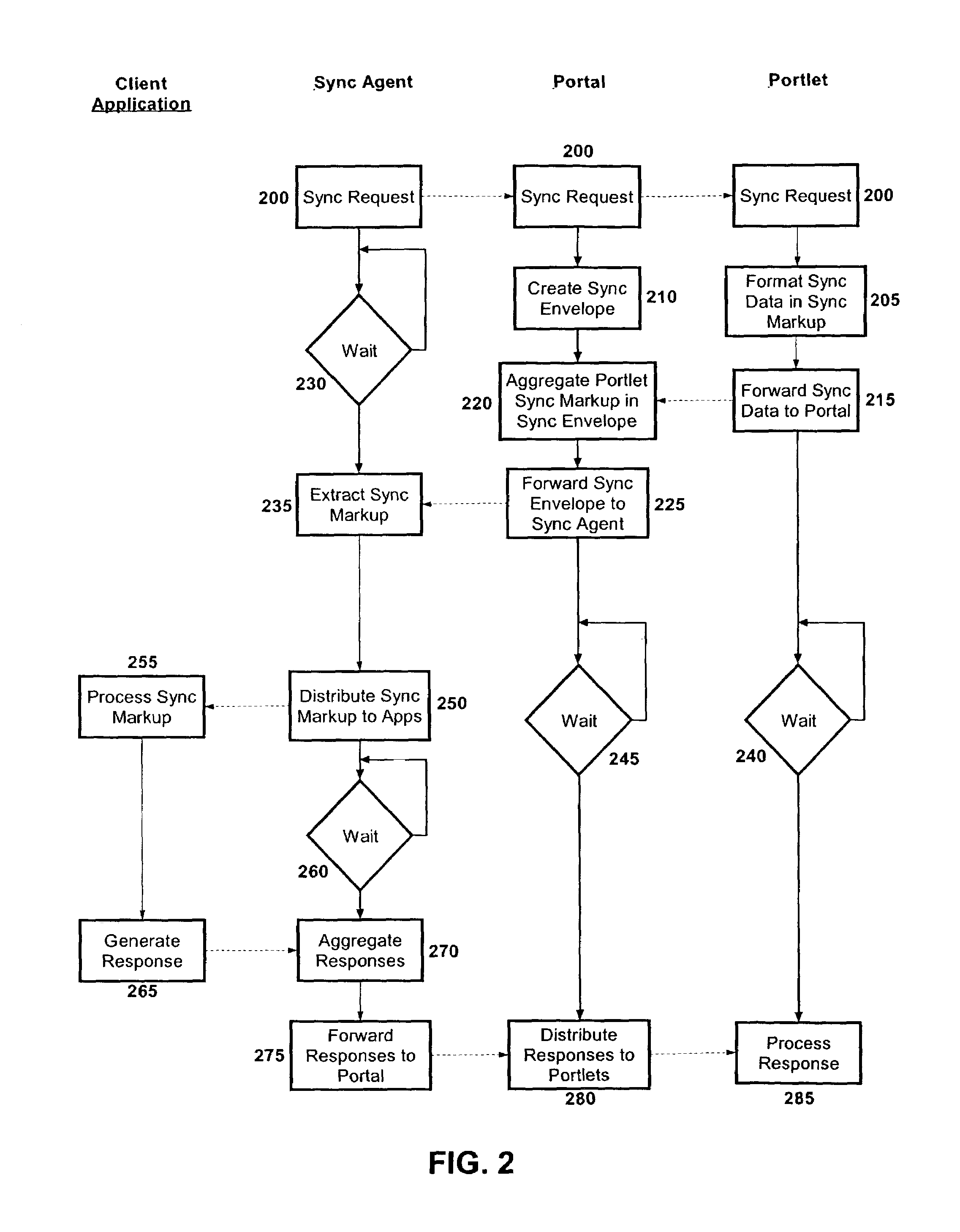
[0018]The present invention is a data synchronization system, method and apparatus with which application data presented through portlets in a portal can be synchronized with an end-user computing device over a computer communications network. In accordance with the inventive arrangements, in response to a synchronization request, a portal server can encapsulate synchronization markup scripts for individual selected portlets in a, synchronization envelope. Subsequently, the synchronization envelope can be forwarded over the computer communications network to a synchronization agent associated with the end-user. The synchronization agent, in turn, can extract each synchronization markup script in the synchronization envelope, and can provide the extracted synchronization markup scripts to underlying client applications associated with the portlets.
[0019]The client applications associated with the portlets can process their respective synchronization markup scripts, and the client app...
PUM
 Login to View More
 Abstract
Description
Claims
Application Information
 Login to View More