Near-field miniature coupler

a near-field, coupler technology, applied in the field of spatial selective couplers, can solve the problems of inability to control the coupling range, increase system complexity, cost, delay response, etc., and achieve the effect of minimizing the footprint of the coupler, minimizing the inadvertent activation, and controlling the coupling rang

US7839287B2Active Publication Date: 2010-11-23ZEBRA TECH CORP
33 Cites 1 Cited by

Patent Information

Authority / Receiving Office
US · United States
Patent Type
Patents(United States)
Current Assignee / Owner
Publication Date
2010-11-23

Smart Images

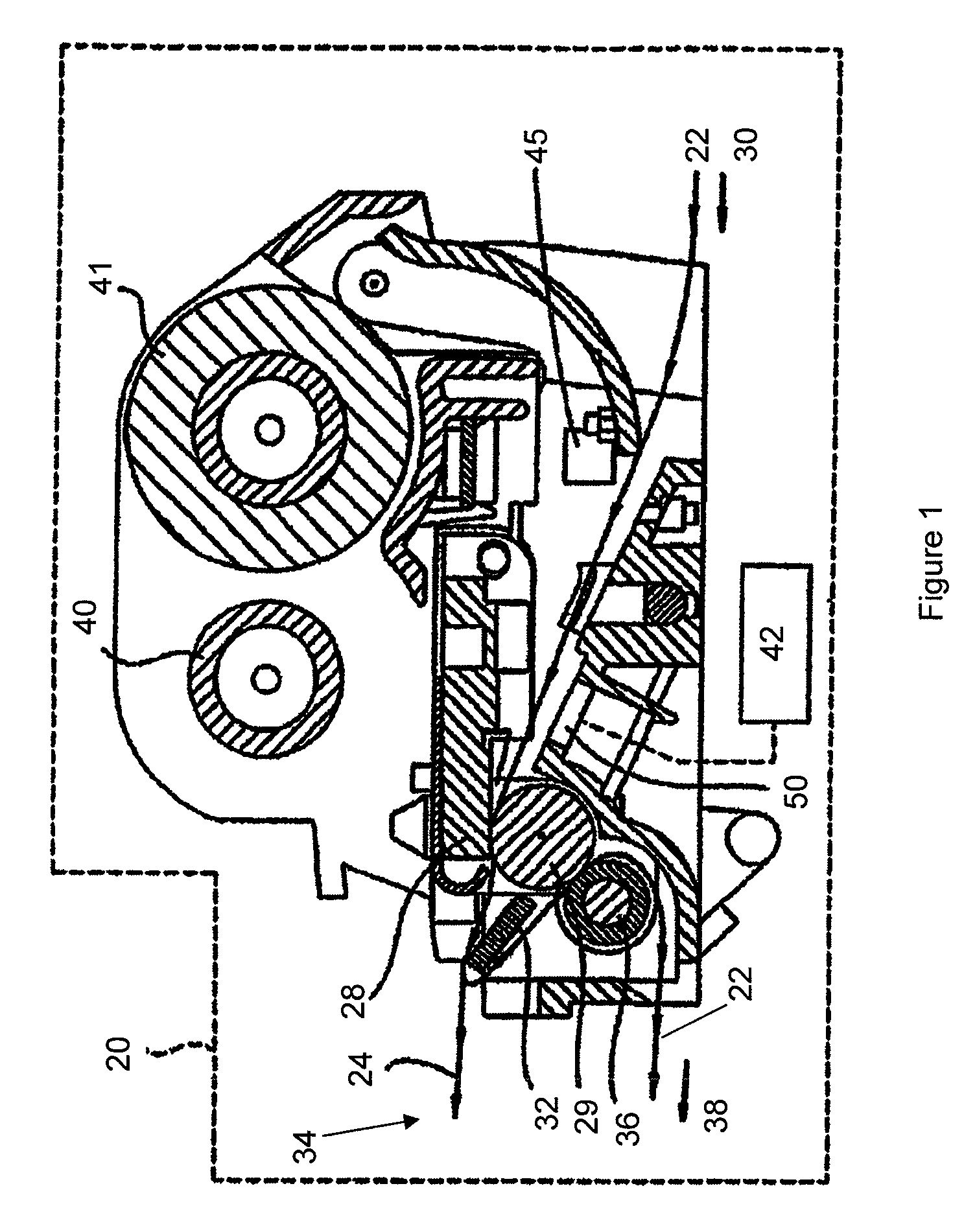
  • Figure 1
    Figure 1
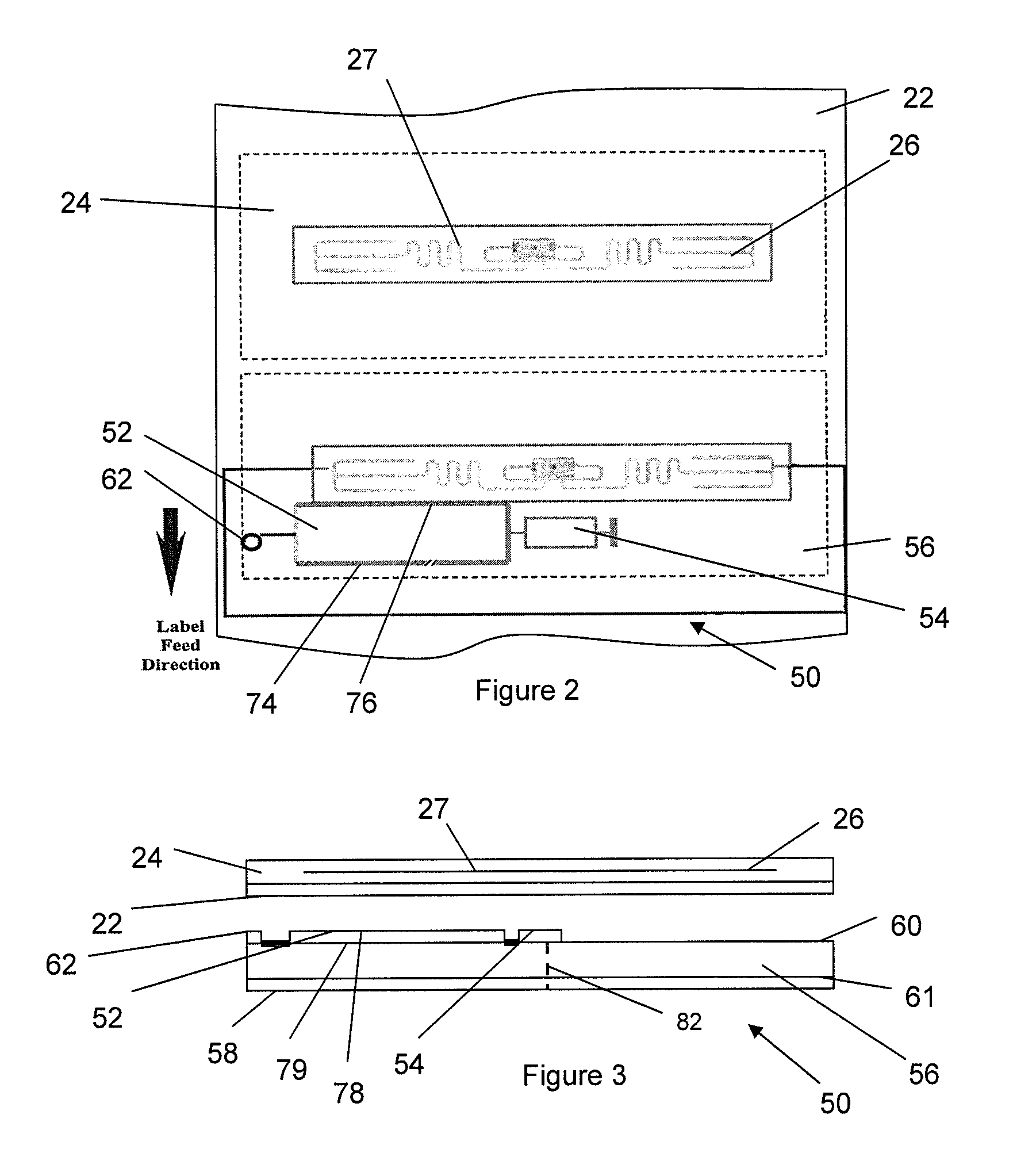
  • Figure 2
    Figure 2
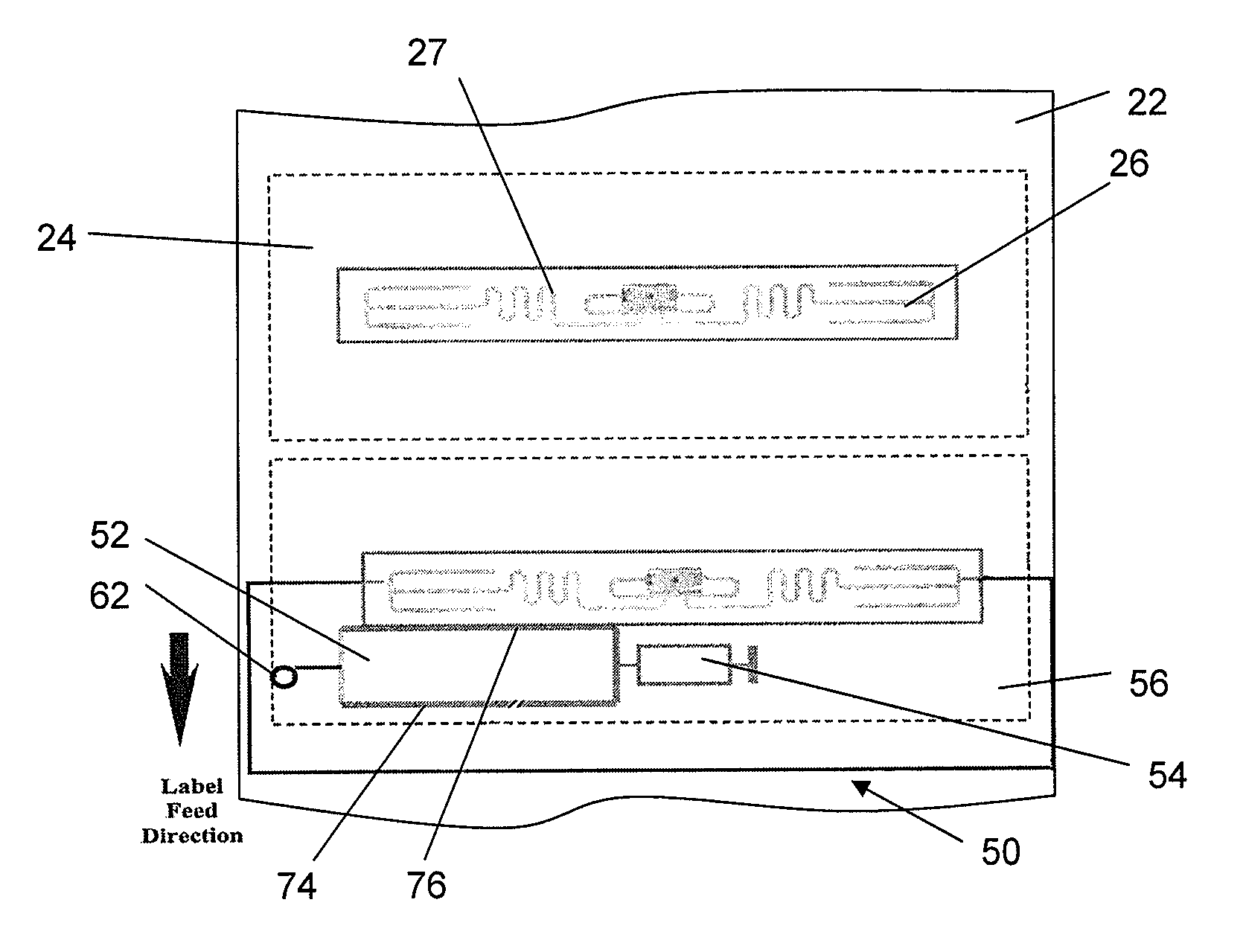
  • Figure 3
    Figure 3
Patent Text Reader

Abstract

A near-field coupler for a RFID system is provided. The coupler is configured to selectively communicate with a targeted transponder from among a group of multiple adjacent transponders. The coupler includes a conductive strip terminated by a load. The load is for matching an input impedance of the coupler to a source impedance of a transceiver. The conductive strip is based on a quarter wavelength of the center operating frequency. The conductive strip may have a substantially constant width and a length substantially equal to the quarter wavelength. Or the conductive strip may have a variable width defining a tapered profile and a length less than the quarter wavelength. The tapered profile may be an exponential profile or a Klopfenstein profile. Due to the overall size of the coupler to a typical transponder, the center of the coupler and the center of the transponder may be offset during coupling.
Need to check novelty before this filing date? Find Prior Art

Description

BACKGROUND OF THE INVENTION

[0001] 1. Field of the Invention

[0002] The present invention relates to RFID couplers and, in particularly, to spatially selective couplers capable of selectively communicating with a targeted transponder from among a group of adjacent transponders.

[0003] 2. Description of Related Art

[0004] Radio frequency identification (RFID) transponders, either active or passive, are typically used with an RFID transceiver or similar device for communicating information back and forth. In order to communicate, the transceiver exposes the transponder to a radio frequency (RF) electromagnetic field or signal. In the case of a passive UHF transponder, the RF electromagnetic field energizes the transponder and thereby prompts the transponder to respond to the transceiver by re-radiating the received signal and modulating it in a well-known technique called backscattering. In the case of an active transponder, the transponder may respond to the electromagnetic field by transmit...

Examples

Embodiment Construction

[0020]The present invention now will be described more fully hereinafter with reference to the accompanying drawings, in which some, but not all embodiments of the invention are shown. Indeed, this invention may be embodied in many different forms and should not be construed as limited to the embodiments set forth herein; rather, these embodiments are provided so that this disclosure will satisfy applicable legal requirements. Like numbers refer to like elements throughout.

[0021]The present invention concerns an apparatus for enabling an RFID transceiver (sometimes referred to as a “reader”) to selectively communicate with a targeted transponder that is commingled among or positioned in proximity to multiple adjacent transponders. As will be apparent to one of ordinary skill in the art, various embodiments of the present invention are described below that selectively communicate with a targeted transponder without requiring physical isolation of the transponder using space-consuming...