
Electrical connector for an in-body multi-contact medical electrode device
a multi-contact, electrical connector technology, applied in the direction of coupling device connection, application, diagnostic recording/measuring, etc., can solve the problems of large size of the connector in the prior art, difficult organization and management, and difficult to organize and manage the connector. , to achieve the effect of convenient operation, excellent electrical connection and convenient us
- Summary
- Abstract
- Description
- Claims
- Application Information
AI Technical Summary
Benefits of technology
Problems solved by technology
Method used
Image

Examples
Embodiment Construction
[0045]While the present invention may be embodied in any of several different forms, the present invention is described here with the understanding that the present disclosure is to be considered as setting forth an exemplification of the present invention that is not intended to limit the invention to the specific embodiment(s) illustrated. Nothing in this application is considered critical or essential to the present invention unless explicitly indicated as being “critical” or “essential.”
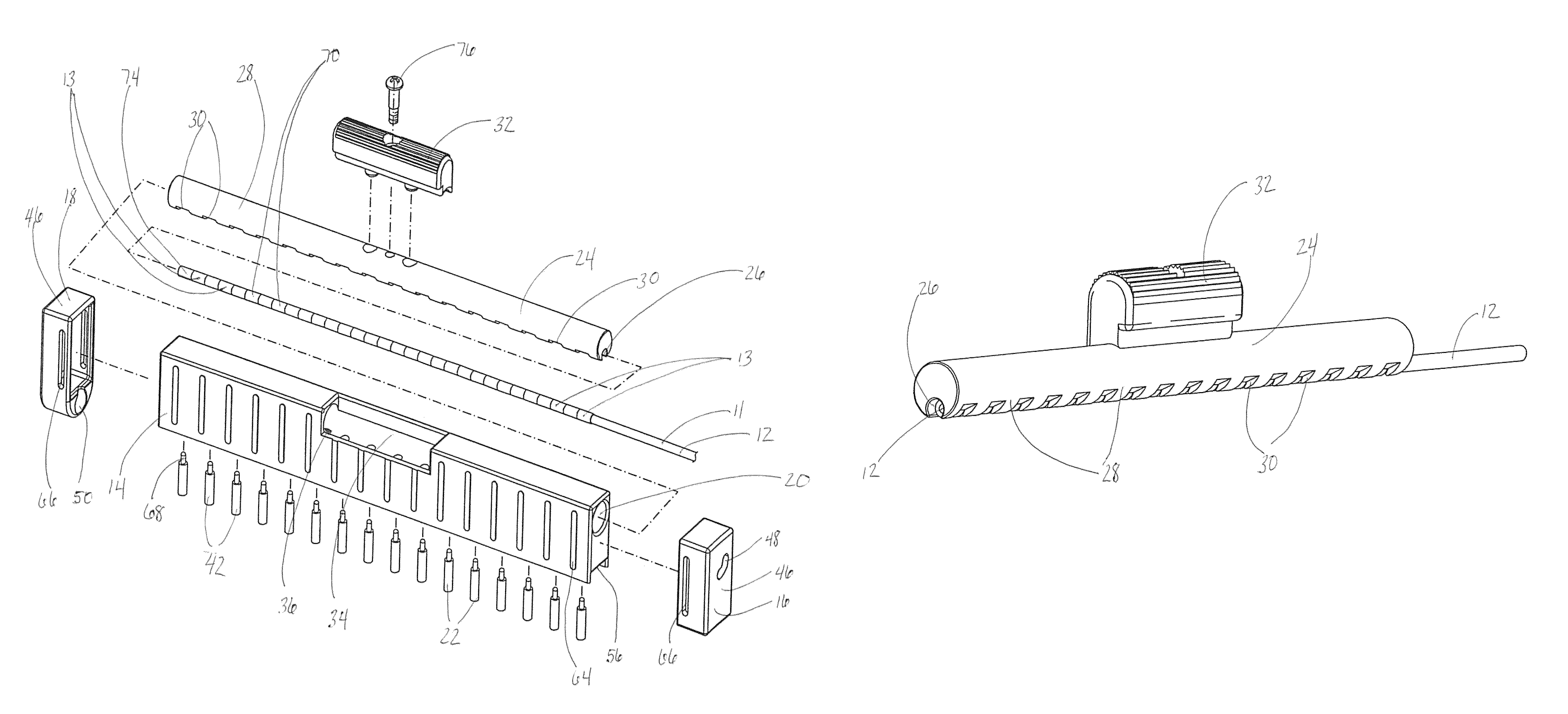
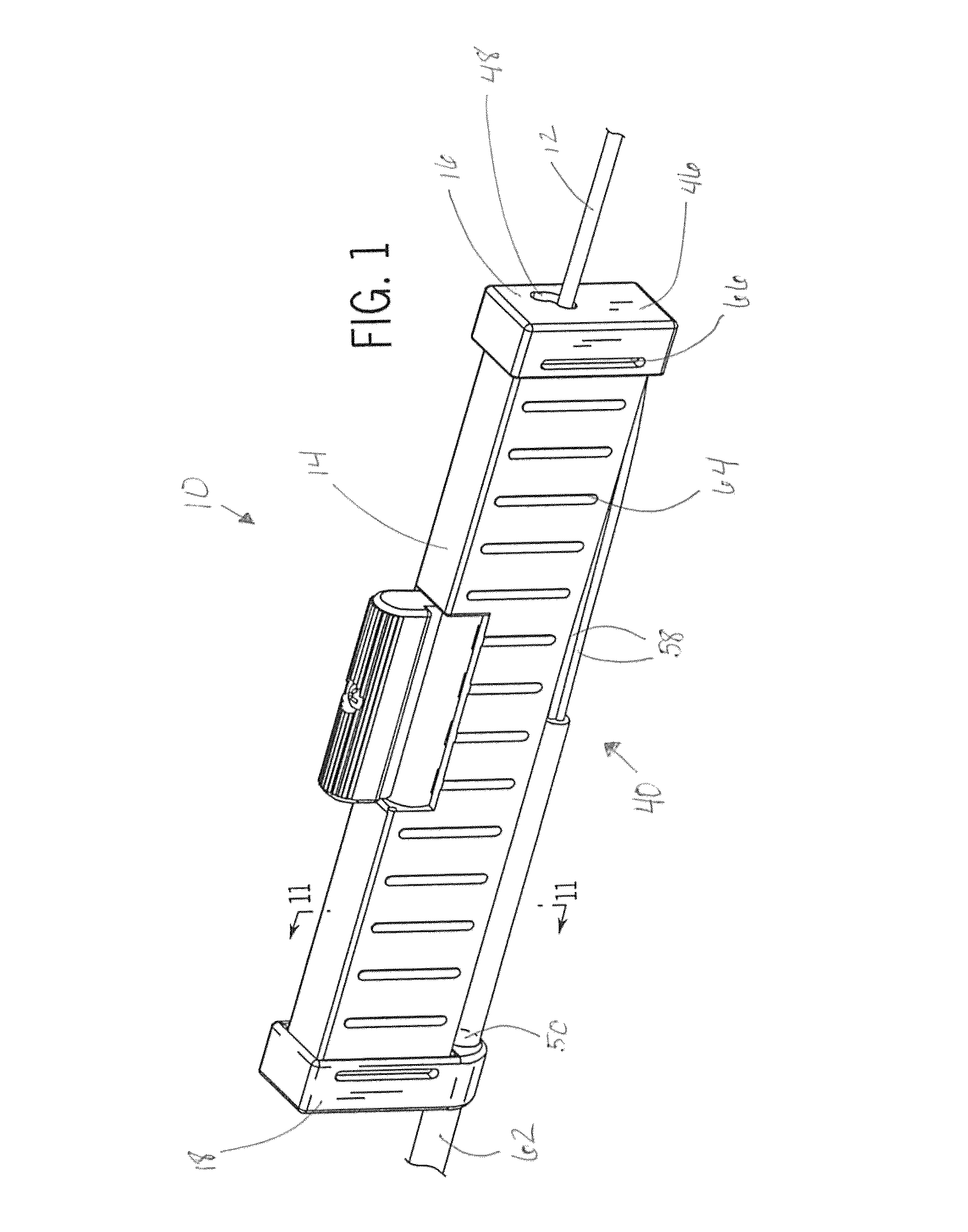
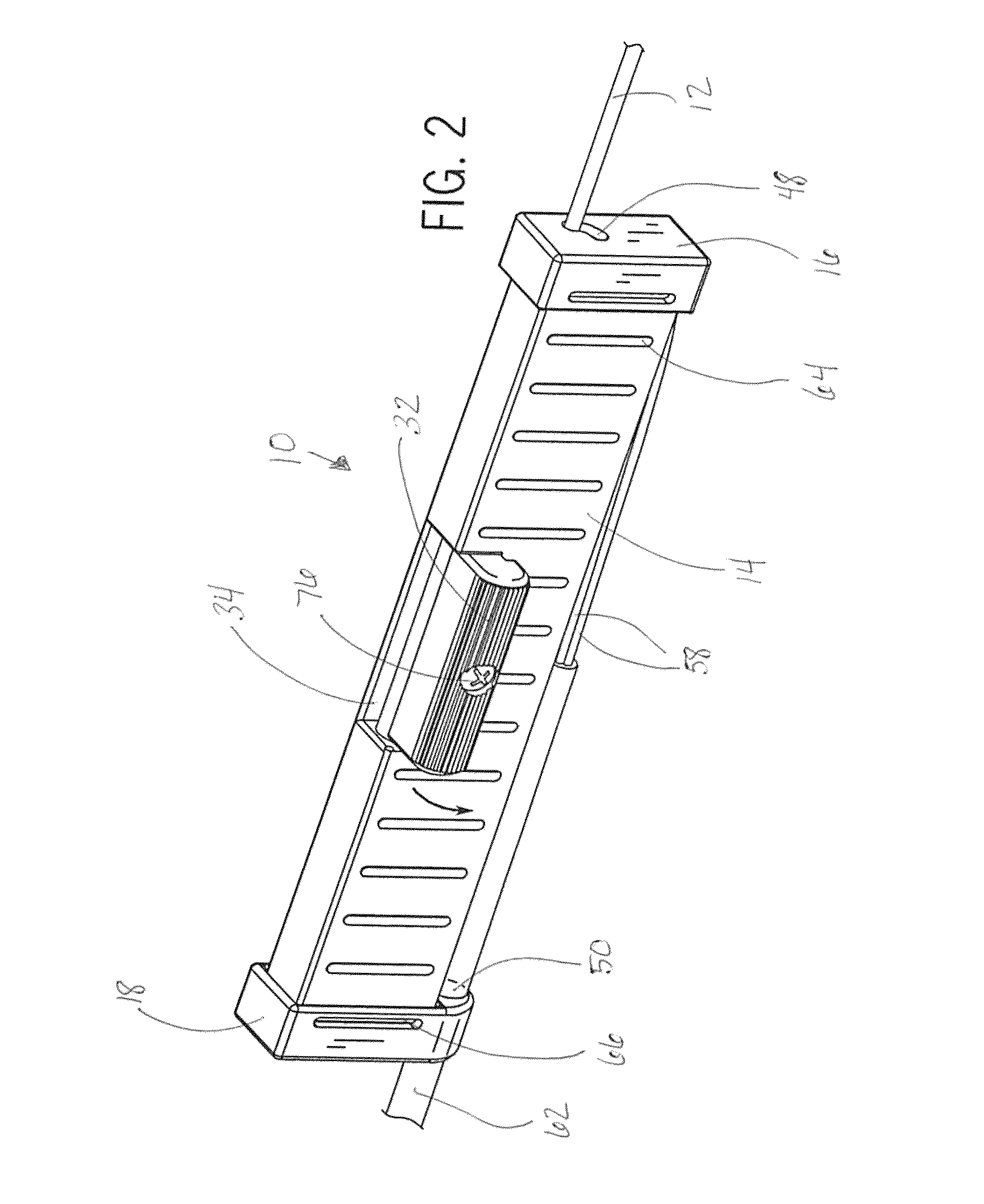
[0046]FIGS. 1-12 illustrate an electrical connector 10 for connecting the linear-array plural-contact tail 12 of an in-body multi-contact medical electrode 11 (the in-body portion of which is not shown), having an array of electrical conductors 22 spaced therealong, each electrically linked by a small electrical wire running up and beyond tail 12 to a particular in-body contact on the in-body portion of the electrode 11. Connector 10 includes an elongate body member 14 which has an elongate void ...
PUM
 Login to View More
 Abstract
Description
Claims
Application Information
 Login to View More