
Catalytic platinum-copper alloy nanoparticles
- Summary
- Abstract
- Description
- Claims
- Application Information
AI Technical Summary
Problems solved by technology
Method used
Image

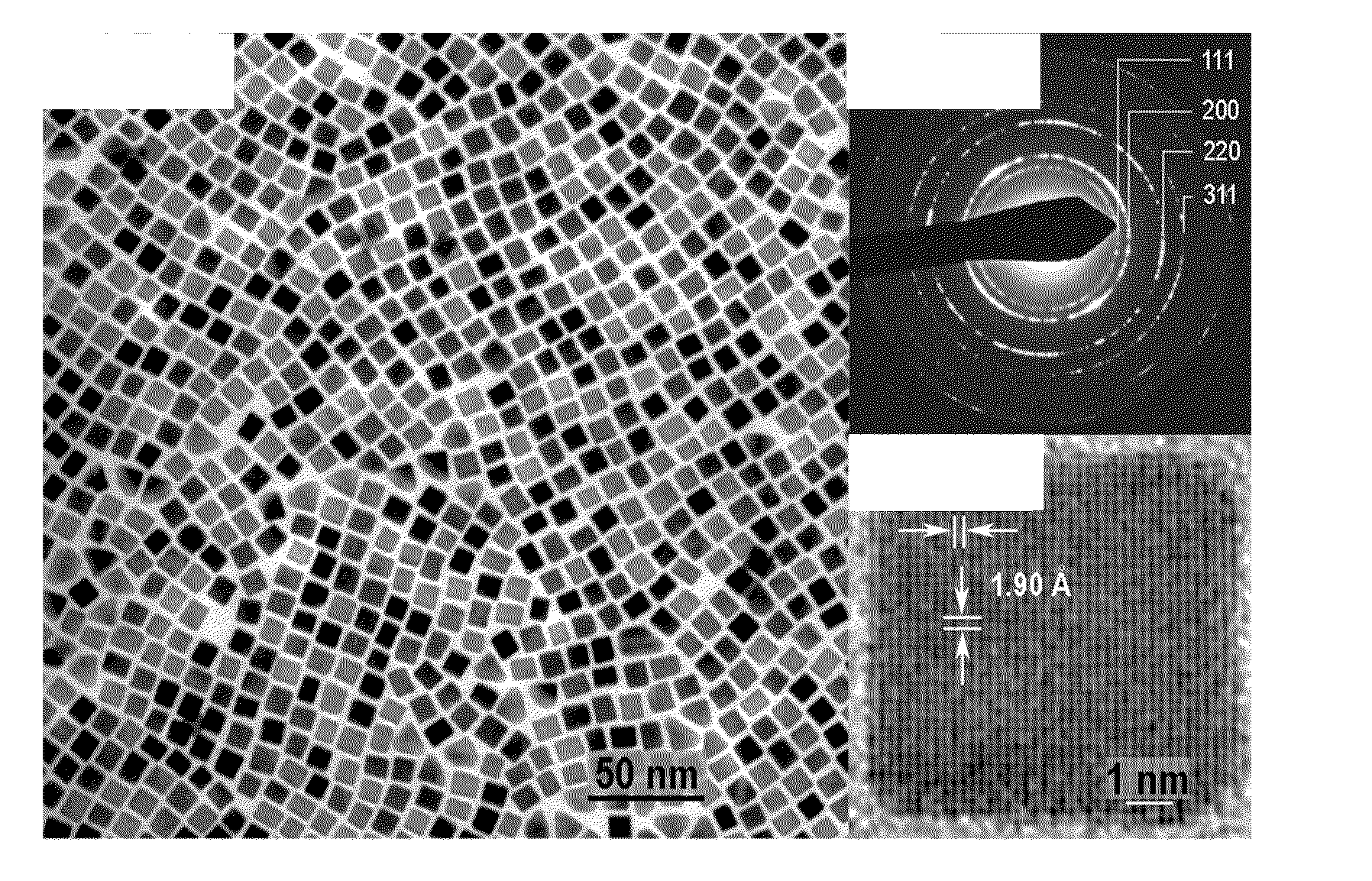
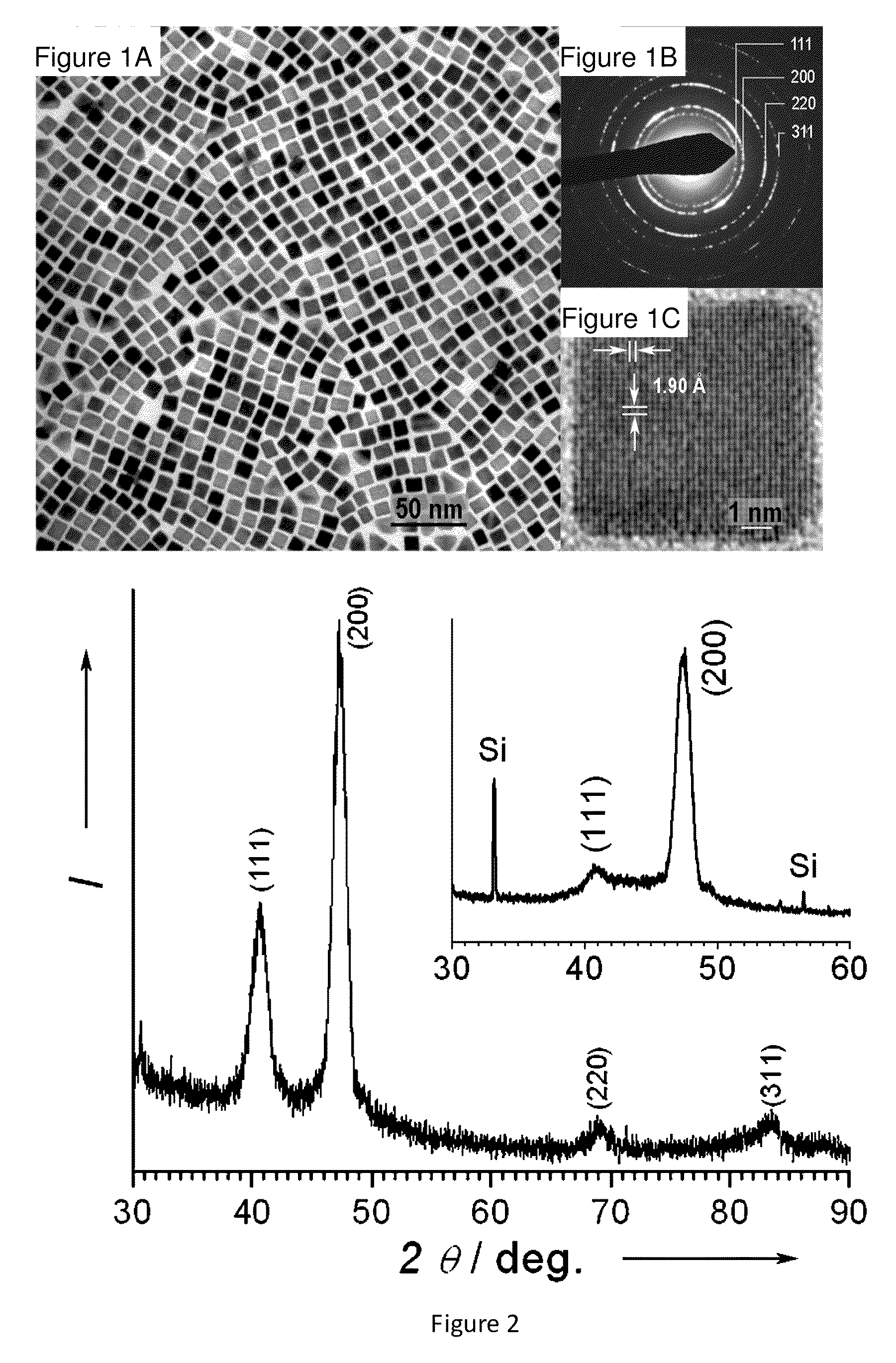
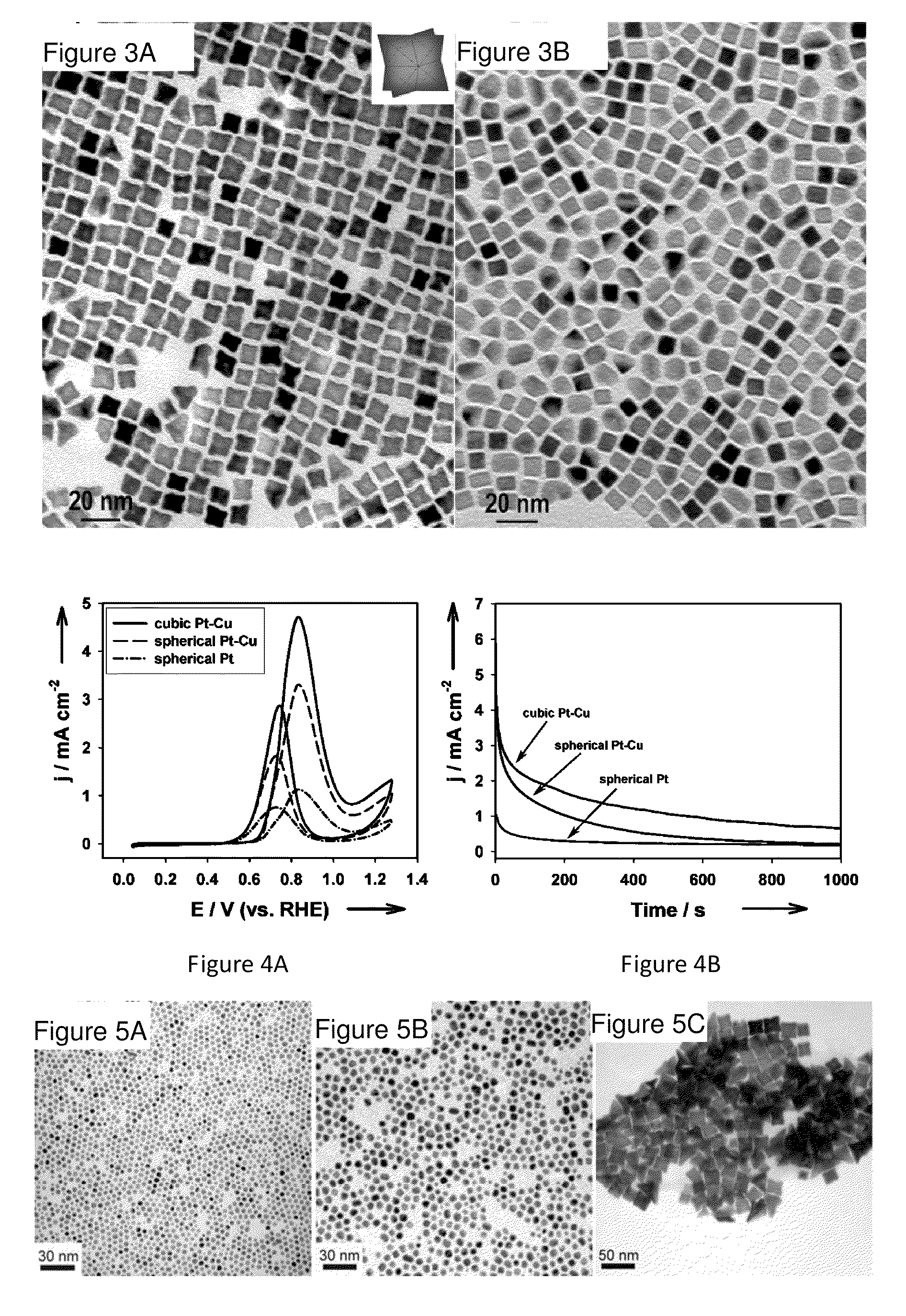
Examples
example 1
[0043]1. General Synthetic Procedure and Characterization
[0044]Synthesis was carried out using a standard airless procedure. In a typical experiment, 0.05 mmol of platinum (II) acetylacetonate (Pt(acac)2, Gelest Inc.), 0.05 mmol of copper (II) acetylacetonate (Cu(acac)2, 99.99+%), 0.5 mmol of 1,2-tetradecanediol (TDD, 90%), and 0.6 mmol of tetraoctylammonium bromide (TOAB, 98%) were gradually dissolved in vigorously stirred 1-octadecene (ODE, 7.0 mL, 90%) in a three-neck flask equipped with a condenser under an argon stream at room temperature. The mixture was then heated to 110° C. to form a clear solution, and 1.6 mL of pre-mixed oleylamine (OLA, 70%) in ODE (0.94 mmol for OLA) and 0.25 ml of pre-diluted 1-dodecanethiol (DDT, C12SH, 98%) in ODE (0.05 mmol for DDT) were then injected into the flask in sequence. The mixed solution was subsequently heated to 230° C. and maintained at this temperature for 20 min following a quench by quickly injecting 6 mL of room-temperature toluene ...
example 2
[0110]Shape-control synthesis of metallic nanocrystals (NCs) has received extensive interest since the catalytic performances of nanoparticles (NPs) have been found to be strongly related with the facets terminated the surface of the particles.[1-6] For example, tetrahexahedral platinum (Pt) NCs exhibit an unusual high electro-oxidation activity for formic acid and ethanol compared with spherical Pt Nanocrystals.[5] Pt60Cu40 nanocubes (NCbs) exhibit superior electrochemical activity towards methanol oxidation reaction compared with similar sized spherical Pt NCs.[6] On the other hand, it is an urgent task to develop substitutes for the pure Pt-catalyst due to the high-cost as well as the rarity of Pt. In recent years, less-expensive Pt-based binary alloy NPs have been elaborately prepared and intensively studied.[7-11] It has been realized that, in addition to particle shape, the alloy composition also acts an extremely important character with respect to the catalytic activity.[11-...
PUM
| Property | Measurement | Unit |
|---|---|---|
| temperature | aaaaa | aaaaa |
| temperature | aaaaa | aaaaa |
| temperature | aaaaa | aaaaa |
Abstract
Description
Claims
Application Information
 Login to View More